 how-to
How to Stop Chasing the Puck in Hockey
Table of Contents
- Why Players Chase the Puck (And Why It Costs You)
- What You'll Need Before You Start
- Step 1: Learn to Track the Puck Without Following It
- Step 2: Build a Defensive Stance and Gap Control
- Step 3: Hold Your Zone Instead of Chasing
- Hockey Defensive Positioning Drills You Can Do Alone
- How to Improve Hockey IQ and On-Ice Awareness
- A Youth Hockey Positioning Guide for Parents and Coaches
- Frequently Asked Questions
Last Updated: September 28, 2026
Why Players Chase the Puck (And Why It Costs You)
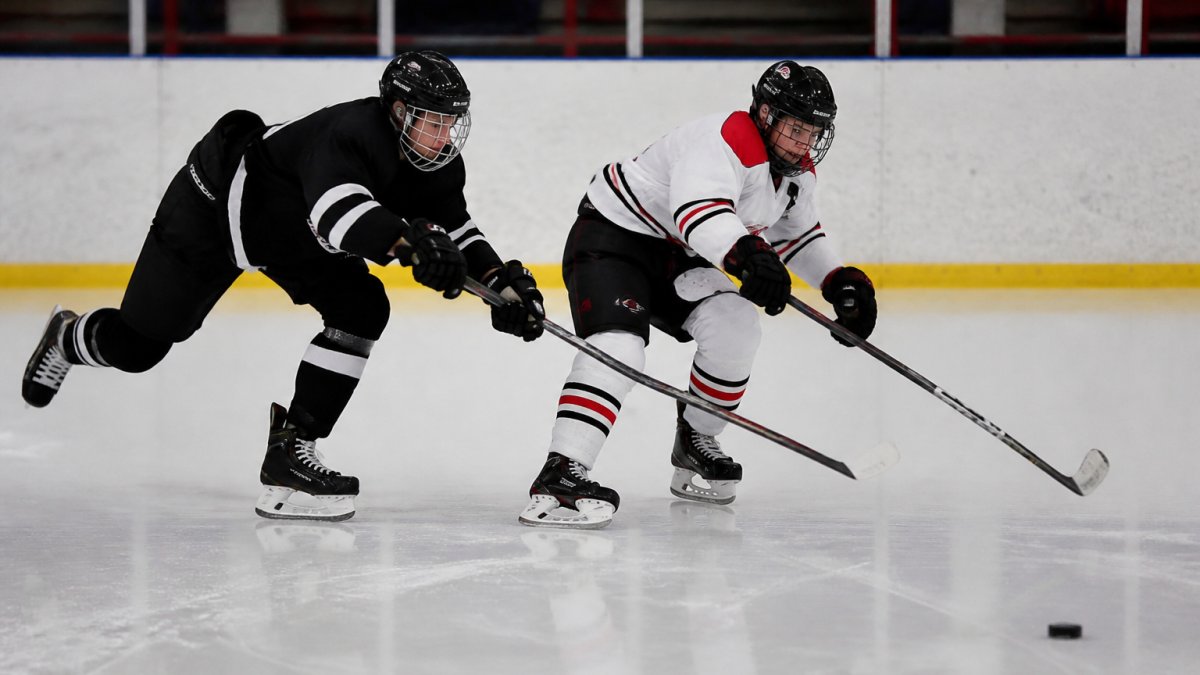
Chasing the puck is the single most common habit that holds young hockey players back. It looks like effort. It feels like hustle. But it pulls you out of position, opens passing lanes for the other team, and leaves your teammates covering for you.
This guide from Hockey Positioning™ breaks down exactly how to stop chasing the puck in hockey, step by step. Below, we'll show you the tracking skills, stance work, and scanning habits that replace chasing with smart positioning.
Here's the hard truth most coaches won't say out loud: chasing isn't a skating problem. It's a thinking problem.
When you chase, you react to where the puck is right now. Smart players read where it's going next. That gap between reacting and anticipating is what separates a player who's always a step behind from one who seems to be everywhere at once.
Three things happen every time you chase:
- You leave your defensive zone assignment open
- You tire out faster because you're skating extra, wasted strides
- Your team's structure falls apart, and nobody knows who covers whom
The fix isn't "skate harder." It's learning to track, scan, and hold your position. Let's get into it.
What You'll Need Before You Start
You don't need special gear to fix this. You need the right mindset and a few basics.
Total time to see change: 3-4 weeks of focused practice.
What you'll need:
- A stick and puck for off-ice work
- A partner or a wall for passing drills
- 10-15 minutes a few times a week
- Patience, because old habits take time to break
The biggest mistake players make is trying to fix positioning only during games. Games are for using skills, not building them. You build the habit in practice, then trust it in the game.
Step 1: Learn to Track the Puck Without Following It
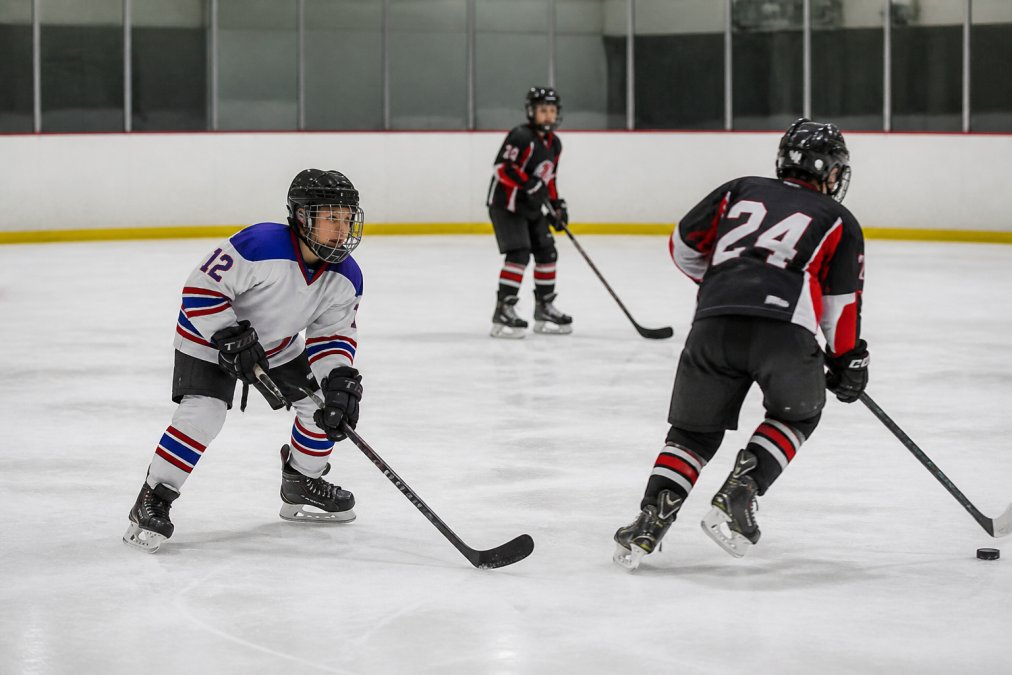
Tracking means watching the puck while staying in your lane. Following means your feet chase wherever the puck goes. One keeps you in the play. The other takes you out of it.
Start here: keep your feet quiet and your eyes busy.
Puck Watching vs. Puck Tracking
Puck watching is staring at the puck and reacting to it. Puck tracking is reading the puck's path while knowing where everyone else is.
Watching gets you caught flat-footed. Tracking keeps you a step ahead.
Try this: during your next practice, pick one shift where you never let your feet chase the puck. Just watch it move and hold your spot. It'll feel strange. That's the point.
Scanning Techniques: Head on a Swivel
Good players scan every few seconds. This is one of the visual scanning techniques that separate average players from smart ones.
- Check your shoulders before you get the puck
- Look for the open player, not just the puck
- Scan behind you, not only in front
- Do it in a rhythm, not randomly
A common mistake is scanning only when the puck comes near you. Scan constantly, even when you're far from the play.
Step 2: Build a Defensive Stance and Gap Control
Your stance is your foundation. Bad stance means bad positioning, every time.
A strong defensive stance has:
- Knees bent, weight on the balls of your feet
- Stick on the ice, blade flat
- One hand low, one hand at hip level
- Head up, eyes forward
This is your body positioning base. From here, you control your gap (the space between you and the attacker).
Gap control means staying close enough to pressure the puck carrier but far enough to react. Too close and you get beat. Too far and they walk right in.
The trick nobody tells you: your gap should shrink as the attacker gets closer to your net. Far away, give space. Near your goalie, take it away.
Step 3: Hold Your Zone Instead of Chasing
The moment you leave your zone, you've handed the other team an advantage. Defensive zone coverage only works when everyone holds their area.
Here's the rule: your job is your zone, not the puck.
- If the puck goes to the corner, your teammate covers it
- You stay in front of the net or cover your man
- Trust your team structure and your system
This is where man-to-man and zone coverage meet. In man-to-man, you follow your player. In zone coverage, you guard an area. Most modern systems mix both.
Hockey Defensive Positioning Drills You Can Do Alone
Most articles tell you to "work on positioning." Almost none tell you exactly what to do when you're alone in your driveway, basement, or at open skate.
| Drill | Time | What It Builds | Chasing Trigger It Fixes |
|---|---|---|---|
| Shadow Skating | 5 min | Stance and pivots | Wandering feet |
| Wall Ball Passing | 10 min | Stick positioning | Lunging at the puck |
| Mirror Drill | 10 min | Hip alignment, containment | Getting beat wide |
| Scan and Call | 5 min | Awareness, scanning | Late reads |
| Two-Puck Read | 5 min | Zone discipline | Panic reactions |
How to Improve Hockey IQ and On-Ice Awareness
Hockey IQ gets treated like a fixed trait, you either have it or you don't. That's wrong. What looks like instinct is almost always a stack of small habits: scanning on a rhythm, reading the puck carrier's hips, and knowing your job before the puck arrives. You can train all three.
Build the reading habit
- Watch one player, not the puck, for a full shift. Track where they go when the puck is on the far side. You'll start noticing that good players are already moving before the pass is made.
- After each game, ask your coach one "why" question: not "where should I have been" but "why was that the right spot." The why is what transfers to the next game.
- Review your own shifts and mark every time your feet moved toward the puck without a reason. Most players are shocked by the count in the first period alone.
The psychological trigger nobody talks about
- Fear of looking lazy. Standing still while the puck is 30 feet away feels like doing nothing. It isn't, it's doing your job.
- Fear of missing the play. Players want to be in the highlight. Holding the net-front while your teammate wins the corner battle feels like watching from the bench.
- Fear of letting the team down. When a teammate gets beat, the instinct is to cover for them. That instinct is what opens the back door.
The two-second rule
Scanning rhythm
USA Hockey's player development resources on decision-making and awareness
A Youth Hockey Positioning Guide for Parents and Coaches
This youth hockey positioning guide is for the adults helping young players learn the game.
What parents and coaches should know:
- Praise positioning, not just goals and hits
- Point out good scans and smart holds, not only the puck
- Keep it visual: show, don't just tell
- Be patient, because habits take weeks to change
Frequently Asked Questions
Why do hockey players chase the puck?
Most players chase because they react to the puck instead of reading the play. When a player watches the puck, their feet follow it, and they leave their zone coverage. Chasing also comes from wanting to make a play, fear of missing out on the action, and poor scanning habits. Teaching players to track the puck with their eyes while holding position fixes most of this.
How do I teach my child to stop chasing the puck?
Start with small-area games that reward staying in a lane, then add scanning cues like 'find your check, then find the puck.' Use visual tools that show where each position should be for a given puck location. A youth hockey positioning guide or an interactive app that lets kids drag the puck and see players move can help them connect the dots before they hit the ice.
What is the difference between puck chasing and defensive positioning?
Puck chasing means leaving your assigned area to pursue the puck wherever it goes, which opens passing lanes and creates odd-man rushes. Defensive positioning means holding your zone, keeping your body between the puck and the net, and using gap control and angle control to contain the play. The first reacts to the puck; the second reacts to the play.
How does Hockey Positioning™ help players learn better ice awareness?
Hockey Positioning™ is an interactive mobile app that lets players drag the puck across a full ice surface and instantly see where every position should be. Pro coaching tips appear at each puck location, so players learn scanning, support, and defensive responsibility visually. It is built for ages 5-13 and adults new to hockey, and it is programmed by hockey professionals. Download it on the App Store to try it.
Chasing the puck is a habit, and habits can be rebuilt. The players who stop chasing aren't the fastest skaters. They're the ones who learned to track, scan, and trust their position. Hockey Positioning™ makes that lesson visual and fun, with an interactive ice surface, coaching tips at every puck location, and full scenarios from power plays to penalty kills. Download Hockey Positioning™ on the App Store and give your player the edge to hold their spot and stop chasing for good.