 How-to
How to Defend the Half Wall in Hockey: A Step-by-Step Guide
Last Updated: November 14, 2026
Quick Summary
Learning how to defend the half wall in hockey starts with reading the pressure before you move. Set your body with your inside shoulder and inside stick, angle the attacker toward the boards, and keep the slot covered.
- Scan the attacker, teammates and time and space before you engage the puck.
- Point your inside shoulder at the attacker's chest and your stick at the passing lane.
- Keep your knees bent and weight on the balls of your feet.
- Force the attacker toward the boards to cut down passes and shots.
- Call out "mine" or "switch" to hand off coverage clearly.
Table of Contents
- Where the Half Wall Sits and Why It Matters Defensively
- Step 1: Read the Pressure Before You Engage
- Step 2: Set Your Body Position and Stick Angle
- Step 3: Angle the Attacker Toward the Boards
- Step 4: Protect the Slot and Know When to Hand Off Coverage
- Common Half Wall Defensive Mistakes and How to Correct Them
- Drills to Build Half Wall Defense and 2-on-1 Recognition
- Practicing Wall Defense With Your Own Plan at Home
- Frequently Asked Questions
Where the Half Wall Sits and Why It Matters Defensively
Learning how to defend the half wall in hockey is one of the most important skills a young player can build. The half wall is the boards area near the blue line in the offensive and defensive zones, roughly where the wall meets the face-off dot. Interactive tools like Hockey Positioning™ can help players see where they should be before the puck ever arrives.
Many youth players chase the puck when it reaches the wall, which can leave gaps behind them. The result is an easy pass to a teammate in the middle of the ice. Good defense starts with knowing where to stand, and learning how to defend the half wall in hockey begins there, not with speed.
- The half wall is a common place for turnovers in youth games
- Defenders who stay between the attacker and the slot give their team time to recover
- Learning this zone early makes every other defensive skill easier to use
Step 1: Read the Pressure Before You Engage
Before you move, look at the puck carrier and the players around them. Ask yourself three quick questions:
- Is the attacker moving toward me or away from me?
- Is a teammate open in the middle of the ice?
- How much time and space does the attacker have?
Watch out: Skating straight at a puck carrier with no plan is the fastest way to get beaten. A quick scan costs less than one second and saves a goal.
Players who read pressure well choose one of three actions. They pressure the puck, contain it by keeping the attacker on the boards, or hand the attacker off to a teammate.
Step 2: Set Your Body Position and Stick Angle
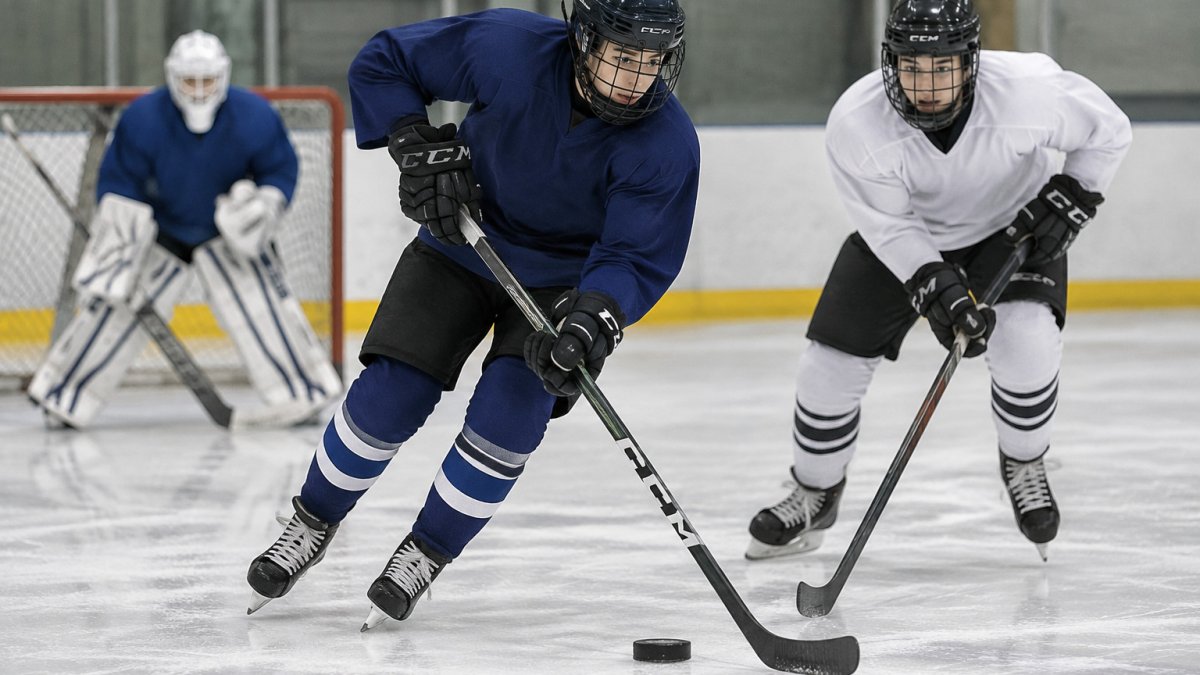
Your body position at the half wall is not just about looking ready. It is about closing the two lanes that matter: the pass to the slot and the cut to the middle. Set up so your chest faces the attacker's inside shoulder, knees bent, weight on the balls of your feet, and your stick on the ice at a 45-degree angle toward the boards. That shape lets you push laterally without crossing your skates.
A common coaching cue is "inside shoulder, inside stick." Your inside shoulder (the one closer to the middle of the rink) should point at the attacker's chest, and your stick blade should sit in the passing lane between the attacker and the slot. If your stick points at the attacker's skates, you are taking away the shot but leaving the seam pass open. If it points at the slot, you are taking away the pass but giving up the short-side shot.
Gap control matters as much as angle.
Watch out: Standing with your stick blade flat on the ice and your body square to the boards opens the inside lane. The attacker only needs one step to get inside your stick and turn a defensive position into a scoring chance.
When the attacker has support, your stick angle should prioritize the most dangerous passing lane, not the puck. Scan the slot and the point before the puck arrives. If the slot is open, keep your stick in that lane even if it means giving the attacker more space along the wall. If the point is the bigger threat, shade your stick toward the blue line and let your partner handle the slot. The principle is simple: take away the pass that leads to the best scoring chance, then adjust as the attacker moves.
Step 3: Angle the Attacker Toward the Boards
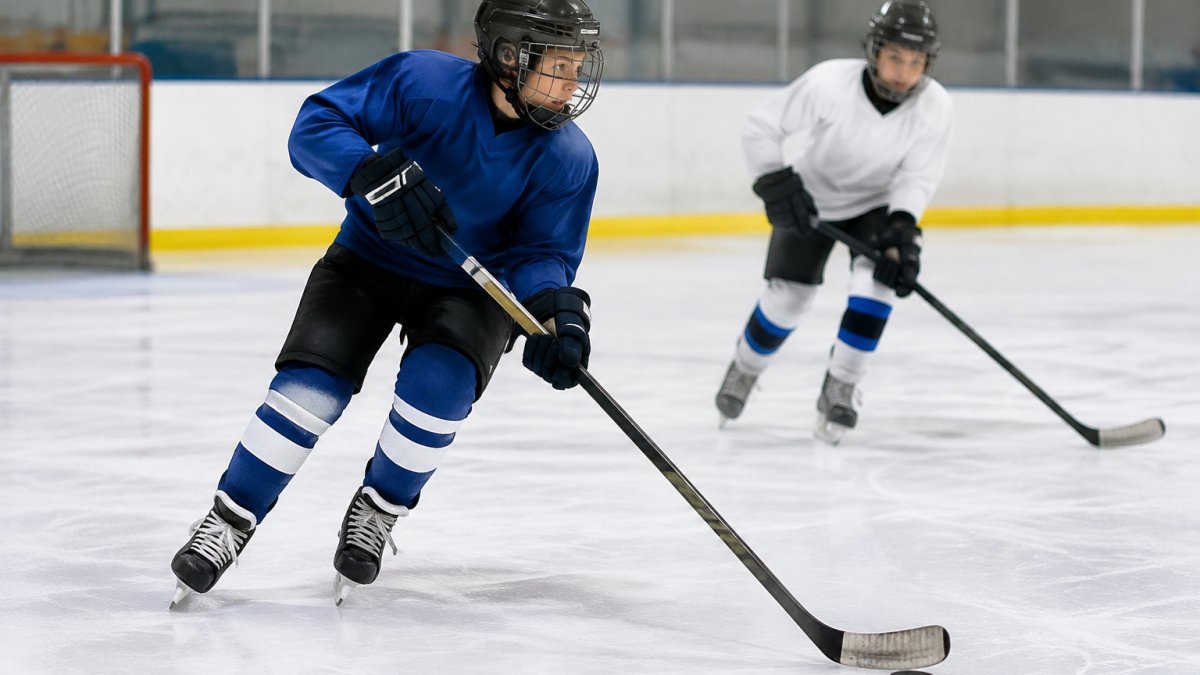
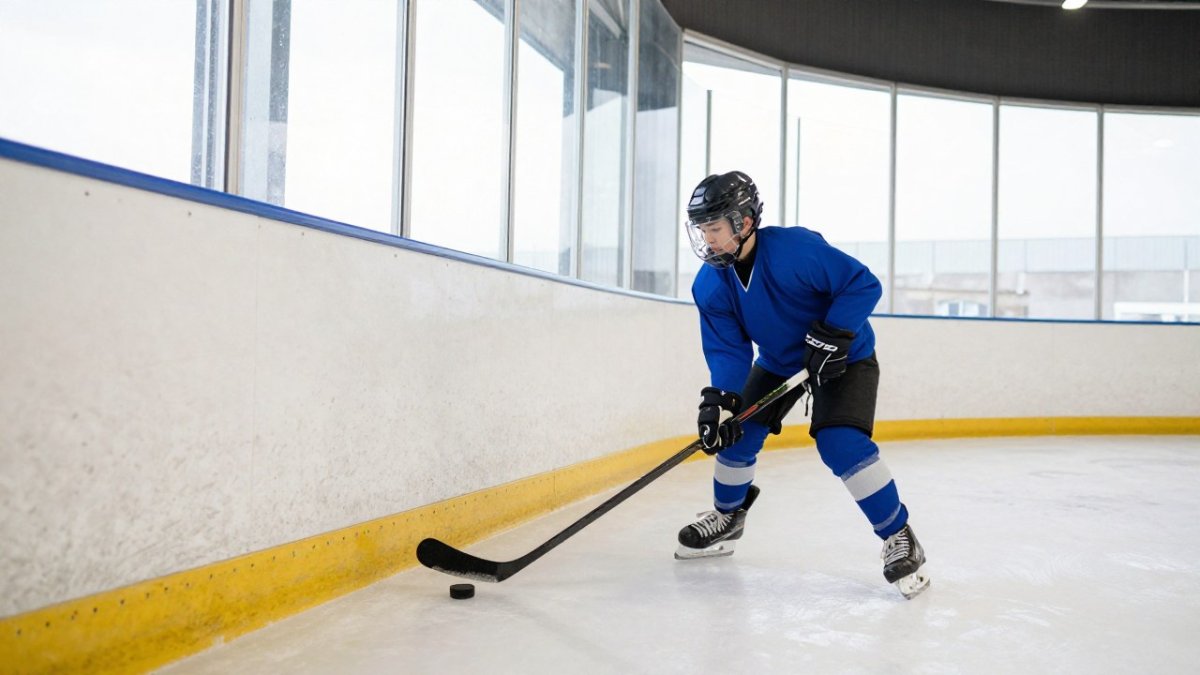
Angling means steering the attacker into the least dangerous part of the ice. The boards are your ally. When you force a player toward the wall, you cut down the number of passes and shots they can make.
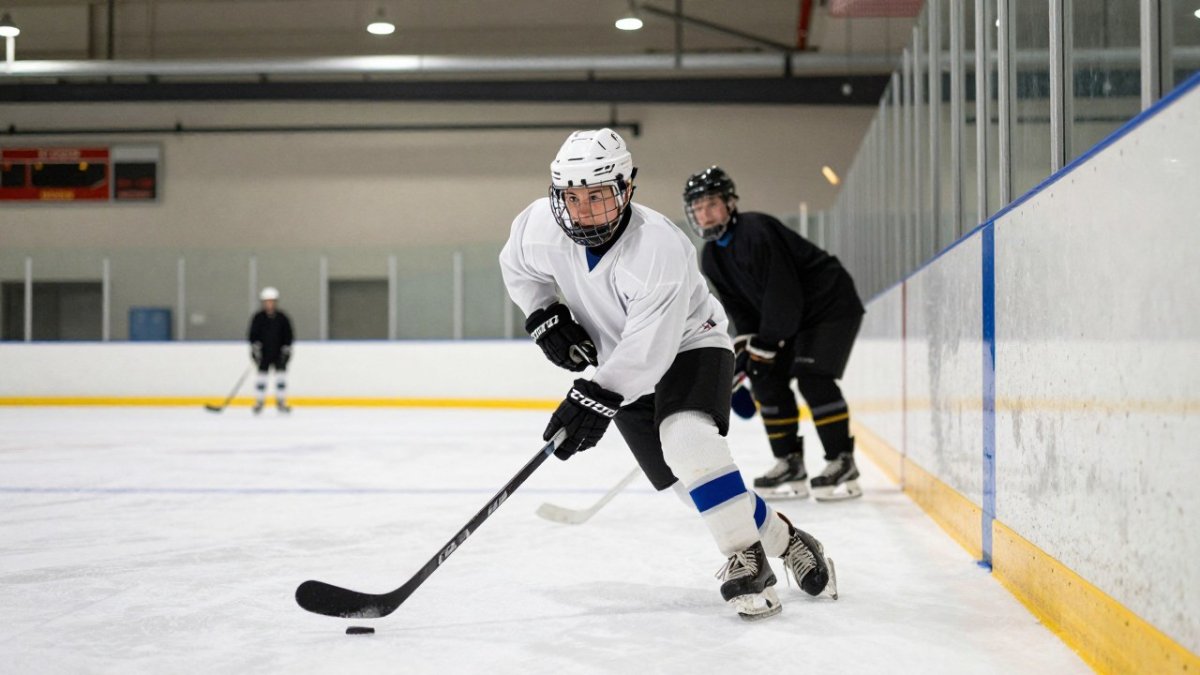
Move your feet to stay between the attacker and the middle of the rink. Keep a small gap so the attacker cannot cut inside you. Stay patient. Let the attacker come to you while you control the angle.
Step 4: Protect the Slot and Know When to Hand Off Coverage
The slot is the high-danger area in front of the net. Even while you defend the half wall, keep one eye on the slot. If your teammate is pressuring the puck carrier, your job may be to cover the slot instead of joining the attack.
Hand off coverage when a teammate is closer to the attacker. Call out clearly so everyone knows who has the player. A simple word like "mine" or "switch" prevents two defenders from chasing the same player.
Common Half Wall Defensive Mistakes and How to Correct Them
Here are the errors coaches see most often, with simple fixes:
| Mistake | Why It Hurts | Fix |
|---|---|---|
| Chasing the puck | Opens gaps behind you | Stay between attacker and slot |
| Standing straight up | Slow to react | Bend knees, stay low |
| Stick pointing at the puck | Easy to deke around | Point stick at the attacker's skates |
| Leaving the slot empty | Gives up high-danger shots | Check the slot before you engage |
A common mistake is overcommitting to the puck. Players want to win every battle, but one good angle beats a hard hit that misses. Learn to hold your position, and the puck often comes to you.
Drills to Build Half Wall Defense and 2-on-1 Recognition
Practice builds the reactions you need in real games, but drills only work when you can measure progress. Each drill below includes a coaching cue and a simple success measure so players and coaches know when the skill is improving.
- Wall Angle Drill (ages 9+): One defender and one attacker work the half wall. The defender must force the attacker toward the boards without touching the puck. Run 3 sets of 30 seconds. Coaching cue: "Inside shoulder, inside stick." Success measure: the attacker is kept below the face-off dot line for at least 20 of the 30 seconds. For ages 5-8, remove the timer and count how many times the defender stays between the attacker and the slot.
- Read and React Drill: The coach calls "pressure" or "contain" just as the attacker receives a pass. The defender responds right away. Repeat 10 times. Coaching cue: "Scan first, then move." Success measure: the defender's first step matches the call on 8 of 10 reps. Add a second attacker in the slot to force the defender to check the pass lane before engaging.
- 2-on-1 Recognition Drill: Two attackers come at one defender near the half wall. The defender must decide whether to pressure the puck or cover the open player. Focus on quick, clear decisions. Coaching cue: "Take away the best chance." Success measure: the defender forces a pass to the covered player or a low-danger shot on 7 of 10 reps. Progress by adding a backchecker so the defender learns when to hand off coverage.
For younger players, the key is repetition without pressure. Run each drill at half speed and stop to ask the defender what they saw before the puck arrived. For older players, add a time limit or a second puck to force faster scanning. A simple weekly goal works well: one week focus on staying low, the next on stick angle, the next on hand-off communication. Track one measure per week so progress is visible.
Hockey Positioning™ includes interactive ice-surface scenarios that show correct player positions, which can complement on-ice practice.
Practicing Wall Defense With Your Own Plan at Home
You do not need a rink to sharpen your wall defense. Use a hallway or driveway and a ball or tennis ball to practice footwork and body position. Set two cones to mark the boards, then move side to side while keeping your knees bent and your stick low.
Write a short plan before each session. Pick one skill, such as reading pressure or setting your stick angle, and practice it for 10 minutes. Track one goal each week, like staying low for an entire drill.
Parents can help by calling out pressure cues while the player works. Keep the tone encouraging. Small, steady practice builds better habits than long, rushed sessions.
Each time you step on the ice, remember the basics: read the pressure, angle the attacker, protect the slot, and hand off clearly. With steady practice, the half wall becomes a place you control rather than one you fear.
Frequently Asked Questions
What is the half wall in hockey?
The half wall is the section of boards in the offensive or defensive zone that runs from the blue line toward the face-off dot area, roughly halfway between the boards' corner and the slot. It is the area where many puck battles and breakouts happen. Defensively, the half wall is where an attacker often tries to work the puck toward the middle of the ice. Good defenders know the wall is a tool: it can take away options by pushing the attacker along the boards, away from dangerous scoring areas.
How should a defenseman defend an attacker on the half wall?
Start with a stick in the passing lane and your feet angled to keep the attacker on the outside. Keep your gap tight enough to threaten the puck but not so close that a quick move beats you. Your goal is to angle the attacker toward the boards rather than letting them cut to the middle. Keep your head up, scan for a second attacker, and communicate with your partner so coverage shifts cleanly if the puck moves.
When should a defender pressure the puck carrier on the half wall?
Pressure when the carrier is facing the boards, has poor body position, or has no support nearby, since those moments give you a realistic chance to win the puck. Contain instead when the attacker has speed through the middle or a teammate is open in the slot. Hand off coverage when another attacker crosses into your zone. A simple rule: engage when you can take away a lane, and hold your position when engaging would open a bigger one.
How do you prevent a pass from the half wall into the slot?
Keep your stick between the puck carrier and the slot, and keep your body on the inside shoulder of the attacker you are covering. Watch the player in the slot as well as the puck, because a defender who only watches the puck is easy to beat on a cross-ice pass. Stay compact, collapse toward the net when needed, and use a quick stick check to disrupt the pass rather than reaching with your body.