 How-to
7 Ways to Anticipate Power Play Passes Before They Happen
Quick Summary
You can anticipate power play passes by reading the puck carrier's cues before the puck moves. Watch where the eyes return, which shoulder opens toward the slot, the blade angle and stick path, and which side the penalty killer is pressuring. When two cues agree, move as the pass is loaded so you arrive in the lane first.
- Track where the carrier's eyes return after the first glance, since the return look is usually the real target.
- An open near shoulder toward the slot loads a middle pass, while a rotated far shoulder points to a cross-ice or point pass.
- Wait for two cues to agree before committing, because one glance or shoulder twitch can be a decoy.
- Move when the blade opens and weight shifts to the back foot, not when the puck is released.
- Practice with a partner who freezes the play at random moments and calls out the next pass.
Table of Contents
- How to Anticipate Power Play Passes Before the Puck Moves
- Understanding Power Play Structure and the Man Advantage
- Reading the Puck Carrier and Predicting the Next Pass
- Recognizing the Power Play Drop Pass
- Working Through the 1-3-1 Power Play Options
- Penalty Kill Positioning to Read and Block Passing Lanes
- Penalty Kill Drills to Build Pass Anticipation
- Building Your Anticipation Habits on the Ice
- Frequently Asked Questions
How to Anticipate Power Play Passes Before the Puck Moves
Last Updated: November 24, 2026
Anticipating power play passes is the difference between reacting to the play and controlling it. Hockey Positioning™ is designed to help young players and adults learn where to be on the ice, so they can read the play before the puck moves.
This guide covers seven practical ways to read the power play. You will learn how the man advantage works, how to spot a pass before it happens, and how to position yourself on the penalty kill. Each section gives you something you can practice at your next game or practice.
Why anticipation matters: When you anticipate a pass, you move before the puck arrives. That gives you a step on your opponent and a better chance to block the lane or break up the play.
- Anticipation saves energy because you do not chase the puck.
- It keeps you in position to support teammates.
- It gives you more time to make a good decision.
Understanding Power Play Structure and the Man Advantage
A power play gives one team an extra skater because the other team has a penalty. For a plain-language explanation of how power play rules work, see the basics.
The attacking team works to move the puck quickly. The defending team, the penalty kill, works to block shots and passing lanes. Both sides know the clock is running.
Here is what to watch for on the man advantage:
- The point players control the blue line and feed the puck to the shooters.
- The half-wall players create space and open passing options.
- The net-front player screens the goalie and looks for rebounds.
Knowing these roles tells you where the puck is most likely to go next.
Reading the Puck Carrier and Predicting the Next Pass
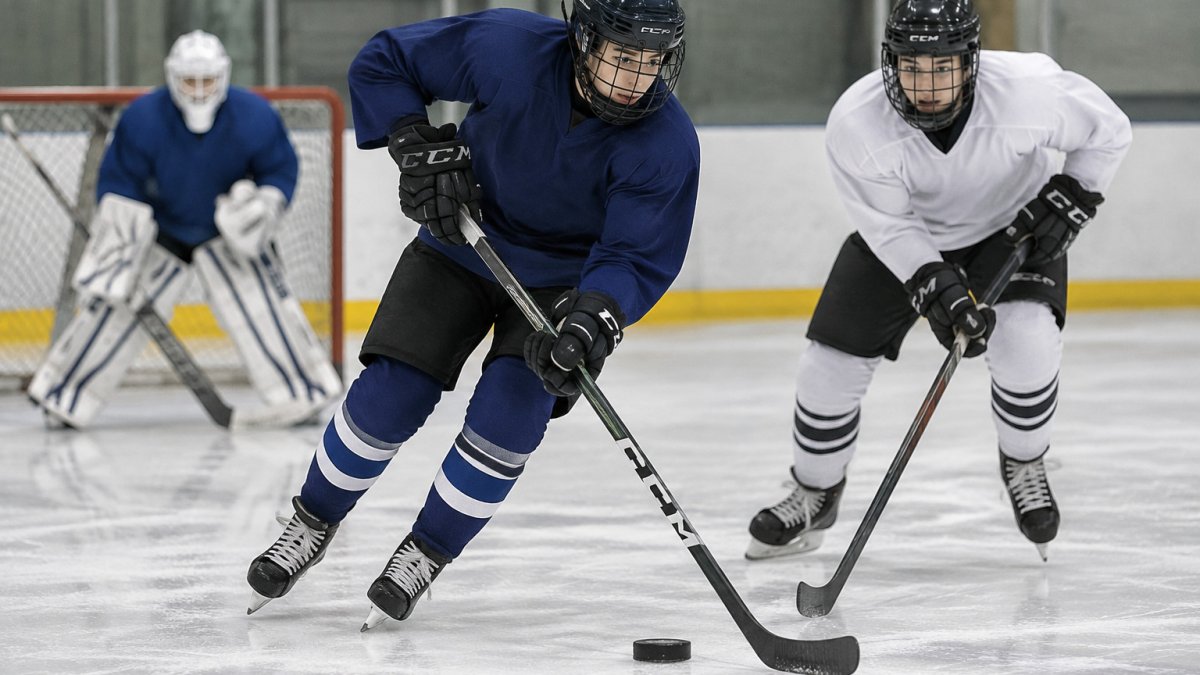
Most power-play goals start with a pass the penalty kill saw coming too late. A repeatable read of the puck carrier can help. Instead of watching the puck, build a short checklist and run it every time an attacker receives a pass. The checklist below turns 'anticipation' into a sequence of observable cues you can practice.
The four-cue checklist
Run these in order as the carrier settles with the puck. Each cue narrows the likely next pass.
- Eyes and head. The carrier usually glances at the target before the pass. A quick look to the half-wall, then back to the middle, often means the half-wall is the real option and the middle look was a decoy. Track where the eyes return, not where they first go.
- Shoulder and hip orientation. A carrier who opens the near shoulder toward the slot is loading a pass into the middle. A carrier who keeps the near shoulder closed and rotates the far shoulder is more likely to go cross-ice or back to the point. The shoulders commit before the stick does.
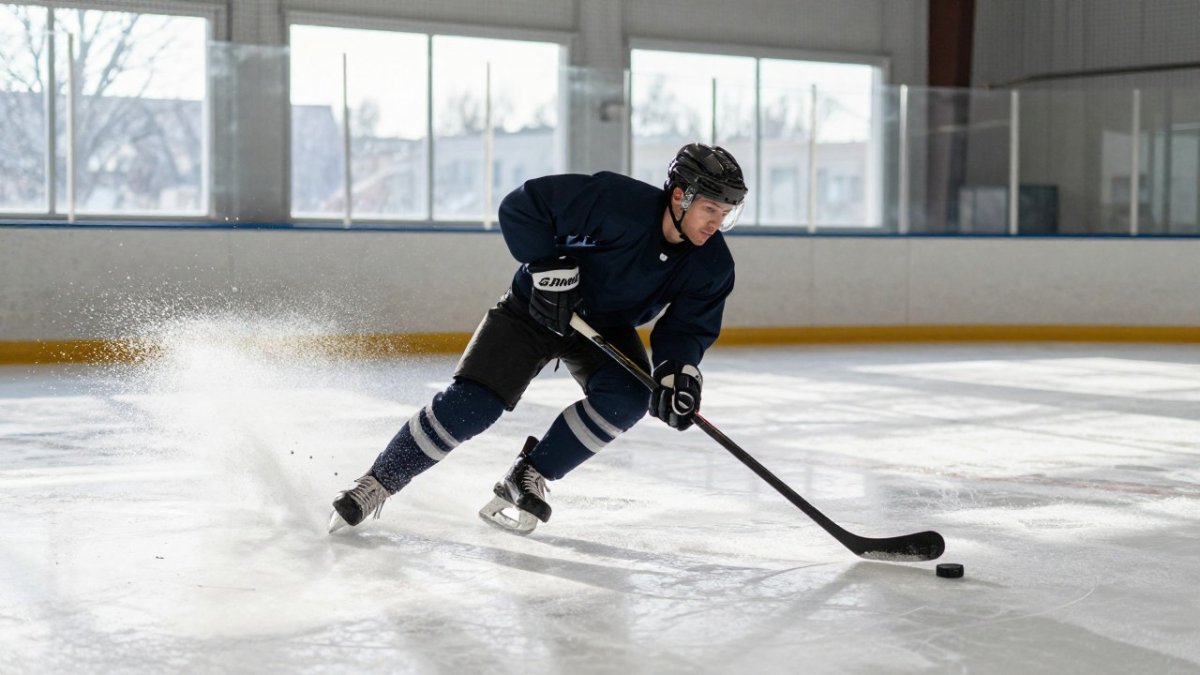
- Blade angle and stick path. A blade that opens toward a teammate and sweeps across the body signals a pass; a blade that closes and pulls in tight signals a shot or a protect. Watch the bottom hand, a hand that slides down the shaft is usually preparing a harder, longer pass.
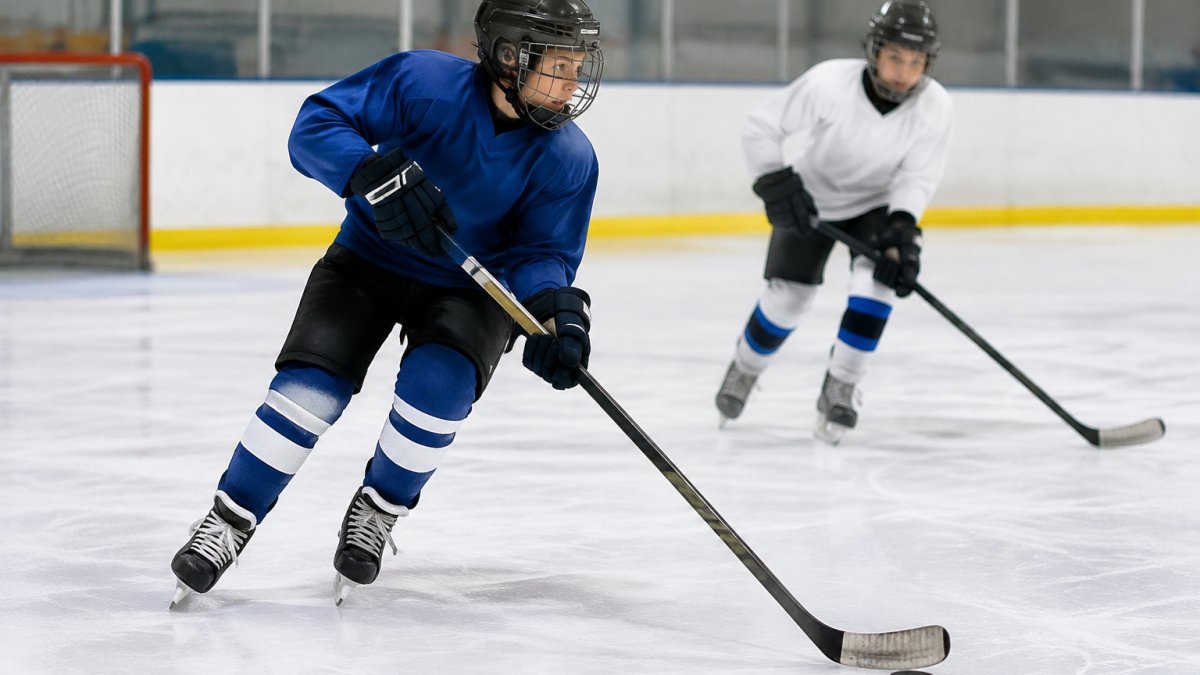
- Pressure and feet. If the nearest penalty killer is closing the carrier's forehand, the carrier will almost always move the puck to the backhand side or to the support player behind the pressure. If the carrier has time and space, expect the more dangerous seam pass rather than the safe outlet.
Turning cues into a prediction
One cue is a guess; two cues agreeing is a read. A common pattern is eyes to the half-wall plus an open near shoulder plus pressure on the forehand, that combination usually means the puck is going to the half-wall or to the bumper underneath. When the cues conflict (eyes one way, shoulders another), treat the shoulders and blade as more reliable, because they are harder to fake than the eyes.
Watch out: do not commit on the first cue alone. Skilled power-play players are taught to look off defenders, so a single glance or a single shoulder twitch is often bait. Wait for the second cue to confirm before you move.
Timing the jump
The best penalty killers move when the pass is loaded, not when it is released. That window is roughly the moment the carrier's blade opens and the weight shifts to the back foot. Move then, and you arrive with the puck.
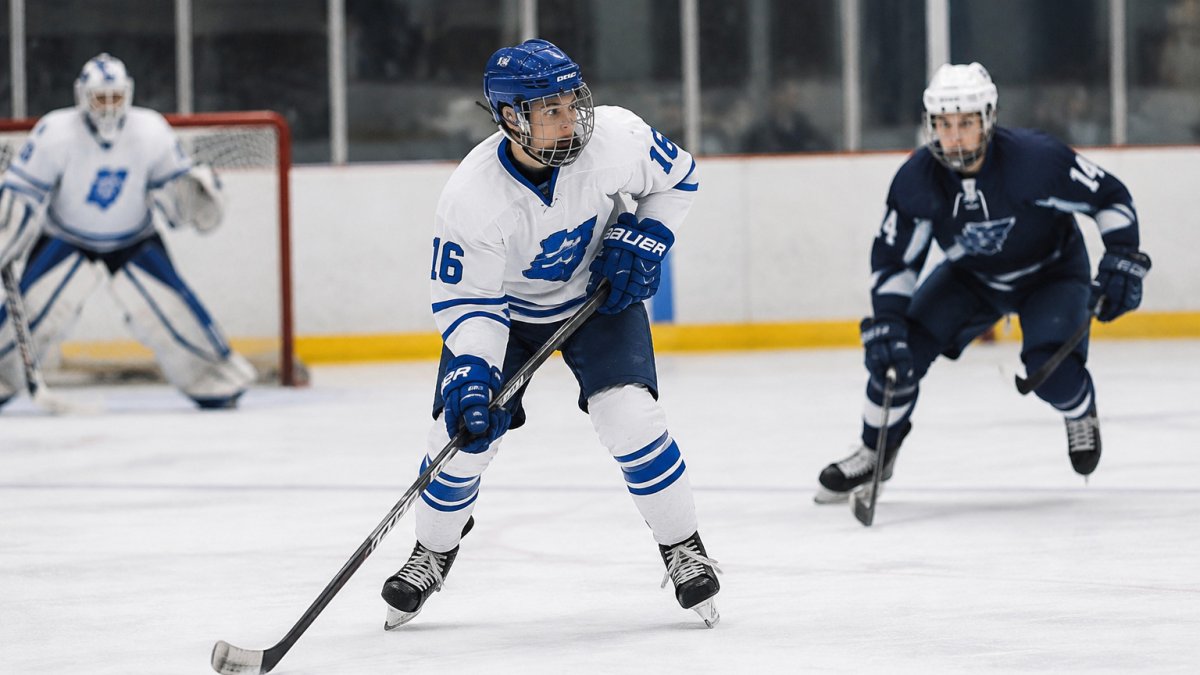
A quick practice read
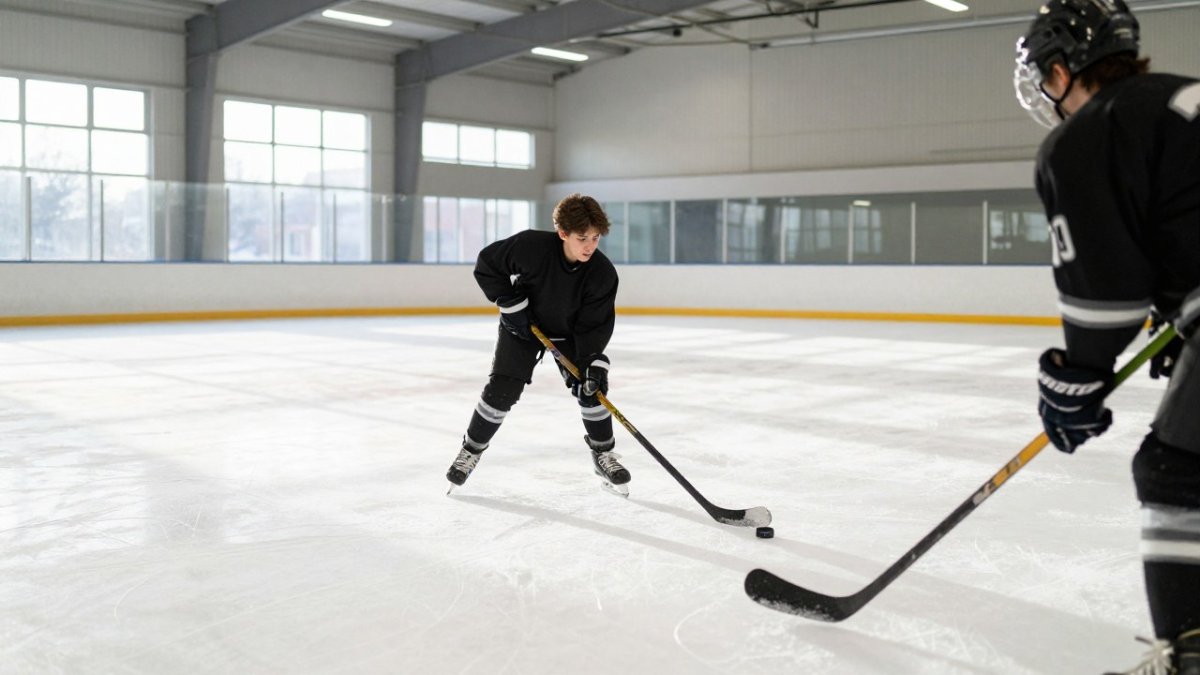
During your next practice, have a partner carry the puck and freeze at random moments. Call out the next pass using only the four cues, then let the play continue to check your read. Players often find their accuracy improves once they focus on the shoulders and blade rather than the puck.
The four cues below give a repeatable way to read the carrier before the pass is made.
| Cue | What to watch | What it suggests |
|---|---|---|
| Eyes and head | Where the eyes return after the first glance | The return look is the real target, not the decoy |
| Shoulder and hip | Whether the near shoulder opens toward the slot | An open shoulder loads a middle pass |
| Blade angle and stick path | Blade opening toward a teammate, bottom hand sliding down | Opening blade signals a pass; sliding hand signals a harder pass |
| Pressure and feet | Which side the nearest penalty killer is closing | Carrier moves the puck away from pressure |
Recognizing the Power Play Drop Pass
The drop pass is one of the most common power play plays. A player with the puck moves it backward to a teammate who is trailing into the zone. It works because defenders often focus on the player who has the puck.
Look for these signs of a drop pass:
- The puck carrier slows down near the blue line.
- A teammate skates toward the middle of the ice behind the carrier.
- The defender in front of the carrier stays flat-footed.
When you see the drop pass coming, move to the open lane behind the play. This gives your team a shooting option and blocks the defender from reaching the puck.
Working Through the 1-3-1 Power Play Options
The 1-3-1 formation places one player at the top, three players across the middle, and one player at the net front or bumper position (Ovechkin closing in on Andreychuk's power-play goals record). It spreads the attackers out and creates many passing lanes.
Common 1-3-1 options include: before you choose one, learn how to set up a power play unit in the first place.
- Top to half-wall: The point player passes to a half-wall player who has room to shoot.
- Half-wall to bumper: The half-wall player sends the puck to the middle player for a quick shot.
- Cross-ice pass: The puck moves from one side to the other to pull the penalty kill out of position.
Each option depends on how the penalty kill defends. Watch which lanes close first, then move to the lane that stays open.
Penalty Kill Positioning to Read and Block Passing Lanes
Penalty-kill positioning is not one skill, it is three different reads depending on whether you are the pressure player, the net-front/goalie, or a power-play player trying to read the kill. This section breaks anticipation down by role, including how the reads change against a 1-3-1.
The penalty killer's read: take away the first option, not the puck
On the kill, your job is to eliminate the most dangerous pass, not to chase the carrier. Use this sequence: before committing to a style, consider whether a passive penalty kill is worth using.
- Identify the most dangerous lane first. On a standard umbrella or 1-3-1, that is usually the seam pass from the half-wall to the bumper or the cross-ice pass to the far-side one-timer. Take that lane away before you pressure.
- Set your stick in the lane, not on the puck. A stick in the passing lane forces the carrier to change the angle, which buys your goalie and your teammates time.
- Pressure only when the carrier's back is to the play or the puck is on their backhand. Pressure on the forehand with the lane open is how penalty kills get picked apart.
Watch out: drifting toward the boards to chase the carrier opens the middle of the ice, which is where the most dangerous passes live. To see whether the box penalty kill suits your level of play, compare it with this approach.
The goalie's read: track the pass before it is made
Goalies anticipate the same way defenders do, but the cues are different. Watch the carrier's blade and the far-side attacker's stick. A far-side attacker who loads the stick and opens the blade before the pass arrives is preparing a one-timer. A goalie who reads that load can push across before the puck crosses the seam. Against a 1-3-1, the goalie should also track the bumper, because the bumper is the most common relay point between the half-walls.
The power-play player's read: how the kill tells you where to pass
If you are on the power play, anticipation works in reverse, read the kill to choose the pass. A penalty kill that collapses low leaves the point open; a kill that pressures high leaves the bumper and backdoor open. Against a 1-3-1, the kill usually tries to take away the half-wall-to-bumper seam first, so the counter is a quick return to the point or a cross-ice pass to the far half-wall before the kill can rotate.
How the read changes against a 1-3-1
The 1-3-1 puts three attackers across the middle, which means the penalty kill faces three passing lanes at once. The kill's priority is usually to protect the bumper and the backdoor, so the open pass is often the point-to-half-wall or the half-wall back to the point. Anticipate the return pass, not the seam pass, and you will be a step ahead of the rotation.
A role-based drill
Set up a 1-3-1 power play against two penalty killers and a goalie. Give each defender one job: one takes away the seam, one takes away the backdoor, and the goalie calls out the loaded stick. Rotate roles every 90 seconds. The drill gives every player repeated reps at the same decision.
Penalty Kill Drills to Build Pass Anticipation
Practice makes anticipation feel natural. Try these drills with a teammate or coach:
- Read and react: One player passes the puck while the other player on the penalty kill moves to block the lane. Switch roles every minute.
- Shadow the carrier: The defender stays with the puck carrier and calls out the next pass before it happens.
- Two-lane block: Two defenders split the passing lanes and practice shifting together.
Start slowly, then add speed. Good anticipation comes from repeating the same reads until they become automatic.
Building Your Anticipation Habits on the Ice
Anticipation grows with repetition. Here are a few habits that help players read the power play faster:
- Scan the ice every few seconds, not just when the puck is near you.
- Name the next likely pass out loud during practice.
- Review game footage and pause the play to predict the next move.
Hockey Positioning™ is designed for players aged 5 to 13 and adults new to hockey.
Start with one habit this week. Pick the one you will practice first, and the next pass will be easier to see.
Ready to practice your power play reads? Start with the Hockey Positioning™ app and learn where to be on every play. It is available on the App Store.
Frequently Asked Questions
What triggers a power play?
A power play starts when an opposing player is assessed a penalty, sending them to the penalty box for a set time and leaving their team one player short. The team with the extra skater has the man advantage, usually five skaters against four. Understanding this setup helps players recognize that the penalty killers are under pressure to block passing lanes and that the power-play unit has more room to move the puck. Knowing when a penalty starts and ends also helps players prepare their positioning before the whistle.
How can you read a power play before the pass is made?
Start by watching the puck carrier's shoulders, head and stick blade, since these usually show where the pass will go a moment before it is released. Track which teammates are open and which penalty killers are leaning toward the puck. Look for a player at the half wall who has turned their body toward the middle, which often signals a cross-ice or drop pass is coming. Practicing these reads in slow motion makes them faster during a real game.
What drills help players anticipate passes on the penalty kill?
Use a two-on-one or three-on-two drill with a passer and a defender, asking the defender to call out the pass before it happens. Another useful drill has penalty killers shadow a moving puck carrier while the coach points to a receiver, forcing the defender to react to body cues. Run these drills at half speed first, then increase the pace as reads become more reliable. Repetition is what turns anticipation into an instinct.