 how-to
Is the Box Penalty Kill Good for Youth Hockey?
Table of Contents
- What Is the Box Penalty Kill and Why It Matters for Youth
- Box Penalty Kill Positioning: How the Formation Works
- Box vs Diamond Penalty Kill: Which System Fits Your Youth Team
- Passive Box Penalty Kill: A Safer Approach for Younger Players
- Penalty Kill Drills for Youth Hockey: Teaching the System
- Pros and Cons of the Box Penalty Kill for Youth Teams
- Making the Box Penalty Kill Stick: From App to Game
- Frequently Asked Questions
Last Updated: October 17, 2026
What Is the Box Penalty Kill and Why It Matters for Youth
Here's why this matters: youth players naturally want to chase the puck around the ice. That instinct loses games. The box penalty kill breaks that habit early.
At Hockey Positioning™, we've analyzed how young players learn defensive systems. The box formation works because it's simple to understand visually and scales from beginner to competitive levels.
The box penalty kill isn't just about killing penalties. It builds the foundation for all defensive play. Teams that master the box early develop better hockey IQ overall.
Box Penalty Kill Positioning: How the Formation Works
The box penalty kill arranges four defenders in a square shape roughly 15-20 feet apart. Two forwards sit in front of the net. Two defensemen anchor the outside edges. The puck carrier faces a wall of players no matter where they move.
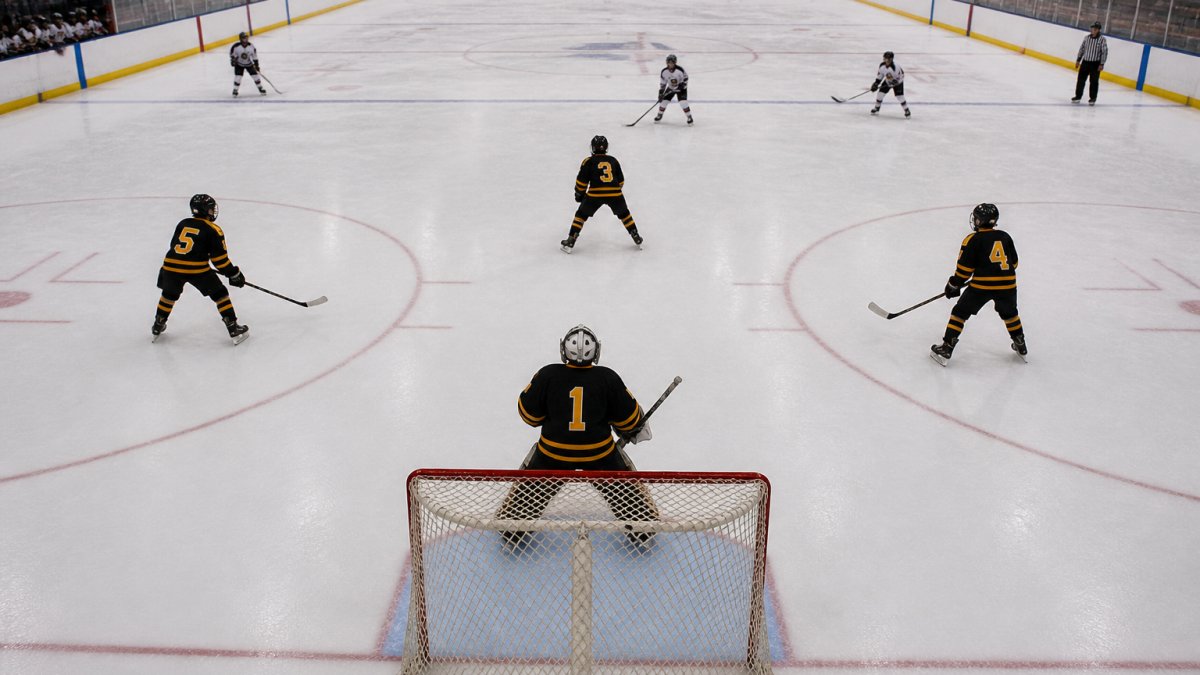
The box penalty kill works because it eliminates passing lanes and forces the power play to shoot from the outside. The middle of the ice, where the most dangerous chances happen, stays locked down.
Protecting the Middle of the Ice and Slot
The slot is where goals happen. It's the area directly in front of the net, roughly 15 feet wide and 10 feet deep.
The two forwards in the box sit low in the slot. Their job is simple: be there. Don't chase. Don't reach. Just occupy space.
This sounds easy but requires discipline. Young players see the puck move and want to follow it.
Common mistake: forwards drifting too high toward the blue line. This opens up the slot. Keep them low and in front of the net.
Forcing the Power Play to the Outside
The power play wants to move the puck into the middle. The box penalty kill doesn't allow it.
Outside shots are low-percentage chances. Most miss the net or go to the goaltender easily. This is why the box penalty kill is so effective, it doesn't try to stop every pass. It controls WHERE the puck can go.
The defensemen on the outside edges play a key role. They pressure the puck carrier just enough to force a bad pass or a rushed shot. Too much pressure and they overcommit.
Player Responsibilities and Coverage
Each player in the box penalty kill has one clear job. When everyone does their job, the system works.
The two forwards:
- Stay low in the slot
- Shift with the puck but don't chase
- Block passing lanes to the middle
- If the puck comes to the slot, pressure it immediately
The two defensemen:
- Cover the outside edges
- Pressure the puck carrier on the perimeter
- Prevent cross-ice passes
- Communicate constantly with forwards
The most important responsibility is communication. Defenders call out who has the puck. Forwards call out open areas. This constant chatter keeps everyone on the same page.
Young players often play in silence. Teach them to talk. "Puck left! Shift! Pass!" Simple calls prevent confusion and keep the box tight.
Box vs Diamond Penalty Kill: Which System Fits Your Youth Team
Youth teams have a choice: box or diamond. Both work. The difference comes down to your team's skill level and what you're trying to teach.
When the Box Works Best
The box penalty kill works best for teams that:
- Have solid skaters but limited hockey IQ
- Play in leagues with younger, less skilled power plays
- Want a simple system that's easy to teach
- Need to build confidence quickly
The box is forgiving. If one player makes a small mistake, the system still works. The other three cover for them. This makes it ideal for youth teams learning the game.
The box also teaches positioning and structure. Young players see exactly where to stand. They don't have to think as much. They just execute.
When to Consider the Diamond Instead
The diamond penalty kill uses a different shape: one forward high, two forwards low, one defenseman deep. It's more flexible than the box but harder to teach.
Consider the diamond if:
- Your team faces highly skilled power plays
- Players have advanced skating and hockey IQ
- You want more aggressive puck pressure
- You're preparing for competitive travel hockey
The diamond requires more communication and adjustment. It's not a set-and-forget system like the box. Players need to think and react more.
For most youth teams, start with the box. Move to the diamond later when players are ready.
Passive Box Penalty Kill: A Safer Approach for Younger Players
The passive box penalty kill is a softer version designed for young players who aren't ready for aggressive pressure.
This approach reduces collisions and keeps the game safer. It also teaches positioning without the complexity of pressure timing.
Passive box works well for:
- Players under 10 years old
- Beginner-level competitive leagues
- Teams still learning basic positioning
- Situations where injury prevention is the priority
The trade-off: passive box allows more shots. The power play gets more scoring chances. But the chances are still from low-percentage areas. Most miss or go wide.
As players age and develop, transition from passive to active box. Active box adds pressure and forces turnovers. Passive box teaches the foundation.
Penalty Kill Drills for Youth Hockey: Teaching the System
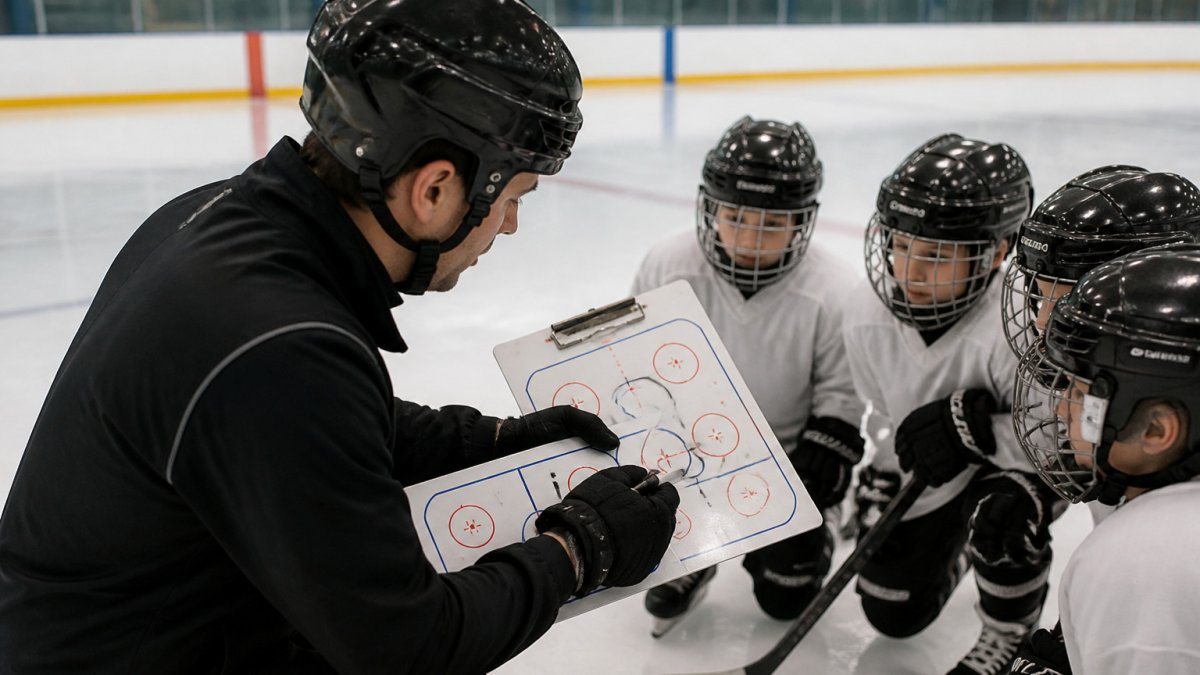
Teaching the box penalty kill requires drills that build the skills step by step. Start simple. Add complexity over time.
Foundational Drills for Beginners
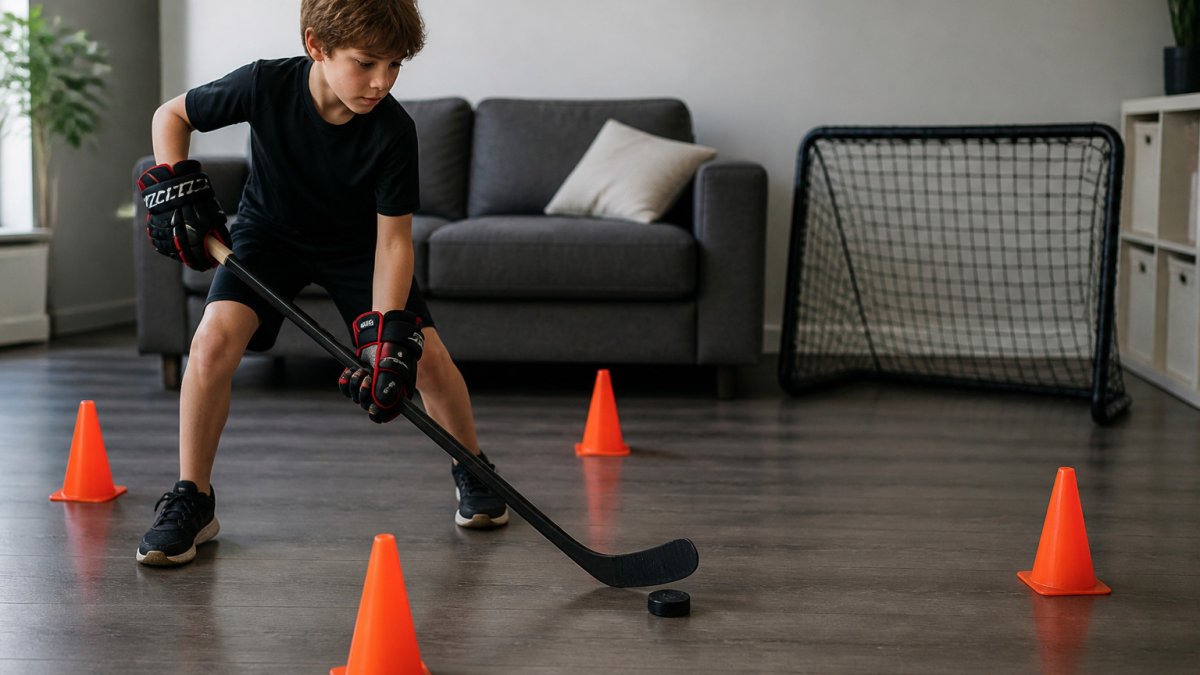
Positioning Drill (5 minutes): Place four players on the ice with no puck. Have them stand in a box shape.
Puck Movement Drill (10 minutes): Add a puck. Have the power play move it around the perimeter. The box just shifts and reacts. No pressure.
Pass Pressure Drill (10 minutes): Power play tries to pass into the middle. Box defenders block passing lanes.
Live Scrimmage (15 minutes): Full power play versus box. No restrictions. Let them play. Watch for positioning errors and address them after.
Repeat these drills twice per week. Consistency builds muscle memory.
Common Youth Mistakes and How to Correct Them
Mistake 1: Forwards drift too high. Correction: Mark the slot area with cones. Forwards must stay inside the cones.
Mistake 2: Defensemen overcommit to pressure. Correction: Use the "two-step rule." Defensemen take two steps to pressure, then hold position.
Mistake 3: Players chase the puck instead of shifting. Correction: Call out "Shift! Shift! Shift!" during drills.
Mistake 4: No communication. Correction: Require players to call out every puck movement. "Puck left! Shift!
Mistake 5: Box gets too spread out. Correction: Measure the distance between players. Box should be 15-20 feet wide.
Pros and Cons of the Box Penalty Kill for Youth Teams
The box penalty kill has clear advantages and real limitations. Understanding both helps you decide if it's right for your team.
Pros:
- Simple to teach and understand visually
- Protects the most dangerous scoring areas
- Forgiving system when players make mistakes
- Builds positional awareness and communication
- Works against most youth power plays
- Scales from beginner to competitive levels
Cons:
- Allows more perimeter shots than other systems
- Requires discipline and patience from young players
- Can feel passive if not taught correctly
- Less effective against highly skilled power plays
- Doesn't teach aggressive puck pressure early
- Needs constant communication or it breaks down
For youth hockey, the pros outweigh the cons, which is why is the box penalty kill good for youth as the right starting point for most teams. The box penalty kill is the right starting point for most teams. It builds the foundation. Later, players can learn more advanced systems.
Making the Box Penalty Kill Stick: From App to Game
Teaching the box penalty kill in practice is one thing. Getting players to use it in games is another.
Step 1: Teach on the ice first. Run the drills above repeatedly.
Step 2: Use visual tools. Hockey Positioning™ lets players interact with the box penalty kill on a mobile device. This visual learning reinforces what they learned on the ice.
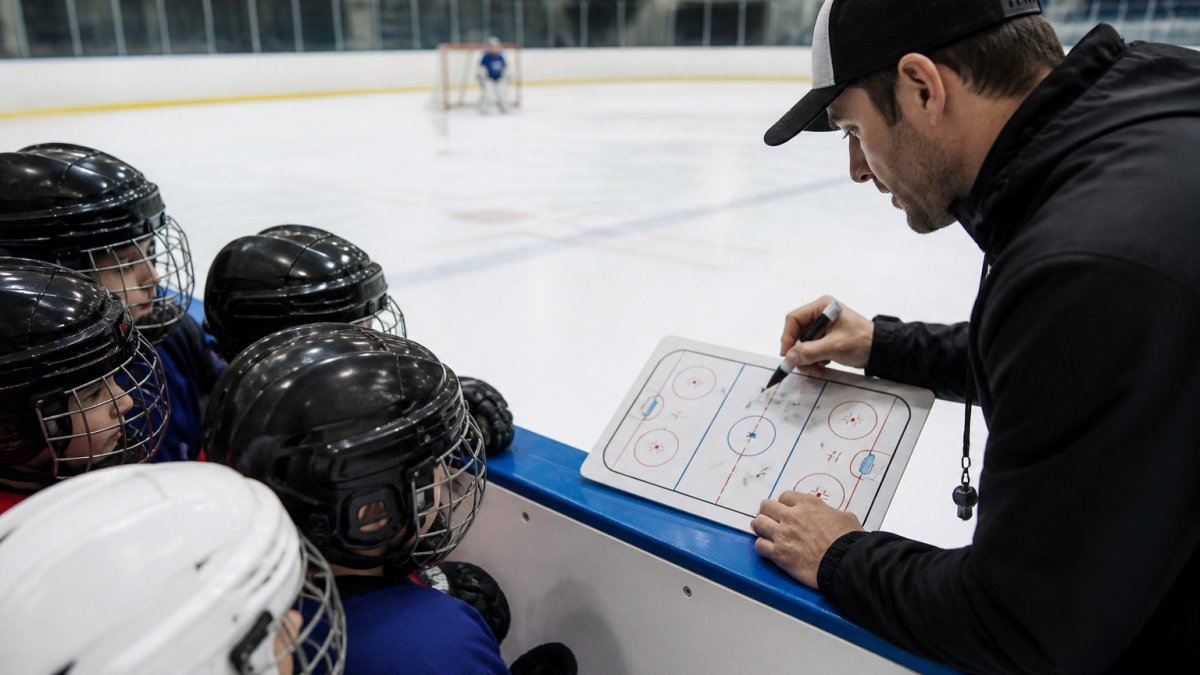
Step 3: Review game footage. After games, show clips of the box penalty kill.
Step 4: Practice penalty-kill situations. Run 5-on-4 drills in practice. Make it competitive. Keep score.
Step 5: Build confidence. Early in the season, use the box penalty kill even when down 5-on-4.
The goal is automatic execution. By mid-season, players should run the box penalty kill without thinking.
| Teaching Stage | Focus | Duration | Success Indicator |
|---|---|---|---|
| Foundation | Box shape and positioning | 2 weeks | Players hold positions without chasing |
| Pressure | Adding puck pressure | 2 weeks | Players pressure correctly without overcommitting |
| Communication | Calling out plays and shifts | 1 week | Constant communication during drills |
| Game Readiness | Live scrimmages and situations | 2 weeks | Successful penalty kills in practice games |
| Game Application | Full implementation in games | Ongoing | Consistent execution under game pressure |
Frequently Asked Questions
Is the box penalty kill effective for youth hockey?
Yes, the box penalty kill is highly effective for youth hockey when taught correctly. It simplifies defensive positioning by organizing four players into a compact square shape that protects the middle of the ice and slot, the most dangerous scoring areas. Youth players benefit from the clear structure and reduced decision-making, which helps them focus on communication, puck pressure, and staying compact rather than chasing the puck. Success depends on consistent teaching, regular drills, and age-appropriate expectations for execution.
At what age should youth hockey players learn the box penalty kill?
Most youth players can begin learning basic box penalty-kill concepts around age 8-9 (U10 level), when they have developed foundational skating and positional awareness. Younger players (ages 5-7) benefit from simplified passive box principles, focusing on staying in a general defensive shape without complex assignments. Competitive or high-school players should have mastered the full box system and understand when to adapt it based on opponent movement and game situation.
What's the difference between box and diamond penalty-kill systems for youth?
The box penalty kill uses four defenders arranged in a square shape, protecting the middle and slot effectively against teams that move the puck side-to-side. The diamond formation stacks defenders vertically around the net and is better for teams with strong perimeter passing or when facing quick puck movement. The box is generally easier for youth teams to learn and execute consistently, while the diamond requires more communication and lateral positioning awareness. Choose based on your team's skill level and the penalty-kill challenges you face most often.
How do I teach the box penalty kill to young hockey players?
Start with stationary positioning drills where players learn their four positions without puck movement. Progress to drills with passive puck movement, then active forecheck pressure. Use visual learning tools like interactive apps to show positioning at every puck location, reducing confusion from complicated diagrams. Focus on communication, staying compact, and protecting the middle before emphasizing puck pressure. Practice regularly (2-3 times per week) and correct mistakes immediately so players build correct habits rather than reinforcing poor positioning.
What are common youth mistakes when learning the box penalty kill?
The most common mistake is overcommitting or chasing the puck, which breaks the compact shape and leaves gaps in the middle of the ice. Young players often fail to communicate, leading to coverage confusion and duplicate assignments. They may also stand too far apart, creating passing lanes the power-play unit can exploit. Many youth players don't understand when to pressure the puck versus when to hold their shape, causing them to abandon positioning too early. Addressing these through targeted drills and immediate feedback prevents bad habits from taking root.
The box penalty kill is good for youth hockey because it teaches the right lessons early. It's simple enough for beginners but effective enough for competitive teams. Start with the box. Build from there.
Hockey Positioning™ makes learning the box penalty kill faster and more visual. Instead of complicated diagrams, players drag the puck and see exactly where everyone moves. Download on the App Store and start teaching your team the positions that win games.