 how-to
How to Understand Simple Hockey Power Play Rules
Last Updated: October 28, 2026
Quick Summary
Power play rules say a team gets a man advantage when an opponent takes a penalty and must serve time in the penalty box. A standard minor penalty lasts two minutes and can end early if the other team scores. Major penalties last five minutes and are served in full.
- A minor penalty lasts two minutes and can end early if the other team scores.
- A double minor lasts four minutes, and only the first two minutes end on a goal.
- A major penalty lasts five minutes and is served in full regardless of goals.
- Misconduct penalties do not create a power play unless a minor or major is also assessed.
- Coincidental penalties leave both teams at equal strength, so no power play is created.
Table of Contents
- What a Power Play Is and How It Starts
- How Long a Power Play Lasts in Hockey
- Minor and Major Penalties in Hockey
- Power Play Positions and Player Movement
- Offside, Icing and Other Rules During a Power Play
- Power Play vs Penalty Kill: Two Sides of the Same Call
- Practising Power Play Positioning Step by Step
- Learning Power Play Positioning on Your Own Time
- Frequently Asked Questions
What a Power Play Is and How It Starts
A power play happens when one team has more players on the ice than the other because a player has been sent to the penalty box, and understanding the power play rules is the first step for any new fan.
Power plays start when the referee calls a penalty against a player. That player must serve time in the penalty box. Their team then plays shorthanded until the time ends or a goal is scored. A common mistake for new fans is thinking the penalty ends the moment the whistle blows.
Here are the basic steps of how a power play starts:
- The referee blows the whistle and signals the penalty.
- The penalized player skates to the penalty box.
- The opposing team gets the extra skater on the ice.
- The power play begins right away.
How Long a Power Play Lasts in Hockey
A standard minor penalty lasts two minutes. That means the team with the extra player has two minutes to try to score. If the other team scores during that time, the penalty can end early.
Some penalties last longer. A major penalty is five minutes, and the player usually stays in the box for the full time. A double minor is four minutes.
Many coaches find that short power plays are the most common. Teams often try to score quickly in the first minute, before the other team settles in.
Minor and Major Penalties in Hockey
Not every penalty creates a power play. The type of call, how many players are involved, and when the whistle happens all change the manpower math. This is the part most tactical guides skip, and it is the part beginners ask about first.
Minor penalties: the standard two-minute advantage
A minor penalty is the most common call in hockey. Examples include tripping, holding, hooking, slashing, and high-sticking (when no injury results). The penalized player serves two minutes in the penalty box, and their team plays shorthanded. The power play ends early if the other team scores.
A double minor is two stacked minor penalties served back-to-back, usually four minutes total. A common example is high-sticking that draws blood. The key difference from a major: if the power-play team scores during the first two minutes, the remaining two minutes are wiped out.
Major penalties: five minutes, full sentence
A major penalty is five minutes and is served in full regardless of how many goals are scored. Fighting is the classic example, and boarding or checking from behind can be majors depending on the league. Because the penalty does not end on a goal, a major can produce multiple power-play goals on the same call, which is why coaches treat it as a completely different situation from a minor.
A misconduct penalty (often 10 minutes) does not create a power play by itself. The player is removed from the game for that duration, but their team does not play shorthanded unless a minor or major is assessed on the same play.
Coincidental penalties: equal strength, no advantage
When both teams take penalties on the same play, the penalties are often coincidental. Both players go to the box, and the teams play at equal strength, usually 4-on-4, or 3-on-3 if multiple penalties stack. No power play is created because neither team has an extra skater.
A quick reference:
- Minor penalty: 2 minutes, ends early on a power-play goal
- Double minor: 4 minutes, first half ends on a goal, second half does not
- Major penalty: 5 minutes, served in full regardless of goals
- Misconduct: 10 minutes, no automatic shorthanded situation
- Coincidental minors: equal strength, no power play
Delayed penalties: why the whistle waits
Referees often raise an arm to signal a delayed penalty but do not blow the whistle until the offending team touches the puck. During that delay, the non-offending team can pull its goalie for an extra attacker, creating a 6-on-5 situation, because play stops the moment the penalized team gains possession. If the non-offending team scores during the delay, the goal counts and the minor penalty is wiped out. This is a common source of confusion for new fans who see a goalie skate to the bench before any whistle.
Penalty shots: no power play at all
A penalty shot is awarded for certain infractions on a breakaway, such as a player being hooked from behind with a clear scoring chance. The result is a one-on-one shot against the goalie instead of a two-minute power play. No penalty time is served on a successful penalty shot; on an unsuccessful one, the minor penalty is typically still served. Beginners often assume every penalty leads to a man advantage, penalty shots are the main exception.
Multiple and stacked penalties
When one team takes two penalties on the same play, the second penalty usually does not start until the first expires. The teams play 5-on-3 for the overlap only if the penalties are staggered. If a team takes three penalties, the third is held in reserve and begins when the first one ends. The practical rule: a team can be shorthanded by a maximum of two skaters at even strength (5-on-3), regardless of how many penalties are called.
League and age-group variation
Penalty lengths and rules vary by league. Youth and recreational leagues often use shorter minor penalties (sometimes one minute) and may not permit body checking or fighting. International rules under the IIHF and NCAA rules also differ from NHL rules in specific areas such as major-penalty review and coincidental-penalty handling. Check your league's rulebook before the season, the two-minute minor is standard, but it is not universal.
The length and effect of each penalty type decide how long a power play lasts, as summarised below.
| Penalty | Length | Power play effect |
|---|---|---|
| Minor penalty | 2 minutes | Ends early if the other team scores |
| Double minor | 4 minutes | First 2 minutes end on a goal; last 2 do not |
| Major penalty | 5 minutes | Served in full regardless of goals |
| Misconduct | 10 minutes | No automatic shorthanded situation |
| Coincidental minors | Equal penalties | Equal strength, no power play |
Power Play Positions and Player Movement
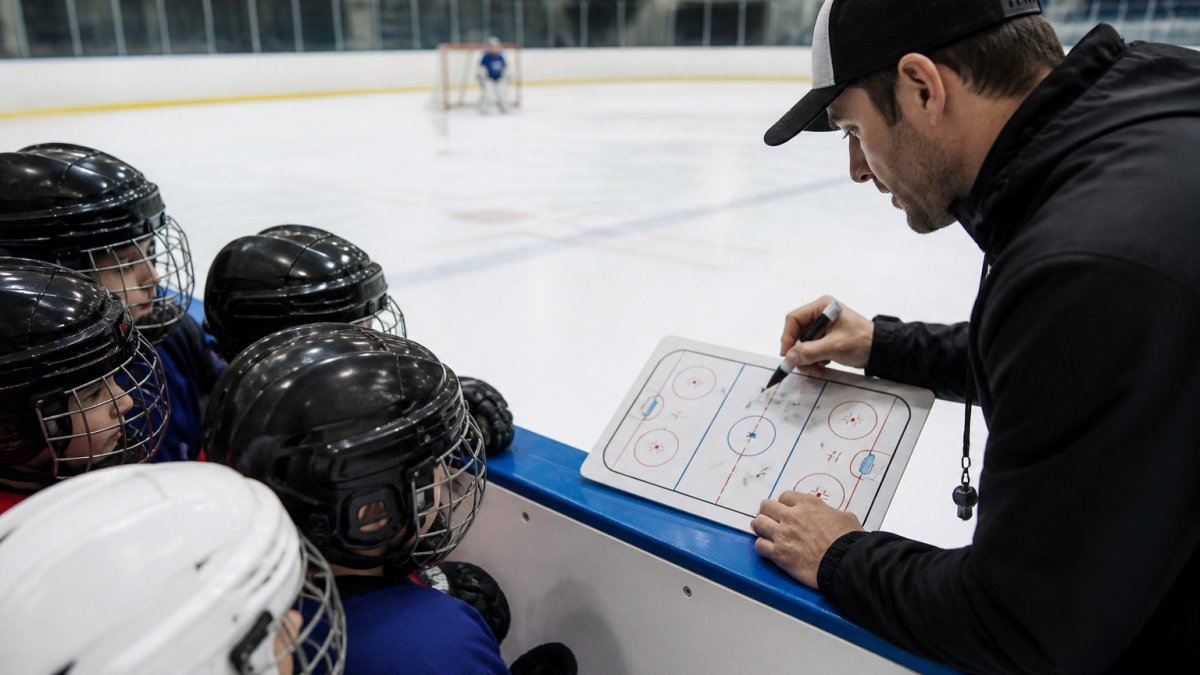
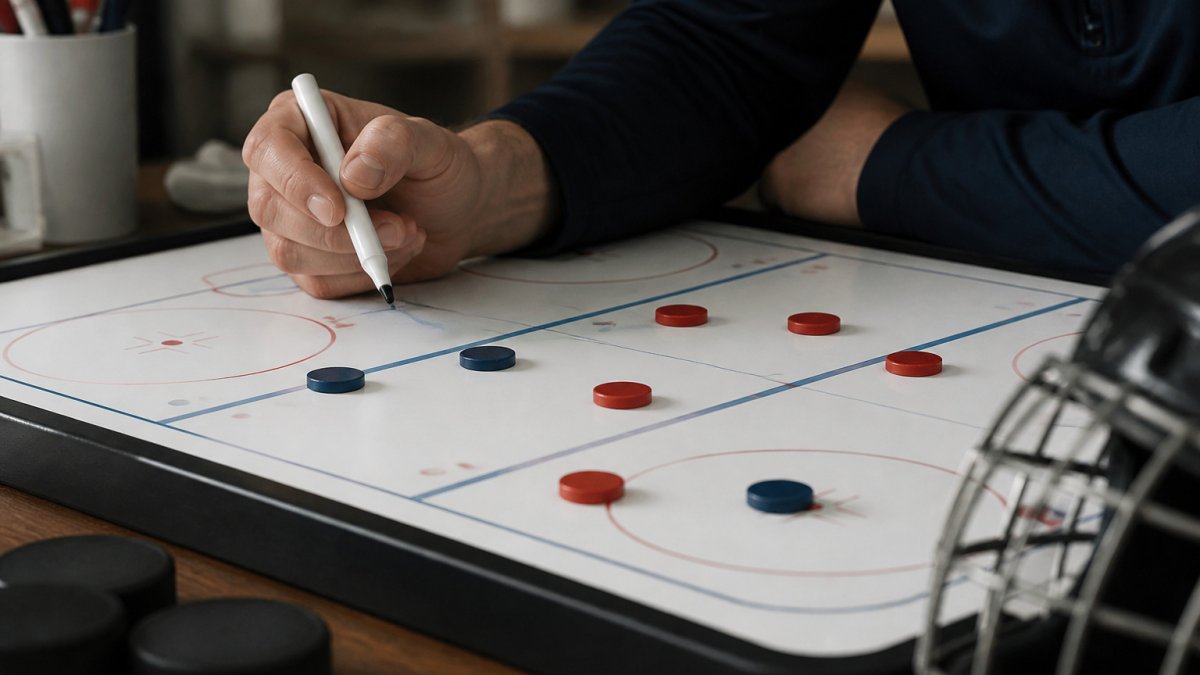
Under the power play rules, the team with the extra player usually uses five skaters at once. Most teams set up in a shape that gives them room to pass and shoot. Common formations include the 1-3-1 and the umbrella. Each one spreads players across the offensive zone so the defenders have to cover a lot of ground.
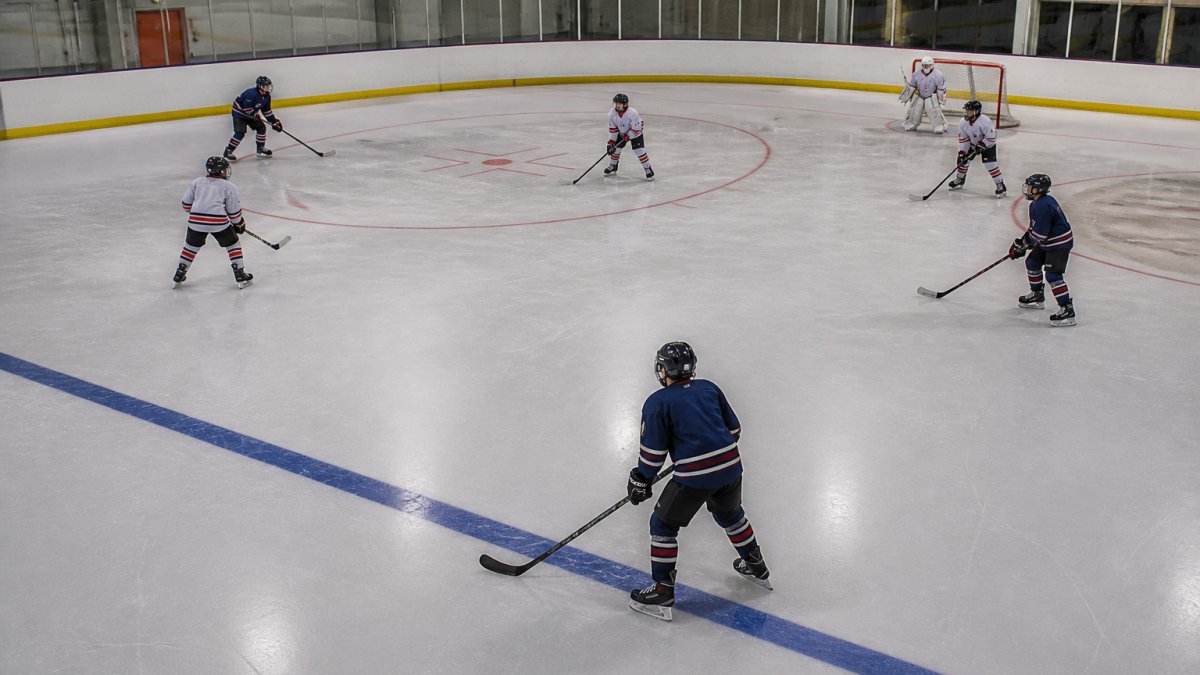
Player movement is the key to a strong power play. Players should keep moving, pass the puck quickly, and return to their starting spots after each play. If everyone stands still, the defense has an easy time.
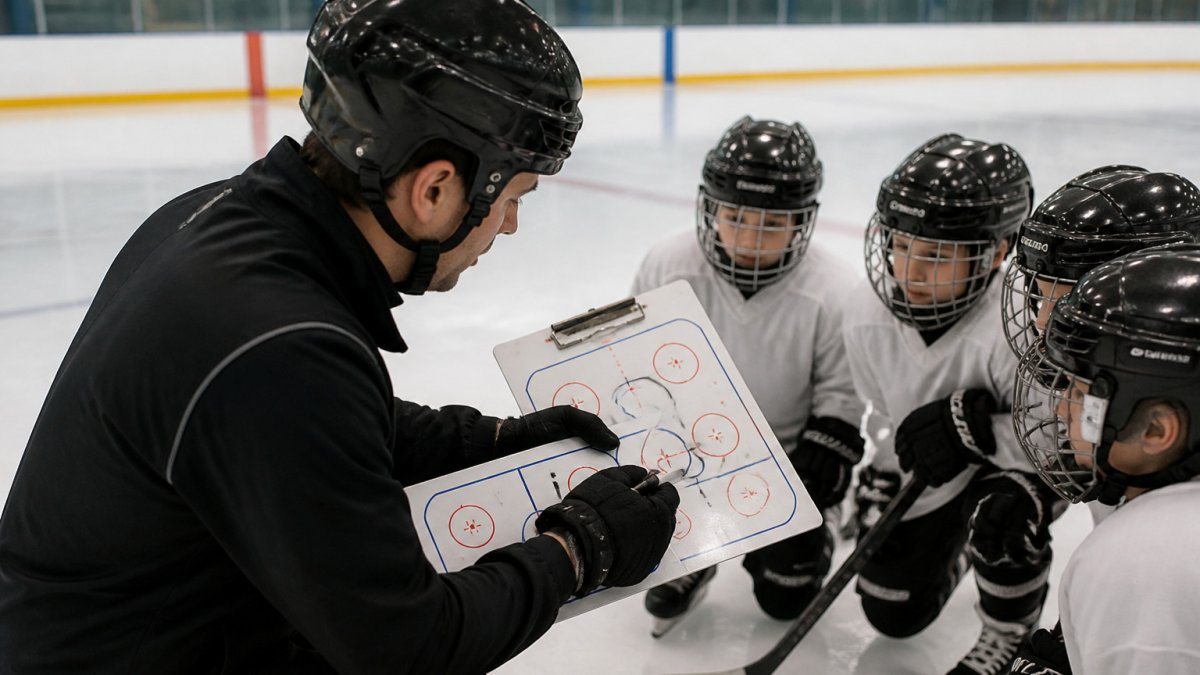
Young players often chase the puck instead of holding their spot. Teaching them to stay in position is one of the most effective things a coach can do.
!Young hockey players in full gear skating into position on an indoor rink during a practice, one player near the blue line and others spaced around the faceoff circle
Offside, Icing and Other Rules During a Power Play
The normal rules still apply during a power play. Offside and icing can stop play just like they do at even strength. A player who crosses the blue line before the puck is offside, and the play stops.
Icing happens when a player shoots the puck from their own side of center ice, across the other team's goal line, without anyone touching it. The play stops.
Youth and recreational leagues can have different rules. Some may use shorter penalties or no body checking. Check your league's rulebook before the season starts.
Power Play vs Penalty Kill: Two Sides of the Same Call
A power play and a penalty kill are two sides of the same penalty. One team tries to score with the extra player. The other team tries to stop them and avoid a goal.
Penalty kill players focus on blocking shots, clearing the puck, and staying in their lanes. Power play players focus on passing, moving, and getting open. Coaches who understand both sides usually build better teams.
For more on the penalty side of the game, read our Hockey Penalty Kill Positioning for Kids guide. You can also see how coaches teach these systems in our Teach Hockey Positioning: A 2026 Coach's Guide.
Practising Power Play Positioning Step by Step
Practice makes the power play work. Start with a simple setup: five players, one puck, and a clear goal. Walk through each position before adding speed. Then run the play at full speed.
Here is a simple way to practise at home or at the rink:
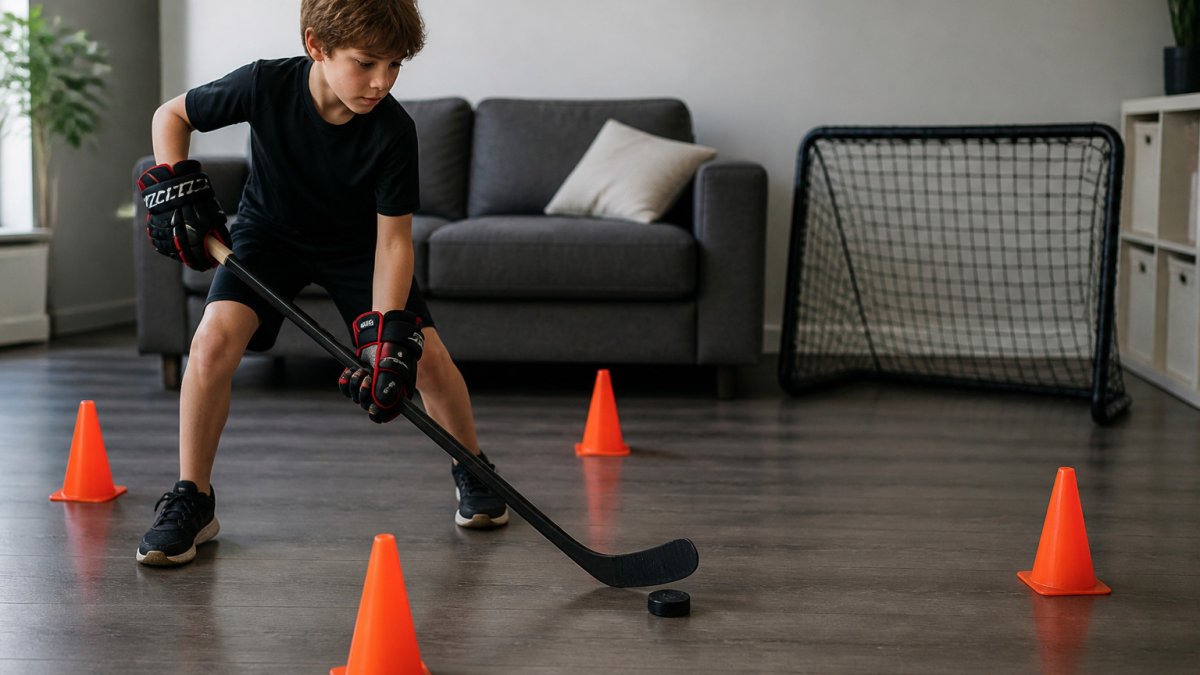
- Mark five spots on the ice or floor with cones.
- Place one player in each spot.
- Pass the puck around and move to the next open spot.
- Return to your starting spot after every play.
- Add a defender once the movement feels natural.
Drills make this easier to repeat. For a full set of exercises, see our Hockey Drills: A 2026 Guide for Coaches and Players. If you want a quick start for beginners, our Hockey Power Play Positioning for Kids: A Step-by-Step Guide walks through each step.
Learning Power Play Positioning on Your Own Time
You do not need to wait for practice to learn power play positions. Watching games, reading guides, and running drills at home all help. Short sessions often work better than long ones.
Interactive tools can also help. Hockey Positioning™ is an app that shows players where to stand in each game situation, including power plays and penalty kills.
If you are just getting started, our Learn Hockey Positions Faster: A Beginner's Guide is a good next read.
Frequently Asked Questions
What is a power play in hockey?
A power play happens when one team has more skaters on the ice than the other because a player from the opposing team has been sent to the penalty box. The team with the extra skater has the man advantage. Most games use five skaters plus a goalie per side, so a power play typically means five skaters against four. The advantage lasts only for the length of the penalty, and the team with the extra player tries to create a scoring chance before the penalty expires.
How long does a hockey power play last?
A minor penalty lasts two minutes, so the power play lasts two minutes unless the team with the extra skater scores. A major penalty lasts five minutes. If the penalized team gives up a goal during a minor penalty, the penalty ends early, and the power play ends with it. Coincidental penalties, where both teams take penalties at once, cancel out the man advantage.
What is the difference between a power play and a penalty kill?
The power play is the team with the extra skater, which is trying to score. The penalty kill is the team playing shorthanded, which is trying to prevent a goal until the penalty expires. Both situations come from the same penalty, so one team's power play is always the other team's penalty kill. Penalty-kill players often focus on blocking shots, clearing the puck and staying in tight passing lanes.
Can a team score while shorthanded?
Yes. A team on the penalty kill can score a shorthanded goal, which is often called a short-handed goal. This can happen when the penalized team's players are out of position or when a penalty-killing forward breaks away with the puck. A shorthanded goal can end the power play immediately, and it can change the momentum of a game.
Hockey Positioning™ is programmed by hockey professionals and designed for players ages 5 to 13 and adults new to hockey. Download on the App Store to start learning positioning on your own time.