 how-to
Hockey Power Play Positioning for Kids: A Step-by-Step Guide
Table of Contents
- What Is Power Play Positioning in Youth Hockey?
- The Five Core Power Play Positions Explained
- The Umbrella and Overload Formations for Kids
- Youth Hockey Power Play Drills to Build Muscle Memory
- Improve Hockey IQ at Home With Interactive Learning
- Common Positioning Mistakes Kids Make (And How to Fix Them)
- Odd-Man Rush Scenarios and Offensive Zone Entry
- Frequently Asked Questions
Last Updated: October 4, 2026
What Is Power Play Positioning in Youth Hockey?
Hockey power play positioning for kids teaches how players arrange themselves on the ice when their team has more skaters than the other team. When a player commits a penalty, the opposing team gets a man advantage.
This matters more than speed or fancy skating. A young player who understands positioning will score more goals than a faster player who chases the puck randomly. The difference is simple: one player knows where to be, and the other doesn't.
Why Positioning Matters More Than Speed
Young players often chase the puck. They skate hard but end up in the wrong spot. Meanwhile, a smart player who's slower might be standing exactly where the puck comes next.
Positioning teaches players to think ahead. Instead of reacting, they predict. This builds hockey IQ at home and on the ice. When kids understand hockey power play positioning for kids, they stop looking lost. They move with purpose.
How the Man Advantage Works
A power play happens when the other team has fewer players on the ice. Your team has 5 skaters versus their 4, or 4 versus 3. This extra player creates space and passing lanes.
The goal is simple: use that advantage to score. But it only works if players know where to stand. Without positioning, the extra player becomes useless. With it, that player becomes unstoppable.
The Five Core Power Play Positions Explained
Every power play needs five players in specific spots. Each position has a job. Each job supports the others. When all five work together, scoring chances appear naturally.
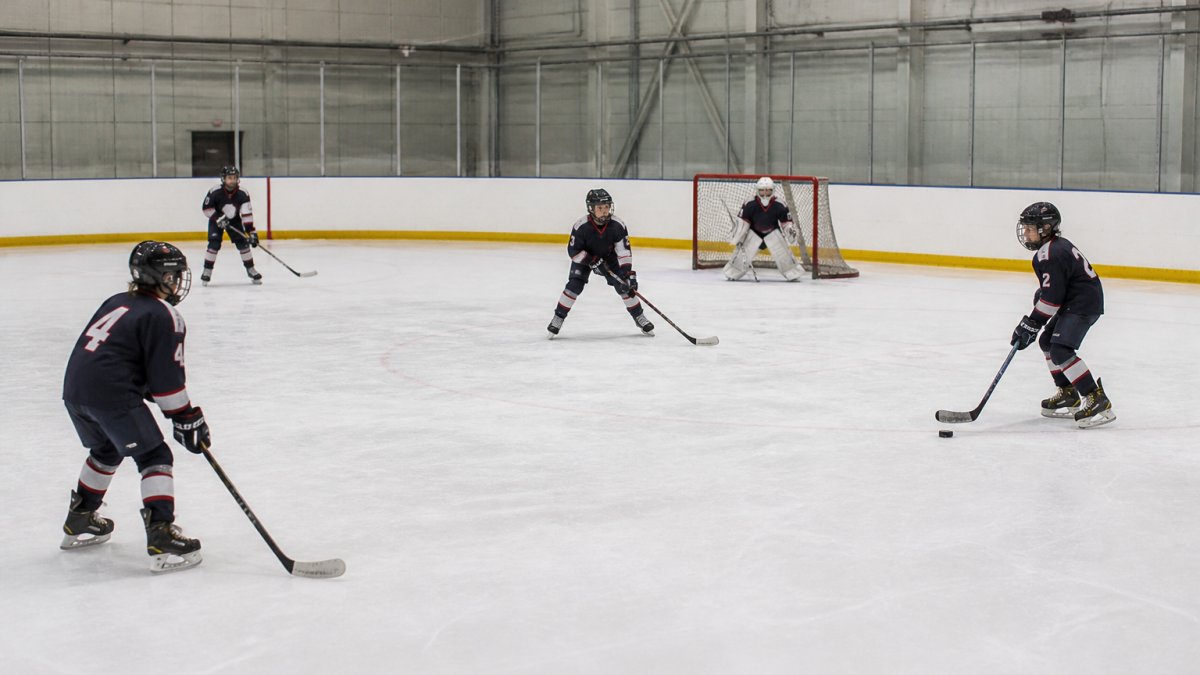
Point Players: The Defensive Foundation
Point players are the two defenders at the blue line. They control the puck entry and start the offense from deep ice.
Point players must understand gap control. They stay wide and keep the puck in the offensive zone. When the puck moves down, they support from behind. They rarely shoot.
Young players often rush forward from the point. This loses the zone. A good point player stays patient and waits for the right moment to join the attack.
Half-Wall Players: The Passing Hub
Half-wall players stand on the sides of the ice, about 15 feet from the goal line. They receive passes from the point and create passing lanes.
Half-wall players must have good puck control. They catch passes and move the puck quickly. They support the puck carrier and create space for teammates.
These players need to understand puck support. When a teammate has the puck, the half-wall player moves to offer a passing option. This keeps the puck moving and frustrates the defense.
Slot Presence: The Scoring Threat
The slot is the area directly in front of the net. This is where goals happen. The player in the slot waits for a pass and shoots immediately.
Slot players must be ready to score at any moment. They stand still or move slightly to stay open. They watch the puck and react fast.
Young players often move too much in the slot. They should stay quiet and ready. Moving around gives the defense time to react. Staying still and ready to shoot creates scoring chances.
The Umbrella and Overload Formations for Kids
Two main formations dominate youth power plays: the umbrella and the overload. Each has strengths. Coaches choose based on the opponent's defense.
Setting Up the Umbrella Formation
The umbrella formation spreads players across the top of the zone in a wide arc. The two point players are wide.
This formation creates passing lanes everywhere. The puck moves quickly from point to half-wall to slot. The defense must react constantly.
To set up the umbrella, start with both point players at the blue line, wide on each side. Half-wall players sit at the hash marks.
The umbrella works well against aggressive defenses that press forward. When the other team pushes up, the umbrella has space behind them.
Using the Overload Formation
The overload formation loads more players on one side of the ice. Instead of spreading five players evenly, four players bunch on one side.
This creates a numbers advantage on one side. Three attackers versus two defenders gives the offense a clear edge.
To set up the overload, put both point players on one side of the blue line. Add one half-wall player on that side.
The overload works against passive defenses that sit back. When defenders don't press, the offense can attack one side with numbers.
Youth Hockey Power Play Drills to Build Muscle Memory
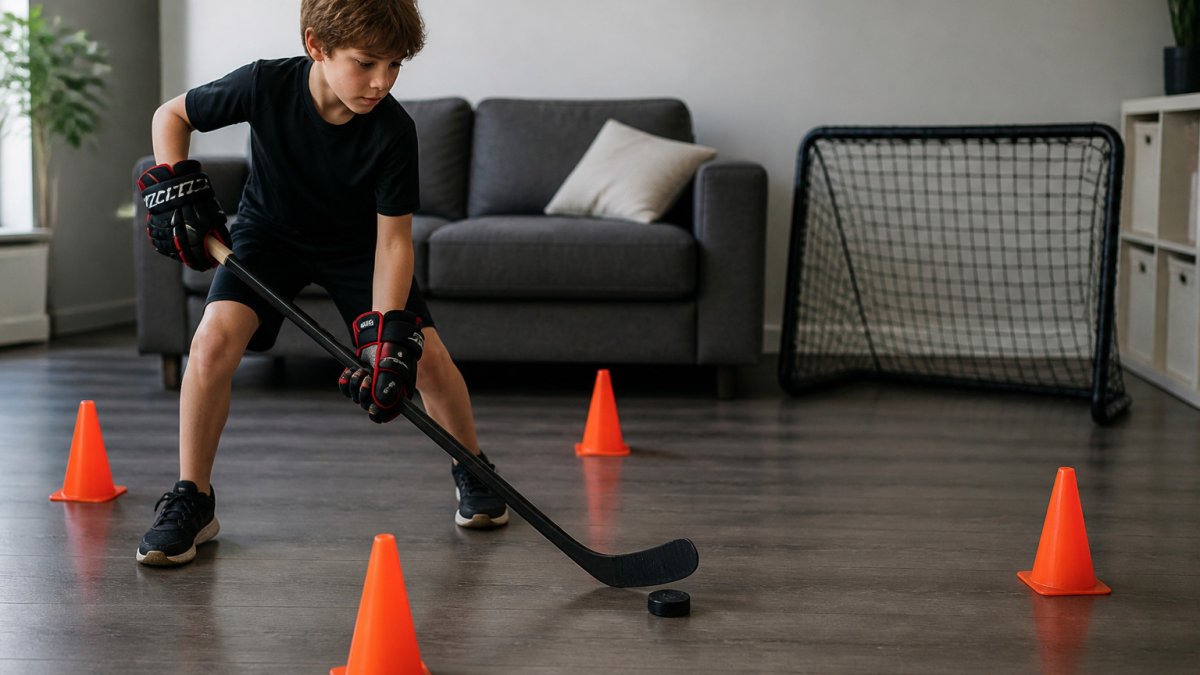
Drills teach positioning faster than games. Repetition builds muscle memory. Players stop thinking and start moving naturally.
Drill 1: Static Positioning and Gap Control
This drill teaches players where to stand. No puck movement yet. Just positioning.
Set up five players in the umbrella formation. Have them hold their spots for 30 seconds. Then call out a new formation.
This drill sounds boring, but it works. Players learn the ice layout. They understand spacing. When the puck enters, they already know where to go.
Coaches can add complexity. Call out positions randomly. "Point! Overload! Umbrella!" Players must move fast. This builds hockey IQ at home during off-ice drills too.
Drill 2: Puck Movement and Passing Lanes
Now add the puck. Start with one point player. They pass to a half-wall player. The half-wall player passes to the slot. The slot player shoots.
Do this drill from both sides. Players rotate positions. Everyone learns every spot.
Add one defender to make it harder. The offense must move the puck before the defender disrupts it. This teaches puck movement under pressure.
Drill 3: Small Area Games for Tactical Development
Small area games teach decision-making. Set up a 30-by-40-foot zone. Play 3-on-3 or 4-on-4. Limit touches to two before passing. No one-timers allowed.
These games force players to think. They can't just shoot. They must pass and move. They learn when to pass and when to hold the puck.
Small area games build spatial awareness. Players understand how far they can move before losing the puck. They learn positioning through play instead of instruction.
Improve Hockey IQ at Home With Interactive Learning
Young players can improve without ice time. Visual learning tools help. Interactive apps show what good positioning looks like.
Using Visual Tools to Understand Rink Geometry
Rink geometry matters. A full-size rink is 200 feet long and 85 feet wide (NHL receives ‘positive reports’ on Olympic rink progress).
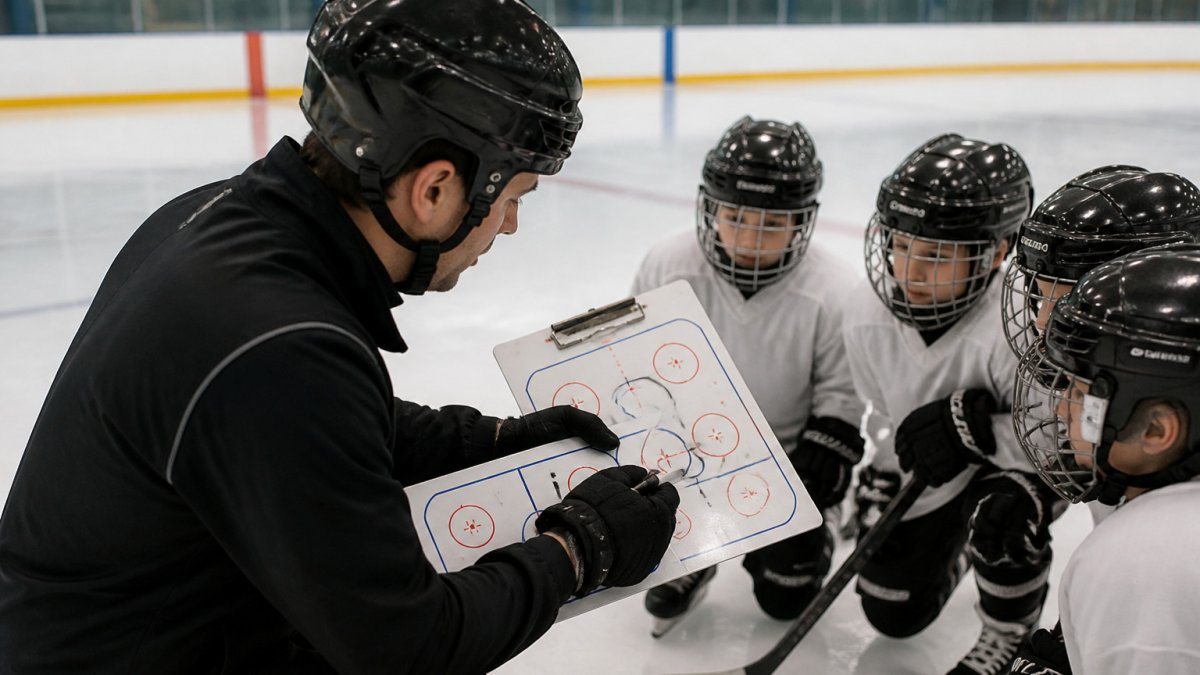
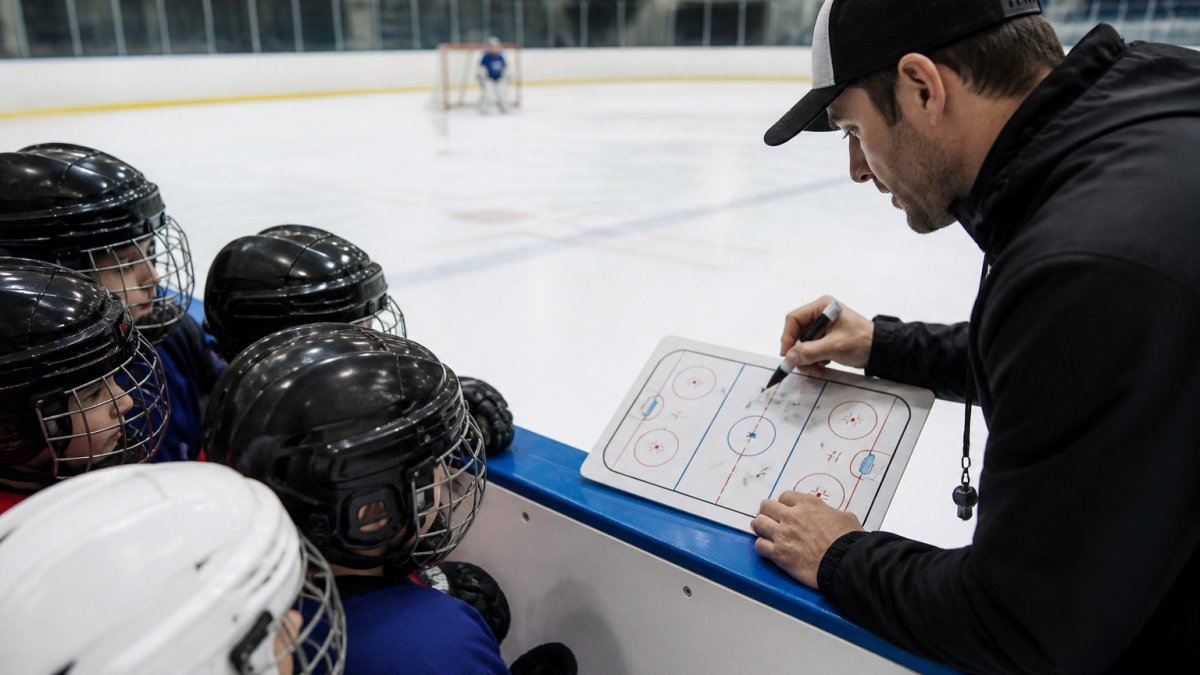
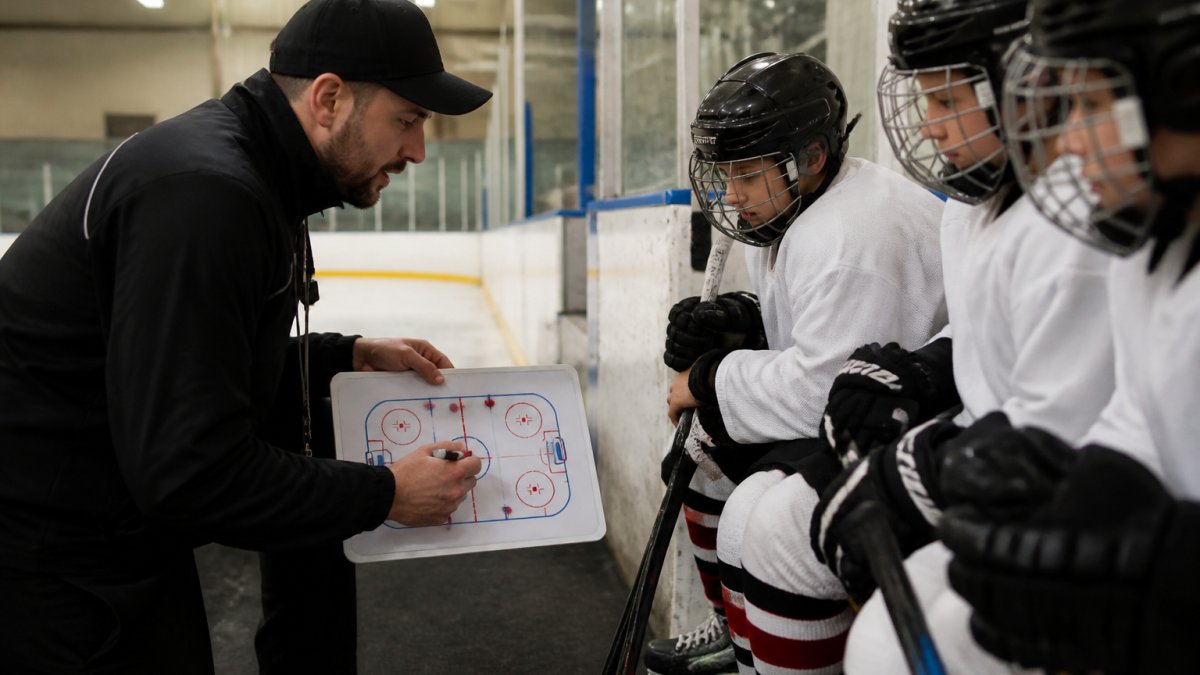
Show kids a diagram of the ice. Mark the blue line, red line, and goal line. Show where the slot is.
Better yet, use an interactive tool. Apps like Hockey Positioning™ let kids drag the puck across a virtual ice surface.
This visual learning sticks better than words. Kids understand rink geometry by seeing it repeatedly. They internalize spacing without thinking about it.
Role-Specific Responsibilities for Each Position
Each position has different jobs. Point players control the zone. Half-wall players move the puck. Slot players finish plays.
Teach each role separately. Show a video of a point player's job. Show how they move. Show what they do with the puck. Then show a half-wall player doing the same.
Kids understand their role faster when they see it clearly. They know what to do when the puck comes to them. They move with confidence instead of confusion.
Common Positioning Mistakes Kids Make (And How to Fix Them)
Young players make the same mistakes repeatedly. Knowing these mistakes helps coaches fix them fast.
Chasing the Puck Instead of Skating to Position
The biggest mistake: kids chase the puck. They skate toward wherever it is right now. This leaves their position empty.
The fix is simple. Teach kids to skate to where the puck will be, not where it is. This requires prediction. It requires understanding positioning.
Use drills to practice this. Call out puck locations. Have players skate to their correct position for that location. Do this without a puck first. Then add the puck.
Losing Spacing and Bunching Up
When kids get nervous, they bunch together. Three players end up in the same area. The defense covers all three easily.
Spacing is the answer. Players must stay apart. Wide spacing creates passing lanes. Tight spacing kills offense.
Use the umbrella formation to teach spacing. The wide arc forces players apart. Make spacing a rule. "Stay three sticks apart." Kids learn spacing through repetition.
Failing to Support the Puck Carrier
The puck carrier needs help. Without support, they get trapped. With support, they have passing options.
Support means positioning near the puck carrier but not too close. It means being ready to receive a pass. It means moving when the carrier needs space.
Teach kids to ask: "Where can my teammate pass?" If they can't answer, they're not supporting. Move closer or move to open ice. Give the puck carrier options.
Odd-Man Rush Scenarios and Offensive Zone Entry
Odd-man rushes happen fast. Players must make quick decisions. Understanding these situations prevents turnovers and creates goals.
2-on-1 Situations: Passing vs. Shooting
A 2-on-1 means two attackers and one defender. The attacker with the puck must decide: shoot or pass?
The rule is simple. If the defender commits to the puck carrier, pass. If the defender backs away, shoot. Young players often pass when they should shoot, or vice versa.
Teach this decision through drills. Set up 2-on-1 scenarios. Let kids practice both choices. They'll learn when each works.
3-on-2 Rushes: Spacing and Decision-Making
A 3-on-2 gives the offense more options. Three attackers versus two defenders. The offense should score, but only with good spacing.
Players must spread out. Two defenders can't cover three players spread across the ice.
Teach spacing first. Then teach decision-making. The puck carrier looks for the open player. Pass when someone is open.
Power play positioning teaches kids to think like hockey players. They stop chasing and start predicting.
At Hockey Positioning™, we've built tools that make this learning visual and interactive.
Frequently Asked Questions
What are the standard power play positions in youth hockey?
Youth power play typically uses five positions: two point players at the blue line controlling the defensive zone, two half-wall players near the boards managing puck movement, and one player in the slot ready to shoot. Point players focus on gap control and setting up plays. Half-wall players act as passing hubs between the point and slot. The slot player provides the primary scoring threat. These positions create spacing that lets your team move the puck quickly and find open shooting angles.
How can parents help kids improve their hockey IQ at home?
Parents can improve hockey IQ at home by using interactive visual tools that show positioning for different scenarios without needing complicated diagrams. Have your child trace puck movement across a full ice surface to see how players should reposition. Discuss role-specific responsibilities (what each position does during a power play). Watch games together and pause to identify formations like the umbrella or overload. Ask your child where they would position themselves if they were the point player or slot player. Repetition with visual feedback builds spatial awareness and tactical thinking.
What is the best power play formation for kids?
The umbrella formation works best for most youth teams because it's simple to teach and creates natural passing lanes. Two point players stay at the blue line, two half-wall players position near the boards, and one slot player moves between them. This spreads the defense and opens shooting angles. The overload formation (stacking players on one side) is useful when your team has a dominant playmaker, but requires more ice awareness. Start with the umbrella, then introduce overload once kids understand basic spacing and puck support.
What is the most common mistake kids make with power play positioning?
The biggest mistake is chasing the puck instead of skating to their assigned position. Young players follow the puck carrier, leaving gaps the defense can exploit. Teach kids that their job is to move to open space and support the puck carrier from distance. Use small area games where kids must stay in their zones and pass to open players. Emphasize that good positioning creates passing lanes and shooting opportunities, the puck finds the open player, not the other way around.