 how-to
Learn Hockey Positions Faster: A Beginner's Guide
Table of Contents
- Why Learning Hockey Positions Matters
- Hockey Positions for Beginners: The Five Core Roles
- Hockey Positioning Drills to Build Game Awareness
- How to Improve Hockey IQ Through Positioning
- Using Visual Hockey Strategy Tools to Learn Faster
- Position-Specific Learning Plans
- Common Positioning Mistakes to Avoid
- Accelerate Your Learning: Practical Next Steps
- Frequently Asked Questions
Last Updated: October 5, 2026
Why Learning Hockey Positions Matters
To learn hockey positions is the foundation of becoming a confident player. When you know where to be on the ice, you stop chasing the puck and start playing with purpose. This shift changes everything about your game.
Most young players struggle because they don't understand positioning. They chase the puck instead of moving to open space. They don't know what their teammates expect. They get caught out of position and feel lost.
Learning hockey positions faster means you can:
- Play with confidence instead of confusion
- Support your teammates effectively
- Anticipate plays before they happen
- Reduce mistakes and turnovers
- Enjoy the game more because you understand what's happening
The good news? Positioning is learnable. It's not a mystery or a talent you're born with. It's a skill you can develop with the right approach and practice. Our interactive app shows you exactly where players should be for every situation, turning complex strategy into something visual and easy to grasp.
Hockey Positions for Beginners: The Five Core Roles
Hockey has five main positions on the ice. Each role has different responsibilities. Understanding these five positions is your starting point.
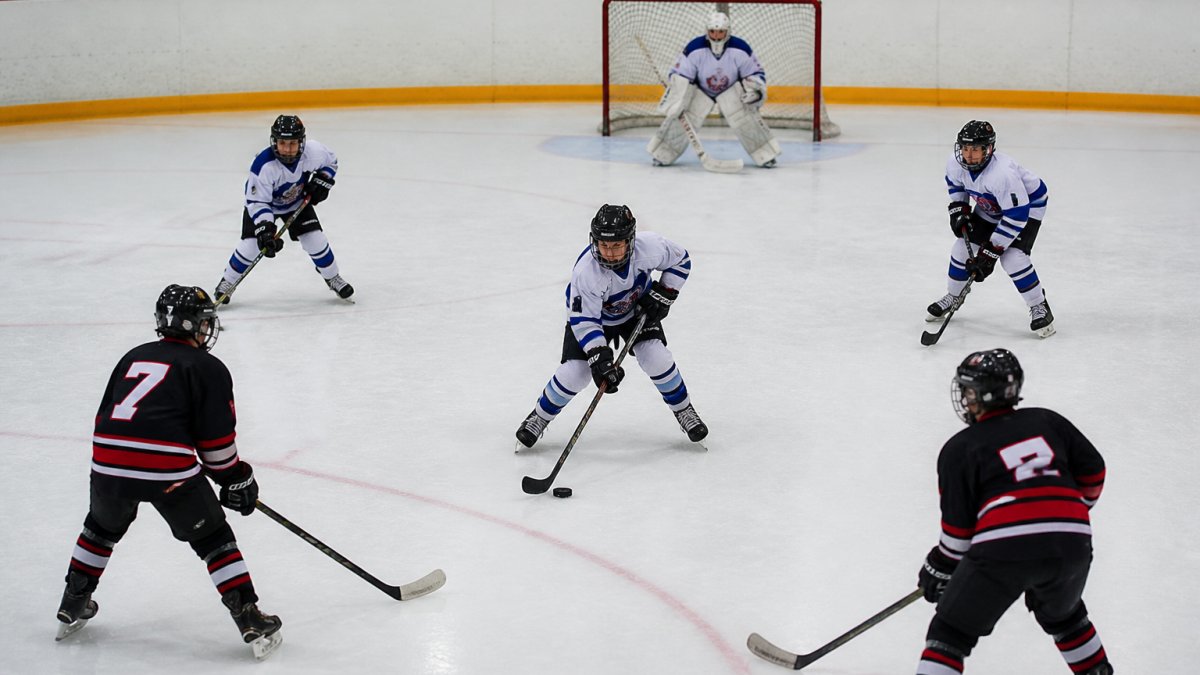
Center: The Playmaker
The center is the leader in the middle of the ice. This player controls the puck and directs the play. Centers take most of the face-offs and handle the puck more than anyone else.
Centers need strong hockey sense and good passing skills. They read the play and know when to shoot or pass. A good center creates scoring chances for teammates. They also play defense when the other team has the puck.
When you learn hockey positions as a forward, the center role teaches you how to think the game. You learn to anticipate what happens next. You develop the decision-making skills that separate good players from great ones.
Wings: The Scorers
Wings play on the left and right sides of the ice. Their main job is to score goals and create space. Wings are usually the fastest skaters on the team.
Wings need to find open ice and get into scoring position. They work with the center to create plays. They also backcheck hard when the other team attacks. A good wing knows when to shoot and when to pass.
The wing position teaches you how to use speed and positioning together. You learn to find space where defenders aren't. You practice making quick decisions under pressure.
Defensemen: The Protectors
Defensemen play in front of the goalie. Their job is to stop the other team from scoring. Defensemen are usually bigger and stronger players.
Defensemen need excellent positioning and body control. They use their body to block shots and take away passing lanes. They also start the breakout by passing to forwards. Good defensemen read the play and anticipate where the puck is going.
Learning the defenseman position teaches you gap control and defensive positioning. You understand how to protect your goalie. You learn to move your feet instead of using your body carelessly.
Goalie: The Last Line of Defense
The goalie is the most specialized position. This player wears special equipment and stays in the net. The goalie stops shots and controls the puck behind the net.
Goalies need quick reflexes and mental toughness. They communicate with defensemen and direct the play. They move side to side and stay ready for shots.
The goalie position is different from the others. It requires specific training and equipment. But understanding goalie positioning helps you understand the whole team's defense.
Hockey Positioning Drills to Build Game Awareness
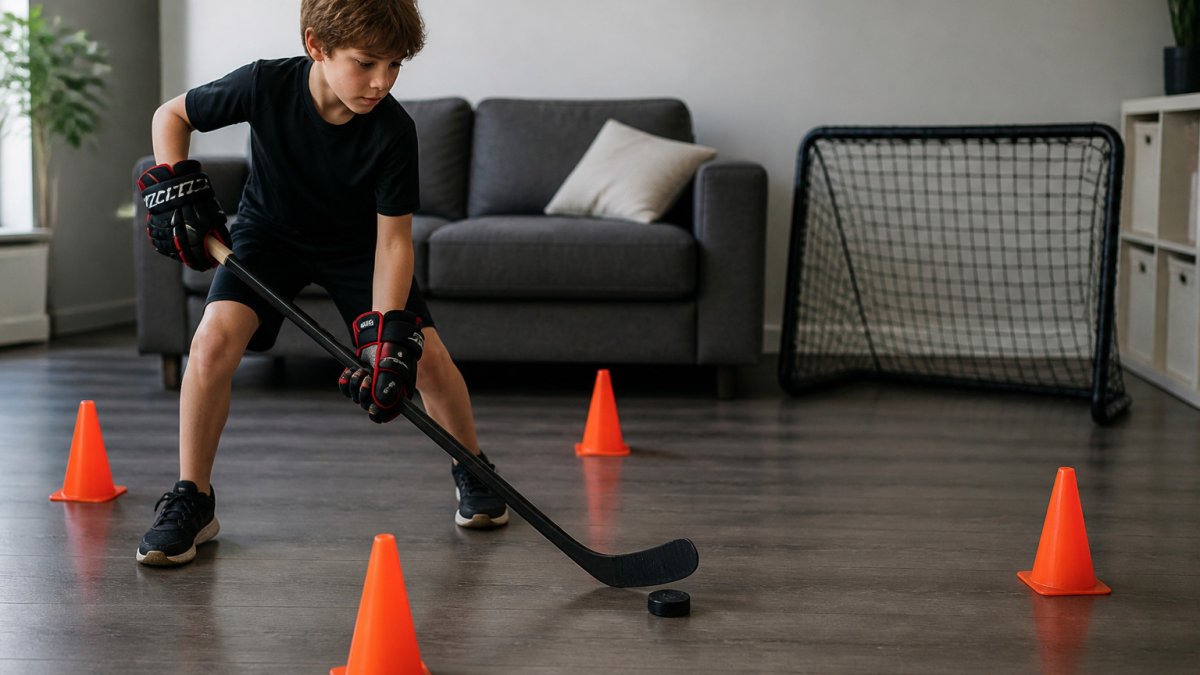
Drills teach you where to be and when to be there. The best positioning drills use small-area games and game situations.
Here are proven drills that build hockey IQ:
- 3-on-3 games in a small area, Forces quick decisions and positioning awareness
- Half-ice scrimmages, Teaches you to play in tight spaces where positioning matters most
- Passing patterns, Shows you how to support teammates and find passing options
- 1-on-1 battles, Teaches you body positioning and use in puck battles
- Board battles, Teaches you how to protect the puck and position your body correctly
- Game-situation drills, Practices specific scenarios like power plays and penalty kills
The key to these drills is repetition. You need to practice the same positions over and over. Your brain learns through repetition. Your body learns through muscle memory.
Many players make a mistake here. They do drills once and expect to improve. Real improvement comes from doing the same drill many times. This is where tools like Hockey Positioning™ help. Our interactive app lets you practice positioning scenarios unlimited times. You can drag the puck anywhere on the ice and see how all five players should move.
How to Improve Hockey IQ Through Positioning
Hockey IQ is your ability to read the play and make good decisions. Positioning is the foundation of hockey IQ.
Here's how positioning builds hockey IQ:
Read the play, When you know your position, you can watch the puck and your teammates. You anticipate what happens next. You see plays developing before they happen.
Anticipation, Good positioning teaches you to predict where the puck will go. You move to the right spot before the puck gets there.
Decision-making under pressure, When you're in the right position, you have time to think. You can make better passes and smarter plays.
Communication, Understanding positions helps you talk to teammates. You know what they're supposed to do.
To improve hockey IQ through positioning, practice game situations. Play small-area games where positioning matters. Watch game film and notice where good players position themselves.
The fastest way to improve is to see positioning in action. Our app shows you exactly where every player should be for every puck location.
Using Visual Hockey Strategy Tools to Learn Faster
Visual learning is powerful for hockey. When you see something, you understand it better than when someone explains it.
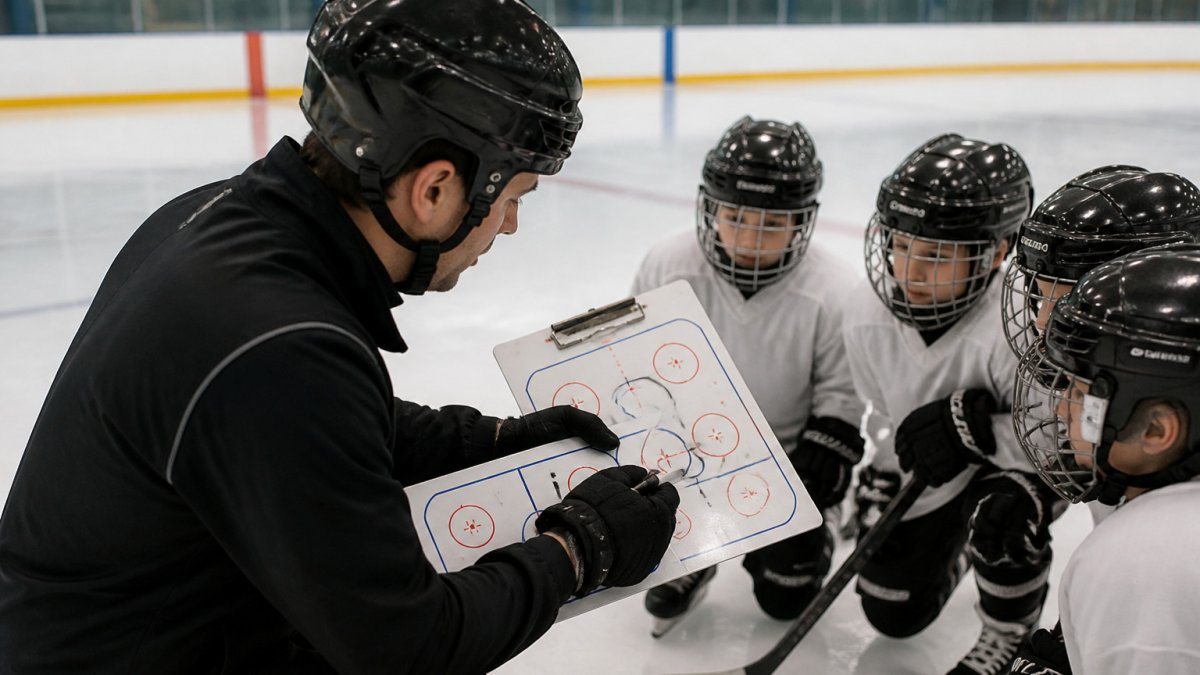
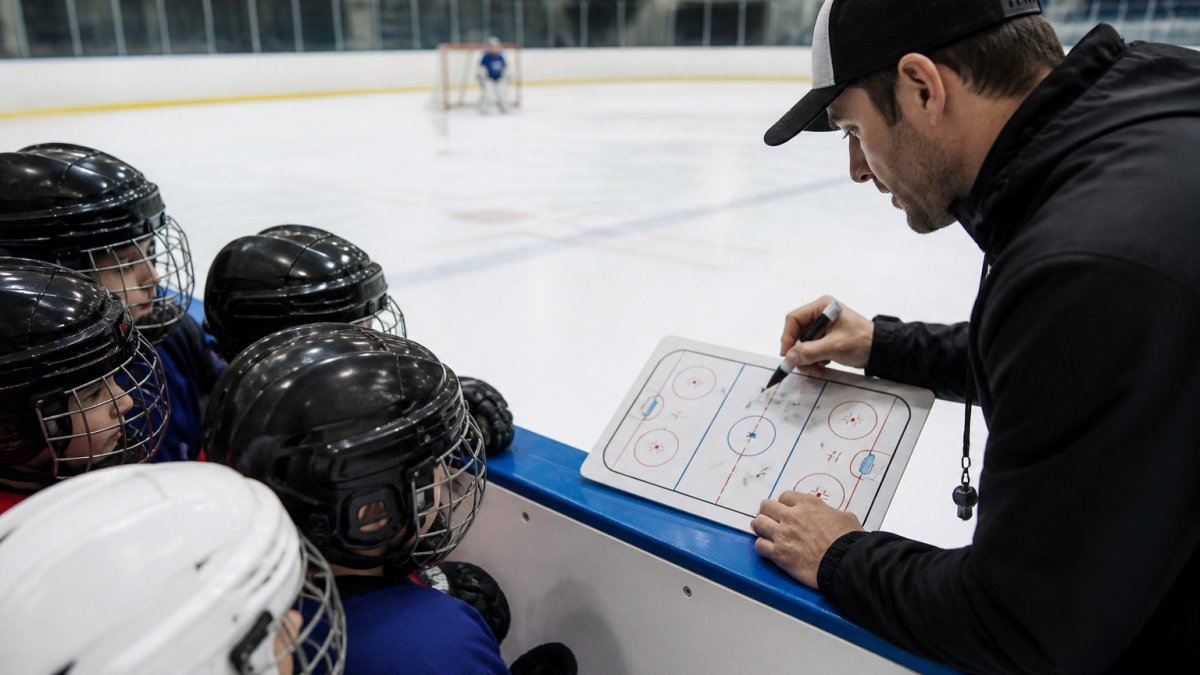
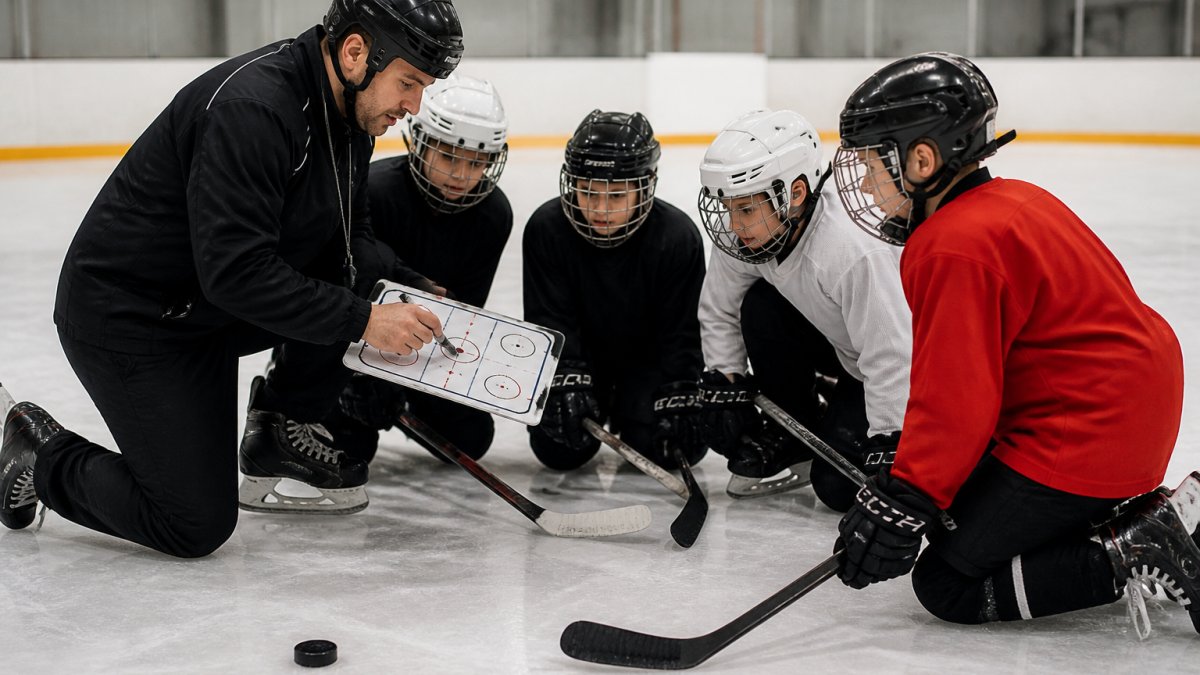
Traditional coaching uses whiteboards and diagrams. These are helpful but limited. You see a still picture. You have to imagine the movement.
Interactive visual tools are different. They show you movement and positioning together. You see what happens when the puck moves. You see how all five players adjust their positions instantly.
The best visual tools let you:
- Interact with the ice surface yourself
- See positions change as the puck moves
- Practice different scenarios unlimited times
- Get instant feedback on your understanding
- Learn at your own pace
Hockey Positioning™ is built on this principle. You drag the puck anywhere on the ice. The app instantly shows you where all five players should be. You see the defensive gaps.
This visual approach works because your brain learns when you see movement. You understand positioning principles instead of just memorizing positions. This deeper understanding transfers to the ice.
Position-Specific Learning Plans
Different positions require different skills. A learning plan should focus on what matters most for your role.
Forward Learning Path
Forwards need to master puck support and finding open space. Here's a focused learning plan:
Week 1-2: Understand your role
- Learn what your position (center, left wing, or right wing) does
- Watch game film and notice where good forwards position themselves
- Practice basic positioning in drills
Week 3-4: Develop passing options
- Learn to find open teammates
- Practice supporting the puck carrier
- Understand how to create space through movement
Week 5-6: Improve decision-making
- Practice when to shoot versus pass
- Learn to read defensive positioning
- Work on reacting to defensive pressure
Week 7-8: Game situations
- Practice power plays and penalty kills
- Play in game-speed scrimmages
- Focus on positioning under game pressure
Defenseman Learning Path
Defensemen need to master gap control and defensive positioning. Here's a focused learning plan:
Week 1-2: Defensive positioning basics
- Learn how to protect your goalie
- Understand gap control and body positioning
- Practice moving your feet instead of reaching
Week 3-4: Puck support and breakouts
- Learn to start the breakout from behind the net
- Practice passing to forwards
- Understand how to support the puck
Week 5-6: Board battles and use
- Practice body positioning in corners
- Learn to protect the puck with your body
- Develop use in one-on-one battles
Week 7-8: Game situations
- Practice penalty kills and defensive scenarios
- Play in game-speed scrimmages
- Focus on reading the play and anticipating
Common Positioning Mistakes to Avoid
Players make the same positioning mistakes over and over. Knowing what to avoid helps you improve faster.
Mistake 1: Chasing the puck Many players follow the puck instead of moving to open space. This leaves gaps on the ice.
Mistake 2: Standing still Some players stand in one spot and wait. Good positioning requires constant movement.
Mistake 3: Not reading the play Poor positioning often comes from not understanding what's happening. You don't see the play developing.
Mistake 4: Overcommitting Defensemen often overcommit to the puck carrier. They leave gaps open. The puck carrier passes to an open teammate.
Mistake 5: Ignoring your defensive responsibility Forwards sometimes forget to backcheck. They only think about scoring.
Mistake 6: Not supporting the puck carrier Forwards need to give the puck carrier options.
Accelerate Your Learning: Practical Next Steps
You now understand the five positions and how to improve your positioning faster. Here's what to do next:
Step 1: Pick your position Decide which position you want to focus on first. Start with one position instead of trying to learn everything at once. Master one role before expanding.
Step 2: Watch game film Watch professional or college hockey. Focus on your position. Notice where good players position themselves. See how they move and react.
Step 3: Practice positioning drills Do the drills we covered. Focus on small-area games and game situations. Repetition builds hockey sense.
Step 4: Get visual feedback Use tools that show you positioning visually. Hockey Positioning™ lets you practice unlimited scenarios. You see exactly where players should be for every situation.
Step 5: Play in games Apply what you've learned in real games. You'll make mistakes. That's normal. Each mistake teaches you something. Your positioning will improve with every game you play.
The path to better positioning is clear. Learn your position. Practice the drills. Get visual feedback. Play games. Repeat. Your hockey IQ will develop.
Frequently Asked Questions
What's the easiest hockey position to learn as a beginner?
Wing is often the easiest starting position because the role is straightforward: stay in your lane, support teammates, and look for scoring chances. Defenseman requires stronger gap control and anticipation skills. Center demands the most decision-making because you handle the puck frequently and need to read play quickly. Start with wing, then rotate positions in practice to build awareness of all roles.
How can a beginner learn hockey positioning without complicated diagrams?
Visual hockey strategy tools that show live positioning on an interactive ice surface work better than static diagrams. Drag the puck to different locations and watch where each position should move automatically. This interactive approach helps your brain understand positioning through movement, not just lines on paper. Combine this with small-area games in practice where you focus on one position at a time.
How long does it take to learn hockey positions well?
Basic positioning takes 4-6 weeks with consistent practice. Understanding where to stand and your primary responsibilities comes quickly. Developing true hockey sense, anticipating what happens next and reacting automatically, takes 2-3 months of regular play and focused drills. The difference is that beginners learn positions when they use visual tools and position-specific practice rather than just playing full games.
Why do some players chase the puck instead of staying in position?
Chasing happens because reading play and anticipation are skills that develop separately from knowing where to stand. A player might know defensemen should control the gap, but without game awareness, they react to the puck instead of where it's going. Fix this by using positioning drills that isolate one responsibility, then gradually add game speed and decision-making pressure once the positioning becomes automatic.
Learning hockey positions faster is possible when you have the right approach. Start with the fundamentals. Use visual tools that show you positioning in action. Practice consistently. Hockey Positioning™ makes this process easier by transforming complex positioning into interactive, visual learning. Download our app and start building your hockey sense today.