 blog
Is a Passive Penalty Kill Worth It in Hockey?
Quick Summary
A passive penalty kill is worth using when your players are still learning positioning or the opposing power play has strong puck movers. It protects the slot and front of the net, trading some pressure for fewer clean chances. Coaches should pair it with metrics like high-danger shots allowed.
- Passive systems focus on protecting the slot and front of the net rather than chasing the puck.
- Use a passive kill when discipline is the main concern or your players are still learning positioning.
- Consider an aggressive approach when the power play is weak or your forwards are fast.
- Penalty kill percentage alone is blunt; also track high-danger shots and zone entries.
- Shift the box together as the puck moves so no one leaves the middle open.
Table of Contents
- What a Passive Penalty Kill Is and What It Is Meant to Do
- Passive vs. Aggressive Penalty Kill: How the Two Systems Differ
- How a Passive Box Penalty Kill Is Structured
- Measuring Success: Penalty Kill Percentage and Other Metrics
- Penalty Kill vs. Power Play: Which Side Gains From a Passive Approach
- Decision Framework: When a Passive Penalty Kill Is Worth Using
- Fixing a Passive Penalty Kill That Is Being Exploited, and Getting Your Players Ready
- Frequently Asked Questions
What a Passive Penalty Kill Is and What It Is Meant to Do
Last Updated: November 18, 2026
A passive penalty kill is a defensive system where players sit back, protect the front of their net, and wait for the power play to make a mistake. It focuses on blocking shots and limiting high-danger chances rather than chasing the puck. This guide breaks these positional decisions down for coaches and parents.
The main goal is simple: keep the puck away from the slot and the front of the net. When the penalty kill sits low and stays compact, the attacking team has fewer clean looks at the goal.
Penalized teams often take a different approach. They try to clear pressure, stop the power play from setting up, and get back to full strength. A passive system asks players to be patient, stay disciplined, and trust their structure.
- Protect the slot and the area in front of the goal
- Limit clean shots from the point and the perimeter
- Stay compact so passing lanes close quickly
- Avoid chasing the puck out of position
Watch out: Sitting too deep for too long lets the power play walk the puck into open ice. Players must still close on puck carriers.
Passive vs. Aggressive Penalty Kill: How the Two Systems Differ
The biggest difference is how much pressure the defenders apply. A passive system waits. An aggressive system pushes out to the puck carrier, forces turnovers, and tries to break up the power play before it sets up.
Each approach asks for different habits. A passive system depends on spacing and patience. An aggressive system depends on fast feet, quick decisions, and players who can recover when a press fails.
Passive systems tend to limit odd-man rushes and keep shots from the middle of the ice to a minimum. Aggressive systems can create turnovers and short-handed chances, but they also open gaps when a player overcommits.
Best for: Teams with disciplined players who can hold shape under pressure. Skip if: Your players tend to drift out of position or your forwards struggle to recover quickly.
How a Passive Box Penalty Kill Is Structured
The passive box is the most common shape. Two players form the front of the box near the top of the faceoff circles, and two players sit lower, close to the net. The shape moves as the puck moves, but the four players keep their spacing.
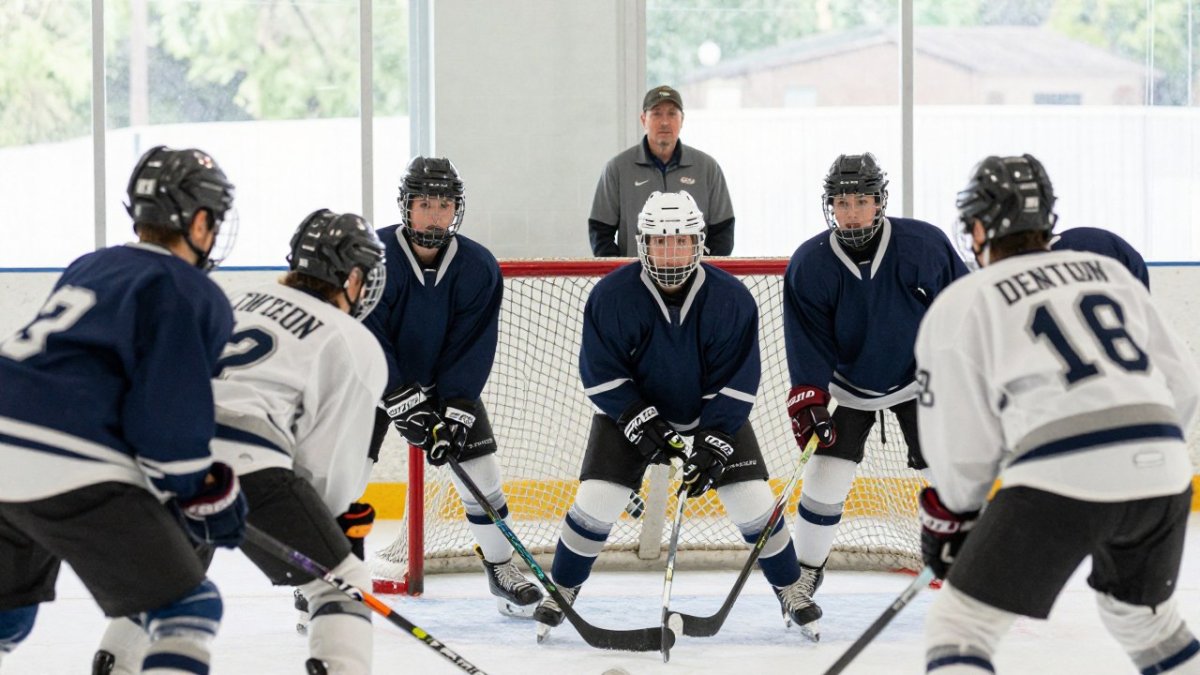
Youth coaches often teach the box first because it is easy to learn and easy to explain. Players know where to be, and parents can see the structure from the stands.
Player Positioning, Spacing and Stick Work
Good spacing keeps passing lanes closed. Players should stand close enough to help each other but far enough apart that one pass cannot beat two defenders. Stick positioning matters too. Sticks in passing lanes block cross-ice passes and force the puck carrier to shoot from the outside.
Hockey Positioning™ lets kids see positioning on a full interactive ice surface, so the idea can sink in before they step onto the real ice.
Shifting and Adjusting as the Puck Moves
The box shifts with the puck. When the puck moves to one corner, the closest defender steps toward it while the others slide to protect the slot. The key is that no one leaves the middle open.
A common mistake is that all four players chase the puck at once. That collapses the shape and leaves an open lane for the next pass.
Watch out: Shifting too late lets the puck carrier find the slot. Communication helps players shift together.
Measuring Success: Penalty Kill Percentage and Other Metrics
Penalty kill percentage is the headline number, but on its own it is a blunt instrument. It tells you how often the power play scored, not whether your passive structure actually suppressed chances.
Goals against per two minutes shorthanded. This normalizes for how much time a team actually spends killing penalties. Divide total power-play goals allowed by total shorthanded minutes, then multiply by two. A lower number means the kill is surviving its shifts; a rising number across several games is an early warning that the passive shape is being solved.
Shots and expected goals allowed from high-danger areas. Raw shot counts can mislead because a passive box is designed to concede point shots while protecting the slot. Chart where shots originate: the top of the circles, the slot, the crease, and the flanks.
Zone entries and setup time. Count how often the power play enters the zone with possession and how long it takes to establish a set formation. A passive kill that forces dump-ins and delays setup is doing its job even if it does not force turnovers.
Clears and time spent defending. Track successful clears and the average length of each shorthanded sequence. A passive system that cannot clear the puck spends too long defending, and fatigue compounds positioning errors late in a kill. Clearing efficiency is often the difference between a kill that survives and one that breaks down.
Faceoff outcomes in the defensive zone. Penalty kills start and restart with faceoffs. Winning the draw and clearing immediately relieves pressure; losing it cleanly gives the power play a free setup. This is a simple, teachable metric for youth and amateur teams.
For younger teams, simplify the scorecard. Count open-slot touches, out-of-position shifts, and successful clears per kill. These are visible from the stands and easy to review on video.
The article lists several process metrics a coach can track alongside penalty kill percentage, each with a simple way to read it.
| Metric | What it shows | Healthy sign |
|---|---|---|
| Goals against per two minutes shorthanded | How often the kill is surviving its shifts | Lower number over several games |
| High-danger shots allowed | Whether the box is protecting the slot | Attempts stay on the perimeter |
| Zone entries and setup time | How quickly the power play sets up | Dump-ins and slow setups |
| Clears and time defending | Ability to get the puck out | Efficient clears, shorter sequences |
| Faceoff outcomes in the defensive zone | Whether the kill gets relief | Wins the draw and clears immediately |
Penalty Kill vs. Power Play: Which Side Gains From a Passive Approach
A passive penalty kill helps the defending side most when the power play struggles with passing and puck movement. It gives up some pressure in exchange for fewer quality chances.
The power play usually benefits from time and space, so a passive system takes away both. The trade-off is that the penalized team may spend more time defending and less time generating counterattacks.
Many coaches feel that passive systems wear players down over a long penalty. Fatigue can cause breakdowns late in the kill, which is why shifts and recovery matter.
Decision Framework: When a Passive Penalty Kill Is Worth Using
Use a passive penalty kill when the other team has strong puck movers and your players are still learning positioning. It is a safe choice for youth teams and for short-handed situations late in close games.
Consider an aggressive approach when the power play is weak, when your forwards are fast, or when you need a short-handed goal.
- Check the power play's strengths, such as shooters and passers.
- Check your players' speed and positioning discipline.
- Pick passive when discipline is the main concern.
- Pick aggressive when turnovers are likely and recovery is fast.
- Review the kill after each game and adjust the plan.
Best for: Coaches who want a simple, teachable system for developing players. Skip if: Your team has the skill to press well and needs a higher-risk approach to win.
Fixing a Passive Penalty Kill That Is Being Exploited, and Getting Your Players Ready
When a passive penalty kill starts giving up clean looks, the fix is rarely to abandon the system. More often it is to identify the specific way the power play is beating it and apply a targeted adjustment.
Trigger: repeated cross-ice passes through the top of the box. If the power play is moving the puck seam to seam and finding one-timers, the front pair is standing too flat and too far apart.
Trigger: the puck carrier walks the line uncontested. A passive box can drift too deep when players back off the point.
Trigger: the power play sets up behind the net. A passive kill that stays low can be stretched by a carrier below the goal line. The low defender on the strong side should engage the carrier's hands while the weak-side defender seals the backdoor lane.
Trigger: repeated backdoor chances. When the weak-side forward is losing the backdoor player, the box is shifting too far toward the puck. Remind the weak-side defender to stay connected to the far post and to keep the stick in the passing lane rather than ball-watching.
Trigger: fatigue and late-kill breakdowns. If the same mistakes appear in the second minute of a kill, the issue is legs, not structure. Shorten shifts, simplify clears, and encourage players to get the puck out of the zone rather than make a play. A tired passive kill becomes a passive scramble.
Trigger: the power play is weak or predictable. If the opponent is struggling to enter the zone or is running a static setup, a passive kill can afford to challenge the first pass and disrupt timing.
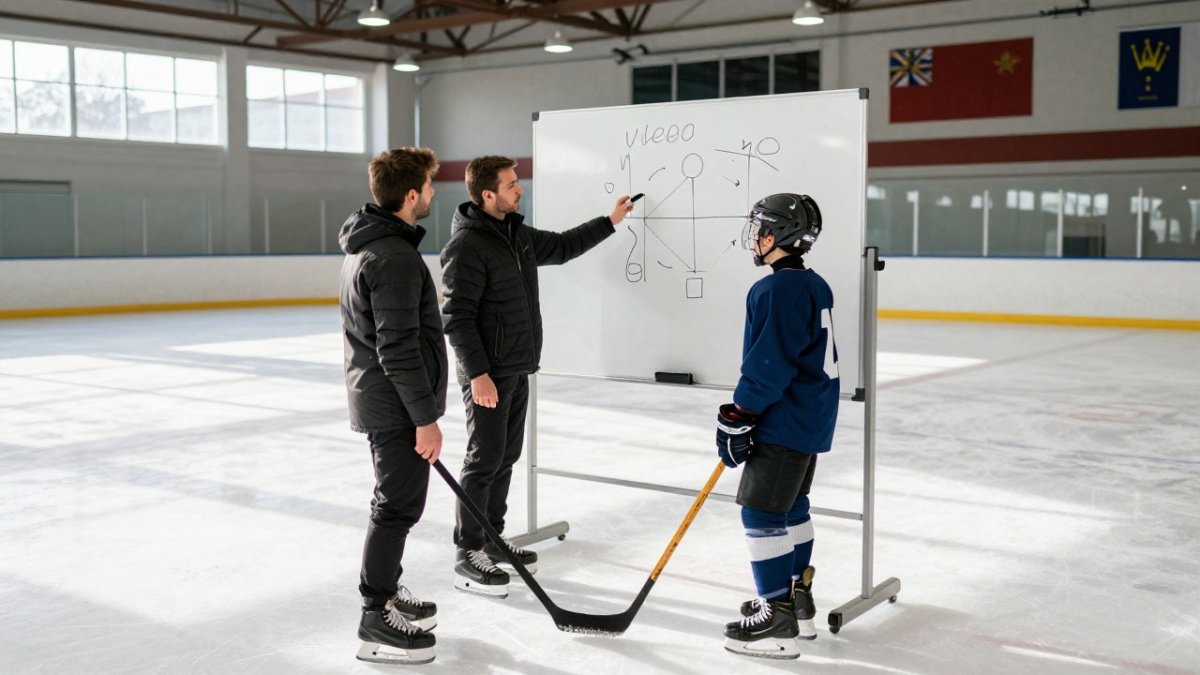
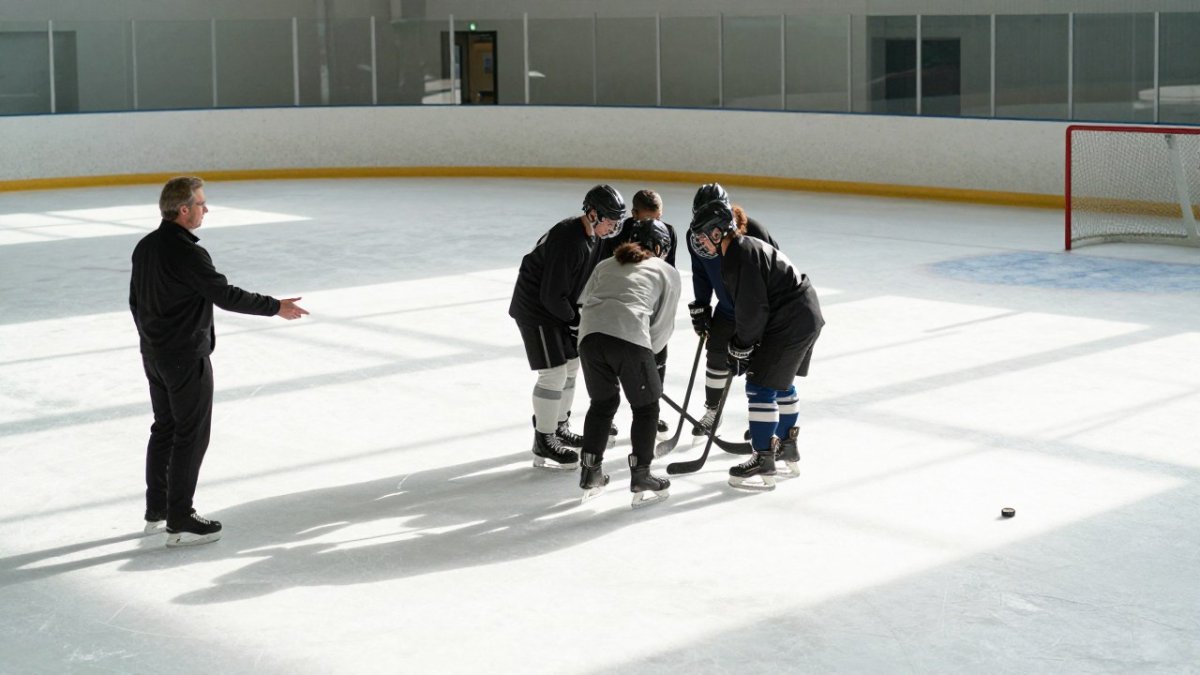
Preparation matters as much as in-game adjustment. Drill the box shift until it is automatic, then add decision reps: show players a puck movement and ask which defender steps, which stays, and where the stick goes.
USA Hockey player development guidelines
Ready to help your players stop chasing the puck? Download Hockey Positioning™ on the App Store and start building better penalty kill habits today.
Frequently Asked Questions
What is a passive penalty kill in hockey?
A passive penalty kill is a defensive system where the short-handed team keeps its players in a compact box or diamond close to the net and waits for the power play to make a mistake. Rather than pressuring the puck carrier, the penalty killers protect the slot and the front of the net, and they only step out to contest clear chances. The approach trades the risk of being beaten by a sharp pass for fewer chances to create a turnover, which makes it popular with teams that have limited speed or are defending a lead.
Is a passive penalty kill worth it against every power play?
No. A passive penalty kill is most useful against power plays with a strong shooter from the point, a quick passing unit, or a team that relies on cross-ice passes into the slot. Against a slower or predictable unit, an aggressive penalty kill that forces turnovers can be more effective. Coaches should watch the opposing power play's habits in the first minute and adjust, since a system that works in one game can fail against a different setup.
What are the weaknesses of a passive penalty kill?
The main weakness is that a passive box gives the power play time and space to move the puck, which can wear out the penalty killers and create shooting lanes from the perimeter. Teams that sit too deep can also be exploited with quick east-west passes that stretch the box. Passive systems rarely generate short-handed chances, so the team can finish a penalty without any offensive pressure, which can be frustrating for players.
How does a penalty kill differ from a power play?
A penalty kill is the team defending while a player is in the penalty box, and its goal is to prevent goals while the team is short-handed. A power play is the team with the extra skater, which aims to use the advantage to score. Penalty killers usually have fewer scoring opportunities, so their success is measured mainly by how few goals they allow, which is captured by penalty kill percentage.