 blog
Best Hockey Gear for Adult Beginners: What to Buy First
Quick Summary
Adult beginners need four core pieces of hockey gear before their first session: a helmet with a full face cage, skates that fit properly, a stick sized to their height, and protective pads. Fit matters more than brand, so prioritize helmets and skates over premium accessories.
- Choose a helmet with a current certification mark and a full face cage.
- Your helmet should sit level, about one finger-width above the eyebrows.
- Buy skates with the socks you plan to wear and check that the heel stays locked.
- A stick that reaches roughly to the chin in skates is a practical starting length.
- Measure yourself and compare against each manufacturer's size chart, not the youth sizing you know.
Table of Contents
- What Hockey Gear Adult Beginners Actually Need
- Essential Protective Gear and Why Each Piece Matters
- Choosing Your First Skates
- Stick Length, Flex, and Hand Position for Beginners
- Side-by-Side: Budget, Mid-Range, and Premium Starter Options
- Sizing, Fit, and Checking Used Gear
- Building Your Adult Hockey Starter Kit and Next Step on the Ice
- Frequently Asked Questions
What Hockey Gear Adult Beginners Actually Need
Adult beginners in hockey need four things before their first session: a helmet with a face cage, skates that fit properly, a stick sized to their height, and protective pads, since this core hockey gear keeps you safe on the ice. Everything else is secondary. This guide covers the equipment that keeps you safe and lets you skate and handle the puck with confidence.
Most new adult players overspend on accessories and underspend on fit. A well-fitting helmet and skates matter more than any premium stick. This guide walks through each piece in the order you should buy it, with notes on what to prioritize when money is tight.
Essential Protective Gear and Why Each Piece Matters
Protective gear is the first purchase for any adult beginner. Each piece covers a specific risk: head and face impacts, puck and stick strikes to the body, and falls onto hard ice. The mistake is treating a full set as interchangeable, helmets, skates, and gloves carry the most safety weight and deserve the largest share of your budget, while pads can be bought used if they pass inspection.
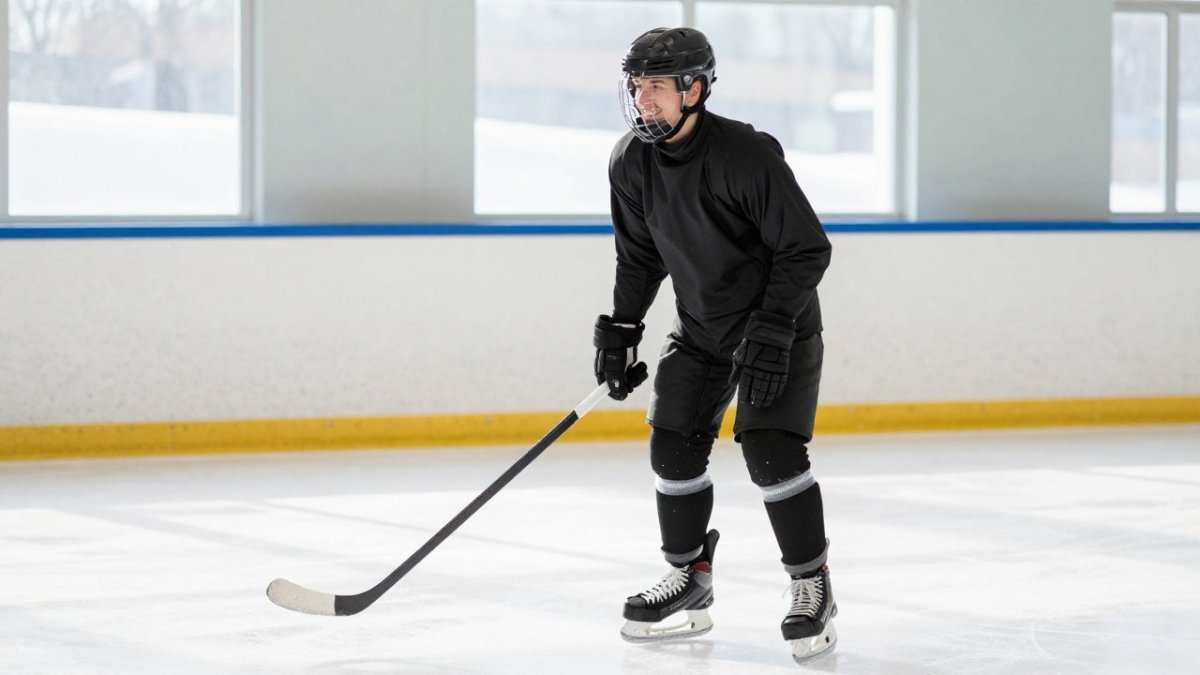
Helmet and Face Cage Selection
Choose a helmet that carries a current certification mark, such as a North American or European safety standard label. A full face cage is the right choice for adult beginners; half visors leave the jaw and teeth exposed, and most learn-to-play and recreational leagues require full facial protection anyway.
Fit is where beginners go wrong. The helmet should sit level on your head, roughly one finger-width above the eyebrows, and the chin strap should be snug enough that you can fit only one finger under it. Shake your head side to side, if the helmet shifts independently of your scalp, it is too loose. Replace any helmet that has taken a hard impact or shows cracked or compressed foam, even if the shell looks intact.
Pair the helmet with a neck guard if your league requires one. Many adult leagues do, and it protects an area that stays exposed otherwise.
Shoulder, Elbow, and Shin Pads
Shoulder and elbow pads protect against puck and stick contact during play and falls. For adult beginners, prioritize coverage over bulk: shoulder caps should sit on the point of the shoulder without riding up when you raise your arms, and elbow pads should cover the point of the elbow and extend far enough to meet the top of your gloves when your arm is bent.
Shin guards protect the front of the leg, which takes the most puck hits. A beginner shin guard should reach from just below the knee to the top of the skate tongue, with a knee cap that stays centered when you squat. If the pad slides down when you skate, it is either too long or the strapping is worn.
Gloves and Hand Protection
Gloves should cover the wrist and allow you to grip a stick comfortably. Try them on with your hands relaxed: the cuff should overlap the forearm pad, the fingers should reach the end of the glove without pinching, and you should be able to close your hand around a stick shaft without the palm bunching. A glove that is too large lets the stick rotate in your grip; one that is too small restricts stickhandling.
Hockey Pants, Jock or Jill, and Base Layers
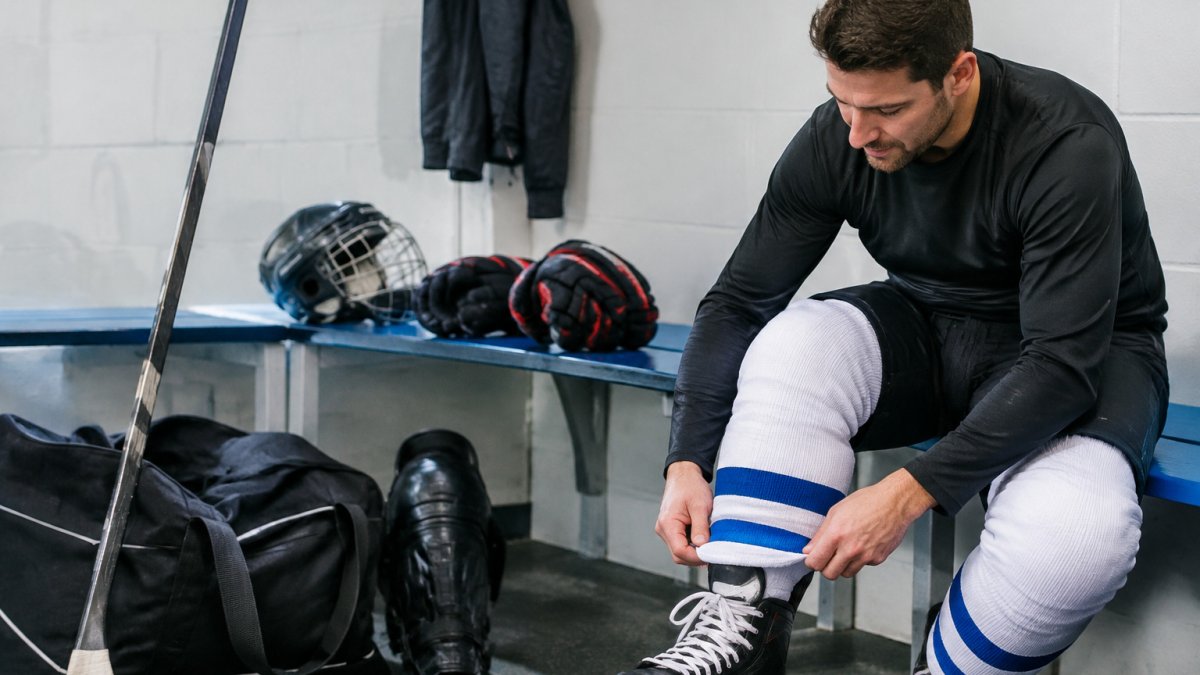
Hockey pants protect the hips, thighs, and tailbone, and beginner pants should cover the top of the shin guard when you are in a skating stance. A jock or Jill is non-negotiable for any contact or scrimmage situation. Base layers wick sweat and reduce chafing under pads; a moisture-wicking top and hockey socks are enough for most adult beginners.
Prioritize fit over brand across every piece. Pads that are too large restrict movement, and pads that are too small leave gaps, and a gap is exactly where a puck finds you.
Choosing Your First Skates
Skates are the most important purchase for performance and comfort. Poorly fitting skates cause blisters, cramping, and poor balance, which makes learning slower and frustrating.
Buy skates in a store where you can try them on with the socks you plan to wear. Your heel should stay locked in place, and your toes should barely touch the front without feeling cramped. Adult beginners often do well with a mid-range skate that offers stable ankle support and a comfortable break-in period.
Watch out: skates that feel comfortable in the store can become painful after a full session. Ask whether the store offers a return window, and wear them around the house before your first ice time.
Stick Length, Flex, and Hand Position for Beginners
A stick that is too long or too stiff makes it harder to control the puck. For most adult beginners, a stick that reaches roughly to the chin when standing in skates is a practical starting length, with a mid-range flex that suits a developing shot.
Hand position matters as much as stick size. Keep your top hand near the top of the shaft and your bottom hand lower, with the blade flat on the ice when you stickhandle. Practicing this grip at home with a foam ball builds the habit before you reach the rink.
Side-by-Side: Budget, Mid-Range, and Premium Starter Options
The table below compares the three typical tiers of starter equipment. It reflects general differences in build and fit rather than specific prices, which vary by retailer and season.
| Tier | Typical Focus | Best For | Main Trade-Off |
|---|---|---|---|
| Budget | Basic protection, entry-level skates | Trying the sport for a few sessions | Less durable, fewer fit adjustments |
| Mid-range | Balanced protection and comfort | Committed beginners in recreational leagues | Moderate upfront cost |
| Premium | Advanced materials, lighter weight | Players planning several seasons | Higher cost for features beginners may not use |
Best for: Adults who plan to play weekly and want durable, comfortable gear. Mid-range is usually the best value for most beginners.
Skip if: You only plan one or two sessions. A budget set is enough to decide whether the sport suits you.
For pricing, check the retailer's website or ask a shop for a quote, since costs change with stock and promotions.
Sizing, Fit, and Checking Used Gear
Adult sizing differs from youth sizing, and brands cut their sizes differently. Measure your height, weight, and waist before shopping, then compare against each manufacturer's size chart rather than assuming your usual size applies. Fit checks matter more than the size label on the box.
Adult Fit Checks by Item
- Helmet: level on the head, one finger-width above the eyebrows, chin strap snug enough for one finger underneath, no independent shifting when you shake your head.
- Skates: heel locked in place, toes barely touching the front without cramping, and no lateral ankle slop when you lean. Skates should feel snug, not roomy, a common beginner error is buying a half size up.
- Shoulder and elbow pads: caps stay centered when you raise and bend your arms, and the elbow pad meets the top of the glove when the arm is bent.
- Shin guards: knee cap stays centered in a squat, and the bottom of the pad meets the top of the skate tongue.
- Gloves: cuff overlaps the forearm pad, fingers reach the end without pinching, and you can close your hand around a stick shaft without palm bunching.
- Pants: cover the top of the shin guard in a skating stance and allow a full squat without binding at the hip.
Inspecting Used Gear
Used gear can save money, but inspect it carefully before you hand over cash. Check helmets for cracks in the shell, compressed or crumbly foam, worn straps, and a missing or expired certification label, a helmet without a readable certification mark is not worth buying at any price. Look at skate blades for deep nicks and check that the boot still holds its shape and the rivets are tight. Pads should show no torn straps, no crushed foam, and no exposed plastic. If a helmet has taken a hard impact, replace it, even if it looks intact.
For skates, a used pair in good condition is a reasonable first purchase, but have the blades sharpened and check the boot stiffness before you commit.
Building Your Adult Hockey Starter Kit and Next Step on the Ice
Start with a helmet, skates, gloves, shoulder and elbow pads, shin guards, a neck guard, and a stick sized to your height. Add a mouthguard and a base layer for comfort, and buy the rest as you learn what your league requires. Prioritize safety and fit over premium features, and keep receipts in case you need to exchange anything.
Once your gear is ready, the next step is learning where to be on the ice. Our guide on learn to play hockey explains how adult beginners can build hockey IQ at home before their first session. For positioning on the rink, read how to learn hockey positioning as an adult beginner, and to understand the roles you will be asked to fill, see learning ice hockey positions for adults. If you are signing up for a league, why adult hockey leagues require rules knowledge covers what organizers will expect from you.
Frequently Asked Questions
What is the best hockey gear for beginners?
For most adult beginners the priority order is a properly fitted helmet with face cage, skates, gloves, shin guards, shoulder and elbow pads, and a stick sized to height. Protective items come first because they prevent injury; the stick can be a cheaper entry model. A beginner does not need premium gear to learn the game, but poorly fitting skates or a loose helmet will limit both comfort and safety. Buy the protective pieces new where possible and consider used sticks or pads only after checking for cracks, worn straps, and degraded foam.
What hockey equipment does an adult beginner need?
A complete hockey equipment list for an adult beginner includes skates, a helmet with cage, a neck guard, shoulder pads, elbow pads, shin guards, hockey gloves, hockey pants with a jock or jill, a stick, and base layers. Many recreational leagues also require a mouthguard. Each item has a specific job: the helmet and cage protect the head and face, the pants and pads protect the hips, legs, and joints, and the gloves protect the hands from pucks and sticks.
How much should an adult beginner spend on hockey gear?
Costs depend on the retailer, the level of gear chosen, whether items are new or used, and current availability, so no fixed figure can be given here. Check Hockey Positioning™'s website for current pricing on the training resources it offers, and compare the price of protective gear across several retailers before buying. Prioritise helmet and skates for fit and safety, and spend less on items that wear quickly or that you may outgrow.
Should beginner hockey players buy new or used equipment?
Used gear can save money, but protective items deserve extra scrutiny. Check helmets for cracks, dents, and expired shells, and replace any helmet that has taken a hard impact. Inspect skates for cracked boots, broken rivets, and dull or uneven blades. Used sticks should be checked for cracks near the blade and shaft. Gloves and pads with compressed or torn foam offer less protection, so buy those new if the budget allows.