 ultimate-guide
Learning Ice Hockey Positions for Adults
Table of Contents
- Overview of Ice Hockey Positions and Roles
- Ice Hockey Positioning for Beginners: The Five Skater Positions
- Defensive Zone Coverage for Adults: Positioning Fundamentals
- Hockey Positioning Drills for Beginners: Building Game Awareness
- Offensive Zone Strategies and Positional Play Concepts
- The Mental Game: Tactical Awareness and Positioning IQ
- Common Positioning Mistakes and How to Avoid Them
- Frequently Asked Questions
Last Updated: October 2, 2026
Overview of Ice Hockey Positions and Roles
Learning ice hockey positions for adults requires understanding where you're supposed to be.
Five skaters and one goaltender make up a standard lineup. The center orchestrates play from the middle. Wingers occupy the flanks, creating scoring threats. Defensemen protect the back end. The goaltender guards the crease.
What separates recreational hockey from chaos is positional awareness. Many adult beginners spend their first season chasing the puck, reacting to where it is rather than anticipating where it will be.
Ice Hockey Positioning for Beginners: The Five Skater Positions
Positional play in ice hockey rests on understanding your role relative to the puck, your teammates, and the opposition. Each of the five skater positions has distinct responsibilities, but they all work together to maintain puck possession and prevent scoring chances against.
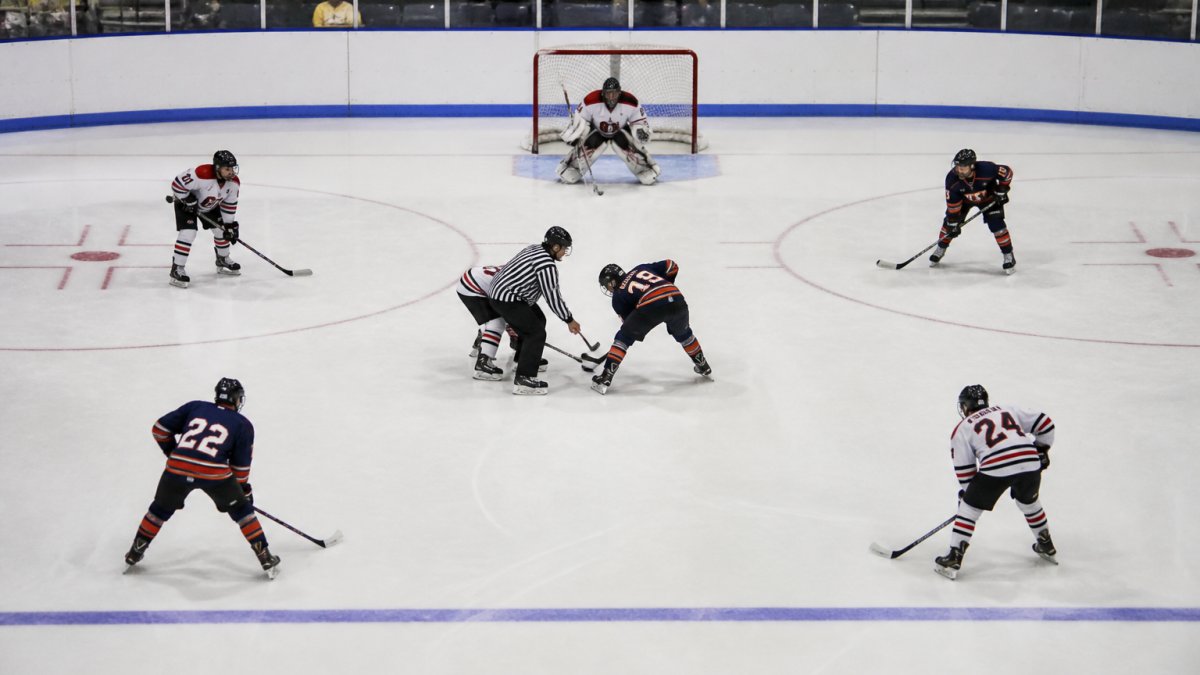
Center: The Playmaker
The center is the quarterback of your forward line, controlling the puck in the neutral zone and initiating offensive plays. Centers take face-offs at center ice and in the defensive zone, constantly battling for possession at the start of plays.
In the offensive zone, position yourself to receive passes and create scoring opportunities as a facilitator. Your stickhandling and passing vision determine whether your line generates quality chances or turns the puck over. In the defensive zone, backcheck to pressure opposing forwards and support defensemen.
Left Wing and Right Wing: Scoring Threats
Wingers operate on the perimeter along the boards and in the corners, supporting the center and generating shots. Unlike centers, you don't take face-offs, freeing you to focus on positioning and offensive movement.
In the offensive zone, create chances by positioning for one-timers or driving to the net for rebounds. Forecheck by applying pressure to opposing defensemen, forcing turnovers. In the defensive zone, backcheck your opposing winger and clear the puck. Avoid drifting too far from your winger defensively, which leaves gaps for skilled opponents.
Defensemen: Last Line of Defense
Defensemen are the final barrier before the goaltender. Your positioning determines whether opposing forwards get clean chances or take low-percentage shots from distance. The two defensemen divide the blue line (the boundary between defensive and neutral zones), one on each side.
Your responsibilities shift with puck location. In your defensive zone, protect the slot and manage shot blocking, though prioritize positioning over diving in front of pucks. In the neutral zone, manage the transition and prevent opposing forwards from gaining speed.
Goaltender: Crease Guardian
The goaltender is the only player allowed to use hands to stop the puck. Your positioning determines the net size available to shooters. Rebound control, managing where the puck goes after a save, prevents second-chance goals.
Position yourself in the crease based on puck location and shooter position. Depth is key: position at the right distance from the goal line to cut the shooter's angle without overcommitting. Communicate with defensemen by calling out screens and directing traffic to prevent confusion.
Defensive Zone Coverage for Adults: Positioning Fundamentals
The defensive zone is where positioning matters most. Prevent the opposing team from generating scoring chances. Defensive positioning requires anticipation and communication, not just skating speed.
Gap control is foundational. A gap is the space between you and an opposing player.
Defensive coverage follows "man-on-man" or "zone" systems. In man-on-man, you cover a specific opponent. In zone, you cover a specific area.
Backchecking, returning to your defensive zone after a turnover, is where many players lose discipline.
Hockey Positioning Drills for Beginners: Building Game Awareness
Drills bridge the gap between understanding positional concepts and executing them in games. The best positioning drills simulate game scenarios, situations you'll actually face during play. These drills build muscle memory and tactical awareness without the chaos of a full game.
Drill 1: Gap Control and Transition Practice
This drill focuses on managing gaps and transitioning from defense to offense. Set up three zones on the ice: defensive zone, neutral zone, and offensive zone. Place one skater in the defensive zone with the puck and one skater without the puck in the neutral zone. The skater in the neutral zone skates toward the puck carrier, closing the gap.
This drill teaches gap closure, pressure application, and quick transitions. Repeat with different starting positions to build versatility.
Drill 2: Backchecking and Forechecking Scenarios
Backchecking and forechecking are the foundation of transition play. In this drill, one line starts in the offensive zone with the puck. They attempt to score or maintain possession. If they lose the puck, they must backcheck (skate back to the defensive zone and apply pressure to the opposing forwards).
This drill simulates constant offense-to-defense transitions, building conditioning and positional discipline under fatigue. Run for 2-3 minutes with rest periods between repetitions.
Drill 3: Breakout and Neutral Zone Positioning
A breakout is the transition from your defensive zone to the offensive zone. This drill focuses on executing breakouts with proper positioning. One line starts in the defensive zone with the puck. They must move the puck out of the zone using a specific breakout pattern (your coach will teach you the team's system). The opposing line applies pressure, forcing quick decision-making.
Breakouts require coordination between forwards and defensemen. This drill builds the communication and timing necessary for clean transitions.
Offensive Zone Strategies and Positional Play Concepts
Offensive positioning creates scoring chances. Unlike defensive positioning (reactive), offensive positioning is proactive, you move to create passing lanes, position for shots, and set up teammates.
The slot is the most valuable real estate in the offensive zone. Forwards in the slot generate the most dangerous chances.
Positional play concepts dictate how your team moves the puck.
Adult beginners benefit from understanding these concepts because they simplify decision-making. Instead of improvising, you execute a system. This reduces turnovers and increases scoring chances.
The Mental Game: Tactical Awareness and Positioning IQ
Positioning IQ separates good players from great ones.
Anticipation is the core skill. Watch the puck carrier's shoulders and stick, they telegraph where they're going.
Reading the opposing team's strategy is another component of positioning IQ. Do they favor the perimeter or attack down the middle?
Communication accelerates the development of positioning IQ. Call out plays, alert teammates to open opponents, and discuss positioning after practice. Teams that communicate effectively execute positioning concepts more consistently.
Common Positioning Mistakes and How to Avoid Them
Adult beginners make predictable positioning mistakes. Recognizing and correcting these errors accelerates improvement and reduces turnovers.
Chasing the puck instead of positioning yourself. This is the most common mistake.
Overcommitting to pressure. Applying pressure is important, but overcommitting leaves gaps for skilled forwards to exploit.
Losing sight of your assignment. In man-on-man coverage, your job is to track your assigned opponent.
Standing still. Static positioning is a liability.
Hockey Positioning™ addresses these mistakes by visualizing proper positioning for every game scenario.
Adult hockey is a journey, not a destination.
Frequently Asked Questions
What are the main differences between each ice hockey position?
Each position has distinct responsibilities. The center handles face-offs and directs play from the middle of the ice. Wingers (left and right) focus on scoring and forechecking along the boards. Defensemen manage the blue line and backchecking to protect the goal. The goaltender guards the crease and controls rebounds. Understanding these roles helps you anticipate where teammates should be and where to position yourself during play.
How can ice hockey positioning for beginners be learned without complicated diagrams?
Visual, interactive tools make positioning intuitive. Instead of studying static diagrams, seeing players move in real-time across the ice shows you exactly where each position belongs in different scenarios.
What is defensive zone coverage for adults, and why does it matter?
Defensive zone coverage means knowing where you should be when your team is defending near your goal. Adults in recreational leagues need to understand gap control, shot-blocking positions, and how to support the goaltender. Poor defensive positioning leads to easy scoring chances for the opposing team. Learning your defensive zone responsibility, whether you're a forward backchecking or a defenseman on the blue line, directly improves your team's ability to prevent goals and transition to offense.
Do I need to stick to one position as an adult beginner?
No. Most recreational adult leagues encourage players to learn multiple positions, especially in beginner-friendly leagues. Learning different positions deepens your understanding of positional play and makes you a more versatile teammate. Many adults rotate between forward and defense throughout a season. Understanding the responsibilities of each position, even if you primarily play one, improves your tactical awareness and helps you anticipate teammate movements.
How does interactive positioning training compare to a coach drawing plays on a whiteboard?
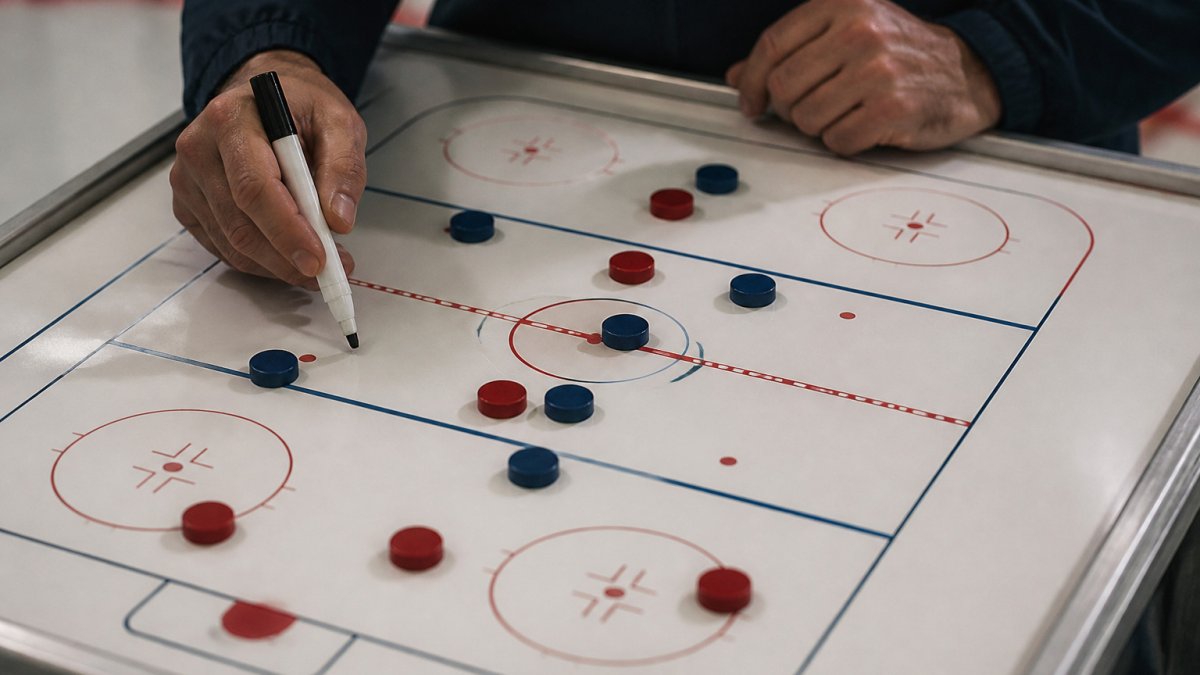
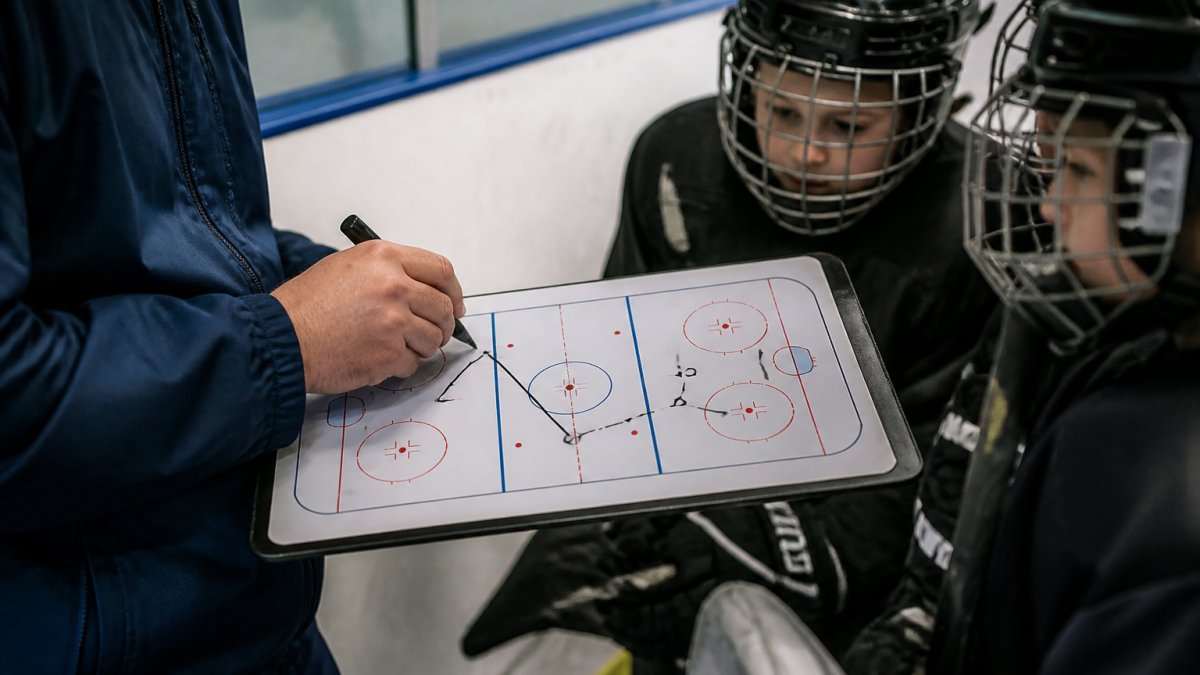
Whiteboard drills are static; interactive training is dynamic. When you see players move in response to puck position across the full ice surface, you understand the flow of positioning in real-time. You can practice the same scenario repeatedly, test different approaches, and see immediate feedback.
What is the difference between forechecking and backchecking in recreational hockey?
Forechecking is when your team pursues the puck in the opposing defensive zone to regain possession or disrupt their breakout. Backchecking is when you return to your own defensive zone to help defend. Both require specific positioning: forecheckers need to pressure the puck carrier, while backcheckers must cover passing lanes and support defensemen. Understanding when and how to execute each improves your team's transition game and prevents odd-man rushes against your goaltender.
Will learning positions on an app actually improve my game on the ice?
Yes, when combined with practice. Interactive positioning training builds tactical awareness for where you should be in different game situations. Many adult beginners struggle because they chase the puck instead of reading positioning cues. By practicing scenarios repeatedly, power plays, penalty kills, breakouts, you train your brain to recognize patterns.