 ultimate-guide
Ice Hockey Systems: A 2026 Guide
Table of Contents
- What Are Ice Hockey Systems?
- Hockey Offensive Systems Explained
- Hockey Defensive Systems and Zone Coverage
- Hockey Forechecking Systems and Pressure
- Hockey Breakout Systems and Transition Play
- Hockey Power Play Systems and Special Teams
- Choosing and Implementing the Right System for Your Team
- Frequently Asked Questions
Last Updated: October 12, 2026
What Are Ice Hockey Systems?
Ice hockey systems are structured frameworks that define how players position themselves, move the puck, and execute plays across different game situations. They're the backbone of team strategy, transforming individual skill into coordinated action on the ice. A system tells each player their role, where they should be, and what decisions to make when the puck moves to different locations.
Without a system, players chase the puck reactively. With one, they anticipate movement, support teammates, and control the game. Whether your team plays a 1-2-2 forechecking formation or a trap defense, the system creates predictability and confidence.
The system multiplies the impact of skill development and player positioning. It's the difference between a group of players and a functioning team.
Hockey Offensive Systems Explained
Offensive systems dictate how your team advances the puck, creates scoring opportunities, and maintains possession in the opponent's zone. The most common offensive systems are the cycle, the spread, and the high-low attack.
The cycle system keeps the puck on the perimeter, moving it around the outside of the zone in a circular pattern.
The spread system pushes players wide and high, stretching the defense horizontally. It creates space in the middle of the ice and relies on quick puck movement to exploit gaps.
The high-low attack positions forwards high in the offensive zone and one player low near the goal line. This creates a two-level attacking structure that forces defenders to choose between coverage levels.
Positioning and Puck Movement in Offensive Play
Effective offensive positioning means each player knows their spacing relative to the puck and their teammates. In the cycle system, the three forwards form a triangle around the zone perimeter. The player with the puck moves laterally while the others rotate to fill open positions.
Puck movement in offensive systems follows predictable patterns. The first pass typically goes to a supporting player moving toward the puck. The second pass often moves the puck to a different zone area, forcing the defense to shift.
Communication drives positioning in offensive play. Players call "support" to indicate they're ready to receive the puck, and they call "time" to signal when they need space to make a play.
Hockey Defensive Systems and Zone Coverage
Defensive systems determine how your team covers space, pressures the puck carrier, and prevents scoring chances. The two primary approaches are zone defense and man-to-man defense. Most teams use a hybrid approach that combines elements of both.
Zone defense assigns players to areas of the ice rather than specific opponents. A defenseman covers the slot area, a forward pressures the puck carrier, and another forward covers the high slot. As the puck moves, players shift within their zones.
Man-to-man defense assigns each player a specific opponent to cover. This system works well for teams with strong skaters and high hockey IQ because it requires constant communication and awareness. It's harder to execute at younger age levels but becomes essential in competitive leagues.
Man-to-Man vs. Zone Defense
Zone defense is easier to teach young players because it relies on positioning and spacing rather than constant communication. Players know their area and can focus on positioning rather than tracking a specific opponent.
Man-to-man defense requires each player to track their assigned opponent and move with them across the ice. This system is more physically demanding and requires higher hockey IQ. It's effective against teams that move the puck quickly because defenders are already positioned near their opponents.
The hybrid approach, used by most competitive teams, starts with zone principles but applies man-to-man pressure on the puck carrier. The nearest player to the puck pressures aggressively while other players cover zones. This balance prevents high-danger chances while maintaining positional discipline.
Hockey Forechecking Systems and Pressure
Forechecking is the defensive strategy applied in the opponent's zone. It determines how aggressively your team pressures the puck carrier and how they cover passing lanes. The three primary forechecking systems are the 1-2-2, the 2-1-2, and the trap.
The 1-2-2 forecheck sends one forward deep to pressure the puck carrier immediately. The other two forwards cover the middle lanes while the defensemen stay high.
The 2-1-2 forecheck sends two forwards deep to pressure the puck carrier and their first passing option. The third forward covers the middle lane.
The trap is an aggressive forechecking system that sends multiple players to cover a small area of ice, forcing the puck carrier to make a difficult play or turn the puck over.
Hockey Breakout Systems and Transition Play
The breakout is how your team moves the puck from their defensive zone into the neutral zone and toward the opponent's zone. Effective breakouts create space for skilled players to accelerate and generate scoring chances. Poor breakouts result in turnovers and scoring chances against.
Transition play occurs when your team shifts from defense to offense or offense to defense. Teams that excel at transition play generate more scoring chances because they capitalize on disorganized defenses. This is where hockey IQ and positioning discipline create competitive advantage.
Common Breakout Patterns and Player Responsibilities
The most common breakout pattern is the defenseman-to-forward pass, where a defenseman passes to a forward moving toward the boards.
Another pattern is the stretch pass, where a defenseman passes the puck across the ice to a forward on the opposite side. This move creates space but is risky if the defense is positioned well.
The drop pass is used when the puck carrier is being pressured. They drop the puck behind them for a trailing teammate to pick up.
Player responsibilities in breakouts are clear: defensemen initiate the breakout with a pass, forwards move toward the puck to create passing options, and the puck carrier makes a decision based on pressure and space.
Hockey Power Play Systems and Special Teams
The power play is your team's offensive system when they have a numerical advantage due to an opponent's penalty.
The 1-3-1 power play creates multiple scoring threats and forces the penalty-killing team to choose which player to cover. The high forward can shoot from distance, the triangle can move the puck quickly, and the low player creates space and screens the goalie.
Special teams systems, power play and penalty kill, are critical at competitive levels because they directly impact game outcomes. Teams that excel on special teams often win close games because they convert scoring chances and prevent them.
Penalty Kill Formations and Strategies
The penalty kill is the defensive system used when your team is down a player due to a penalty.
Another penalty kill approach is the aggressive forecheck, where your team pressures the puck carrier immediately rather than sitting back. This system is riskier but can force quick decisions and turnovers. It works best when your team has speed and conditioning advantages.
Communication is critical during penalty kills because players must know where the puck is and adjust their positioning accordingly. A single miscommunication often results in a scoring chance against. Teams that practice penalty kill formations regularly develop the communication patterns needed to execute under pressure.
Choosing and Implementing the Right System for Your Team
Selecting the right ice hockey systems for your team depends on your players' skill level, age, conditioning, and hockey IQ. A system that works for a competitive U18 team won't work for a recreational U10 team.
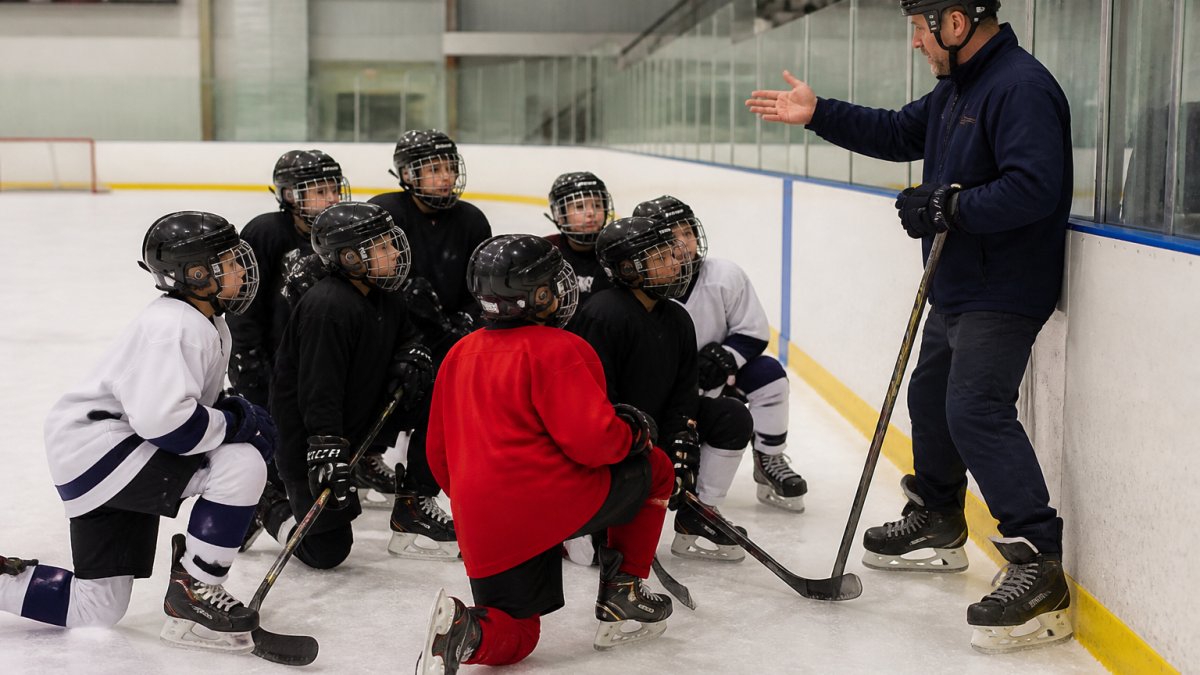
Start by assessing your team's strengths. If your team has fast skaters, a system that emphasizes speed and transition play will be more effective than a possession-based system.
Implementation requires patience and repetition. Players need to understand not just the system but why the system works.
Age-Level Adaptations and Progression
Ice hockey systems must adapt to age and skill level. U8-U10 players benefit from simple systems focused on basic positioning and puck support. The 1-2-2 forecheck is appropriate at this level because it's easy to teach and doesn't require complex communication.
U12-U14 players can handle more sophisticated systems. The 2-1-2 forecheck and zone defense principles become appropriate because players have developed better hockey IQ and communication skills.
U16 and older players can execute advanced systems like the trap, aggressive man-to-man defense, and complex power play formations. At this level, the focus shifts from teaching positioning to teaching decision-making and game reading.
Building System Understanding Through Drills and Practice Plans
Drills are how players internalize ice hockey systems.
Practice plans should progress from stationary drills to game-speed drills.
Common mistakes in practice planning include spending too much time on stationary drills and not enough time on game-speed execution.
Team culture impacts system implementation. If players understand that the system exists to make them better and help them win, they'll buy in.
Understanding ice hockey systems transforms how your team plays the game. The positioning, puck movement, and defensive principles that define each system create structure, reduce turnovers, and generate scoring chances.
When players can drag the puck across an ice surface and see how their teammates move to correct positions, with pro coaching tips at every location, the abstract becomes concrete.
Frequently Asked Questions
What is an ice hockey system?
An ice hockey system is an organized framework that defines how players position themselves and move together on the ice during different game situations. Systems dictate player roles, puck movement, spacing, and decision-making for offense, defense, forechecking, and special teams. Rather than chasing the puck, players follow a system that tells them where to be based on the puck's location. This structure helps teams play cohesively and reduces individual mistakes.
How do hockey forechecking systems work?
Hockey forechecking systems determine how many forwards pressure the opposing team in their defensive zone and how they apply that pressure. Common forechecking systems include the 1-2-2 (one forward pressures immediately, two support, two cover behind) and the 2-1-2 (two forwards attack the puck carrier). The system defines which players go where, when they retreat, and how they communicate. Effective forechecking forces turnovers and prevents clean breakouts by the opposing team.
What's the difference between hockey defensive systems?
Hockey defensive systems vary primarily between zone defense and man-to-man coverage. In zone defense, players defend a specific area of the ice rather than a specific opponent, allowing better positioning and support. Man-to-man defense assigns each player to shadow an opponent. Most youth and recreational teams use zone defense because it's easier to teach and provides better defensive-zone coverage. The choice depends on team skill level, coaching philosophy, and the opponents' strengths.
How can beginners learn ice hockey systems?
Beginners learn systems best through visual demonstration, repeated practice, and interactive learning tools. Start with simple positioning drills that show where players should be in basic game scenarios. Progress to game-situation drills that add decision-making and communication. Interactive apps that let players see correct positioning for every puck location help cement understanding faster than static diagrams or whiteboard drawings. Consistent practice with clear coaching feedback builds system mastery over time.
What is a hockey power play system?
A hockey power play system is a structured approach to scoring when your team has a numerical advantage (typically 5-on-4 or 5-on-3). Power play systems emphasize puck movement, spacing, and shot creation from high-percentage areas. Common systems include the umbrella (spread formation), the overload (concentration on one side), and the diamond (four players in a diamond shape). Each system has specific player roles and passing lanes designed to create scoring chances against a disadvantaged defense.
Will learning systems on an interactive app actually help my child stay in position during a real game?
Interactive visual learning accelerates understanding because players see themselves moving to correct positions instantly for every puck location. This immediate feedback helps the brain connect positioning concepts to game situations faster than traditional coaching methods. However, app learning works best combined with on-ice practice drills that reinforce those same positions under game-like conditions. The app teaches the 'what and where'; practice drills teach the 'why and how' of executing systems in real time.
Are ice hockey systems too complicated for young beginners?
No. Systems can be taught at any age when broken into simple, visual steps. Young players (ages 5-8) start with basic positioning for two or three players in simple scenarios. As they develop, systems gradually add complexity: more players, faster transitions, and more decision-making. The key is teaching systems progressively through age-appropriate drills and visual tools that show positioning clearly. Young players grasp systems faster when they see them demonstrated on ice and in interactive visuals rather than through verbal explanation alone.