 how-to
Why Adult Hockey Leagues Require Rules Knowledge
Table of Contents
- Why Adult Hockey Leagues Require Basic Rules Knowledge
- Safety, Fair Play, and Game Flow: The Three Pillars
- Basic Hockey Rules for Beginners: What You Must Know
- Hockey Penalties Explained: What Gets You Benched
- Hockey Offside and Icing Explained: Avoiding Common Mistakes
- How to Learn Hockey Rules Before Your First Game
- Consequences of Not Knowing the Rules
- Rules Knowledge vs. Playing Ability: Why Both Matter
- Frequently Asked Questions
Last Updated: October 17, 2026
Why Adult Hockey Leagues Require Basic Rules Knowledge
Adult hockey leagues require adult hockey rules knowledge because safety and fair play depend on it. When everyone understands the same rules, games run smoothly, collisions decrease, and penalties are fair.
A beginner who doesn't know offside might skate into an illegal position without realizing it, and a player unfamiliar with body-checking rules could injure a teammate.
Players who understand the basics play with confidence, they know where to be and why.
Safety, Fair Play, and Game Flow: The Three Pillars
Safety comes first. When players know the rules, they anticipate what others will do.
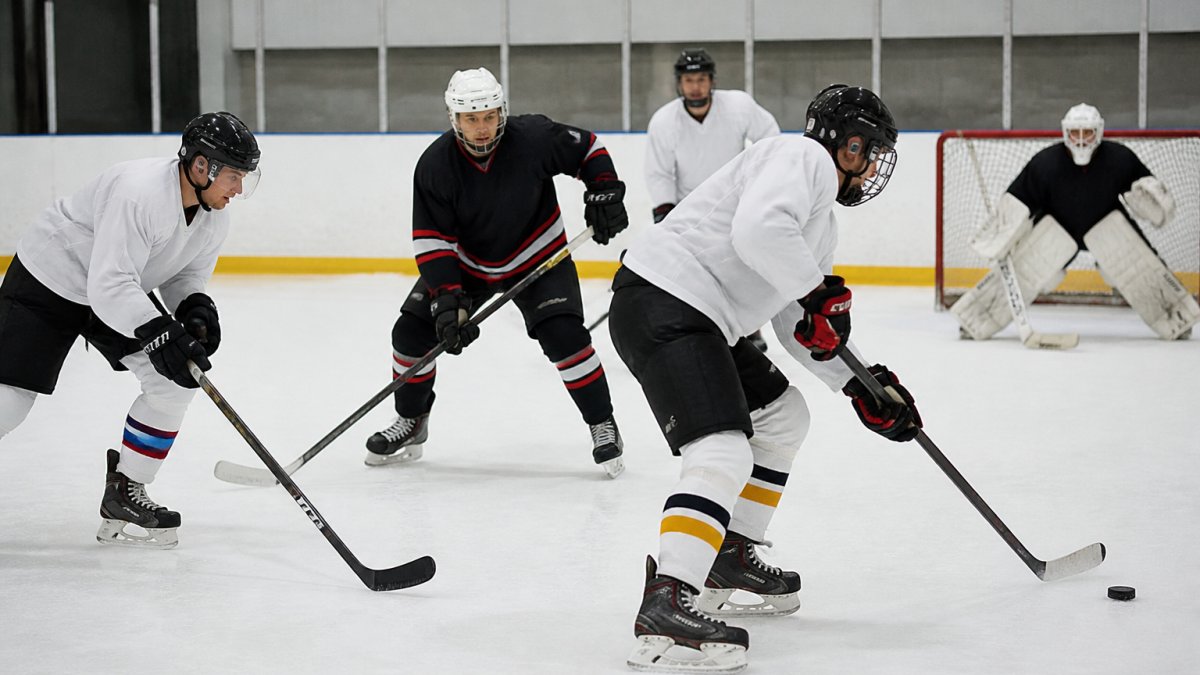
Fair play is next. If some players know the rules and others don't, experienced players exploit beginner gaps. Leagues require rules knowledge to level the playing field.
Game flow depends on it too. When everyone knows the rules, refs don't stop play to explain penalties and players don't argue calls.
Many adult recreational leagues now require a basic rules test before joining a team. It's a quality-of-life standard, not a punishment.
Basic Hockey Rules for Beginners: What You Must Know
Adult hockey leagues require basic rules knowledge that covers three main areas: offside, icing, and contact rules.
Offside and Icing Violations
Offside means a player crosses the opponent's blue line before the puck does.
Offside prevents players from camping near the goal for easy chances; beginners struggle because it requires constant awareness of puck position.
Icing prevents players from repeatedly clearing the puck down the ice, forcing teams to move it through the neutral zone.
Both rules seem confusing at first, but watch a few games and they become automatic. Most beginner mistakes happen in the first few weeks.
Contact and Body-Checking Rules
Body checking is allowed in most adult recreational leagues, but it has limits. You can use your body to block an opponent or separate them from the puck. You cannot:
- Hit someone from behind
- Hit someone in the head
- Hit someone who doesn't have the puck
- Charge (take more than two strides before hitting)
Contact rules exist to reduce injuries: a legal check is controlled and purposeful, an illegal one reckless or dangerous.
Many beginner adult leagues restrict body checking entirely. Check your league's rules before your first game, some are non-contact, others allow light contact, a few allow full checking.
Hockey Penalties Explained: What Gets You Benched
Hockey penalties are the ref's way of enforcing rules.
Minor penalties last two minutes. Common minor penalties include:
- Holding (grabbing an opponent)
- Tripping (sticking out your leg)
- High stick (hitting someone with your stick above the shoulders)
- Hooking (using your stick to pull an opponent)
Minor penalties are the most common; most beginners take one in their first few games.
Major penalties last five minutes or more. These are serious infractions:
- Fighting
- Boarding (checking someone hard into the boards)
- Slashing (hitting someone with your stick)
- Cross-checking (checking someone with both hands on your stick)
Major penalties often result in ejection from the game. Avoid these at all costs.
Misconduct penalties are for behavior, arguing with the ref, unsportsmanlike conduct, or excessive penalties in one game.
Most beginner penalties are unintentional, you didn't know the rule or realize what you were doing.
Hockey Offside and Icing Explained: Avoiding Common Mistakes
Offside and icing are the two rules beginners struggle with most. Here is a pre-game checklist for the rules that trip up new adult players, plus habits that prevent mistakes.
A Concise Beginner Rules Checklist
Before your first game, confirm you can answer these five questions. If any answer is unclear, ask your captain or league organizer before puck drop.
- Offside: Do you know where the blue line is and when you are allowed to cross it? (You may enter the offensive zone only after the puck has crossed the blue line.)
- Icing: Do you know which line you must shoot from for icing to be called, and what happens after the whistle? (Most recreational leagues use no-touch icing; the puck comes back for a faceoff in your defensive zone.)
- Penalties: Can you name the three most common minor penalties in adult rec hockey, tripping, hooking, and high-sticking, and what each looks like?
- Line changes: Do you know how to change on the fly without disrupting play, and when to wait for a stoppage?
- Faceoffs: Do you know where you are allowed to stand and when the puck is live?
Offside Habits That Prevent Whistles
Offside is called when a player crosses the opponent's blue line before the puck. The habit that prevents it: watch the puck, not your feet. If the puck hasn't crossed the blue line, stop at the line or curl back, don't drift into the zone hoping the puck will follow.
New players often enter early because they watch the play instead of the puck. As you approach the line, find the puck: if it's behind you, hold the line; if it's ahead, you're free to enter.
Icing Habits That Prevent Turnovers
Icing is called when a player shoots the puck from behind the center red line all the way past the opponent's goal line without anyone touching it.
A better default: skate the puck to the red line before dumping it, or pass to a teammate in the neutral zone. It takes more effort but keeps possession and avoids the defensive-zone faceoff after an icing call.
How These Rules Vary by League
Offside and icing are standard in most adult leagues, but details vary: some beginner leagues modify icing to reduce stoppages, and some non-contact leagues enforce stricter offside interpretations. Before you register, ask your organizer for the rulebook or a one-page summary.
What to Do If You Are Unsure
If you're unsure about an offside or icing call, ask the referee at the next stoppage or your captain on the bench. Most adult recreational referees will explain a call to a new player, the goal isn't to argue but to learn the local interpretation so you don't repeat the mistake.
How to Learn Hockey Rules Before Your First Game
Building adult hockey rules knowledge doesn't require hours of study, but it does require a plan: a study schedule, questions to ask before you register, and guidance on how rules vary by league.
A Short Study Plan for the Week Before Your First Game
You can cover the rules that matter most in about two hours across a week. Here is a practical plan:
- Day 1 (20 minutes): Read your league's beginner rules guide or watch its rules video. Most leagues provide one. Focus on offside, icing, and the penalty types most common in adult rec hockey.
- Day 2 (30 minutes): Watch one period of an adult recreational game in person or online. Watch the referees, not just the puck. Notice when the whistle blows and what the call is.
- Day 3 (15 minutes): Review the five-item checklist from the previous section. Write down any question you cannot answer.
- Day 4 (20 minutes): Ask your captain or a teammate the questions you wrote down. Most experienced players are happy to explain a rule to a new player.
- Day 5 (15 minutes): Review line changes and faceoff positioning. These are the rules that affect game flow most and are rarely explained in beginner guides.
- Day 6 (10 minutes): Confirm your league's specific variations, icing, contact, and any modified rules for beginners.
- Day 7: Play. Expect to make mistakes. Each one teaches you something specific.
Questions to Ask Before You Register
Before you join a league, ask the organizer or captain these questions, the answers tell you whether the league expects rule knowledge up front and what support it provides.
- Does the league require a rules test or orientation before the first game?
- Which rulebook does the league follow, and are there local modifications?
- Is body checking allowed, limited, or prohibited in this division?
- How does the league handle icing and offside, standard or modified?
- Are there beginner-specific sessions or a learn-to-play program before the season starts?
- Who should I ask on the bench if I am unsure about a call during a game?
How Rules Vary by League and Governing Body
Adult recreational leagues are not governed by a single universal rulebook. Many adopt rules from a governing body such as USA Hockey or Hockey Canada but modify them for adult play, common changes include no-touch icing, stricter body-checking limits, and run-time periods in some divisions.
A player who learned the rules from professional broadcasts may arrive with assumptions that don't match the local league: pro hockey allows touch icing in some situations, while many adult recreational leagues use no-touch icing to reduce injury risk near the boards, and body checking is allowed in some adult divisions and prohibited in others.
Ways to Demonstrate Rules Knowledge
Some leagues ask new players to demonstrate basic rules knowledge before joining a team, not a skating tryout, but a check that you understand safety and game-flow rules. You can demonstrate it by completing the league's orientation, passing a short rules quiz if offered, or confirming with the organizer that you've reviewed the rulebook. If there's no formal check, showing up to your first game knowing the five-item checklist is enough.
Consequences of Not Knowing the Rules
Skipping rules knowledge has real consequences: more penalties, frustrated teammates, and injury risk.
Injury risk increases. If you don't understand contact rules, a high stick or blind-side hit can cause serious injury.
Leagues may not let you play again. Some leagues have policies about repeated rule violations.
The good news: these consequences are entirely avoidable. Spend 30 minutes learning the basics and you avoid almost all of them.
Rules Knowledge vs. Playing Ability: Why Both Matter
Rules knowledge and playing ability are separate skills. You need both.
The best adult beginner players combine both. They know the rules so they can play confidently.
Rules knowledge is easier to gain than skating ability, a few hours versus months of practice.
Hockey Positioning™ helps with the positioning side of rules knowledge.
Adult hockey leagues require rules knowledge because it makes the game safer, fairer, and more enjoyable for everyone.
Frequently Asked Questions
Why do adult hockey leagues require players to know the basic rules?
Adult hockey leagues require basic rules knowledge for three reasons: safety, fair play, and game flow. When all players understand offside, icing, penalties, and contact rules, the game runs smoothly, injuries decrease, and everyone has a better experience. Without this shared knowledge, newer players commit frequent infractions that disrupt play, frustrate teammates, and create unsafe situations on the ice.
What are the most important hockey rules for beginners to learn?
Beginners must understand offside (no player ahead of the puck when it enters the offensive zone), icing (shooting the puck across the goal line from your half), contact rules (where body-checking is permitted), and basic penalties (tripping, hooking, slashing). These four areas prevent most beginner infractions and keep play safe. Many adult beginner leagues provide a rules summary before your first game or practice.
How can a new player learn hockey rules quickly?
Start with your league's official rules sheet or beginner guide, watch a few instructional videos on offside and icing, and attend any pre-season orientation your league offers. Interactive tools and apps that let you visualize game scenarios help rules stick faster than reading alone. Ask your coach or captain to explain rules during practice, and don't hesitate to ask questions during games, most adult leagues expect questions from newcomers.
What happens if a player breaks a rule in an adult hockey league?
Rule violations result in penalties: minor penalties (2 minutes in the penalty box) for infractions like tripping or hooking, major penalties (5 minutes) for more serious contact violations, and misconduct penalties for unsportsmanlike behavior. Repeated violations or intentional rule-breaking can result in ejection from the game or suspension from future games. Most adult leagues emphasize learning over punishment for beginners.