 blog
5 Ways to Improve Defensive Zone Positioning
Table of Contents
- Why Defensive Zone Positioning Matters in Youth Hockey
- 1. Master the Structure: Understand Your Defensive Zone Coverage System
- 2. Learn Position-Specific Hockey Defensive Zone Responsibilities
- Frequently Asked Questions
- Featured Resources
Last Updated: October 16, 2026
Why Defensive Zone Positioning Matters in Youth Hockey
Defensive zone positioning is the foundation of every strong hockey team. When players know where to stand and how to move together, they stop chasing the puck and start controlling the game.
Most young players struggle because they watch the puck instead of reading the play, crowding around it and leaving open ice. The fix is simple: learn a system and practice it until it becomes automatic.
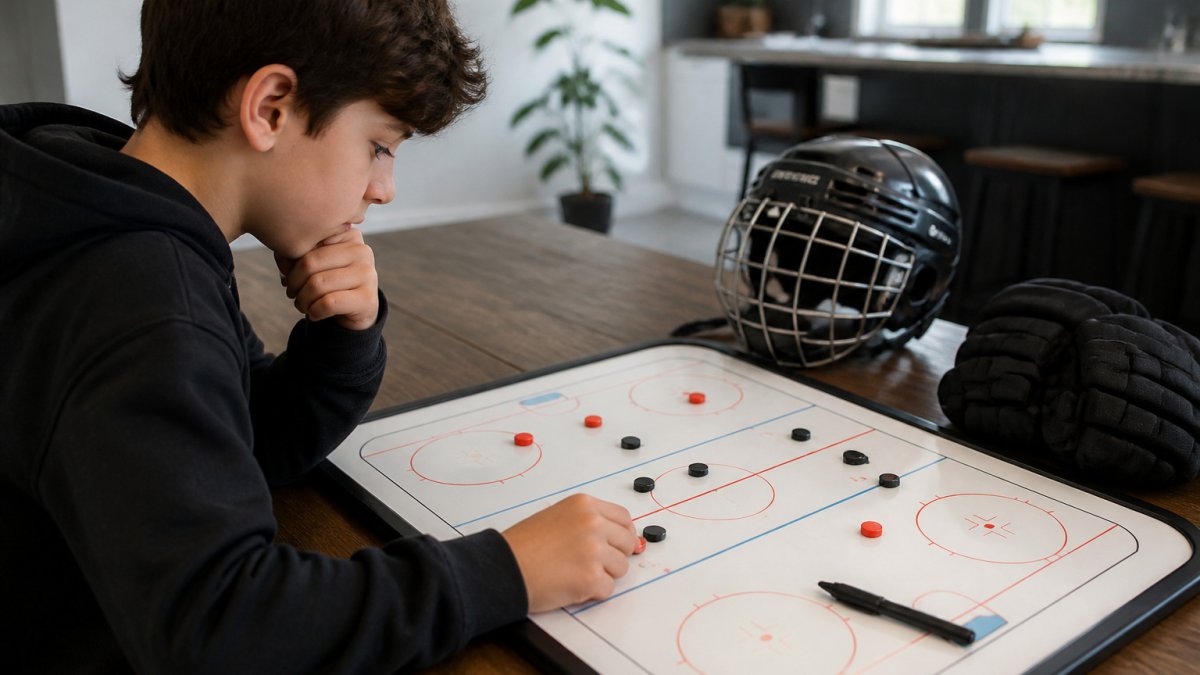
When players visualize where they need to be before stepping on the ice, they anticipate passes, cut off scoring chances, and support teammates without thinking.
1. Master the Structure: Understand Your Defensive Zone Coverage System
Defensive zone coverage is built on structure. Every player has a role; when one freelances, gaps open and the other team scores.
Two main structures dominate youth hockey: the box formation and the diamond coverage. Both work. The choice depends on your team's speed and your opponents' tendencies.
Box Formation Basics
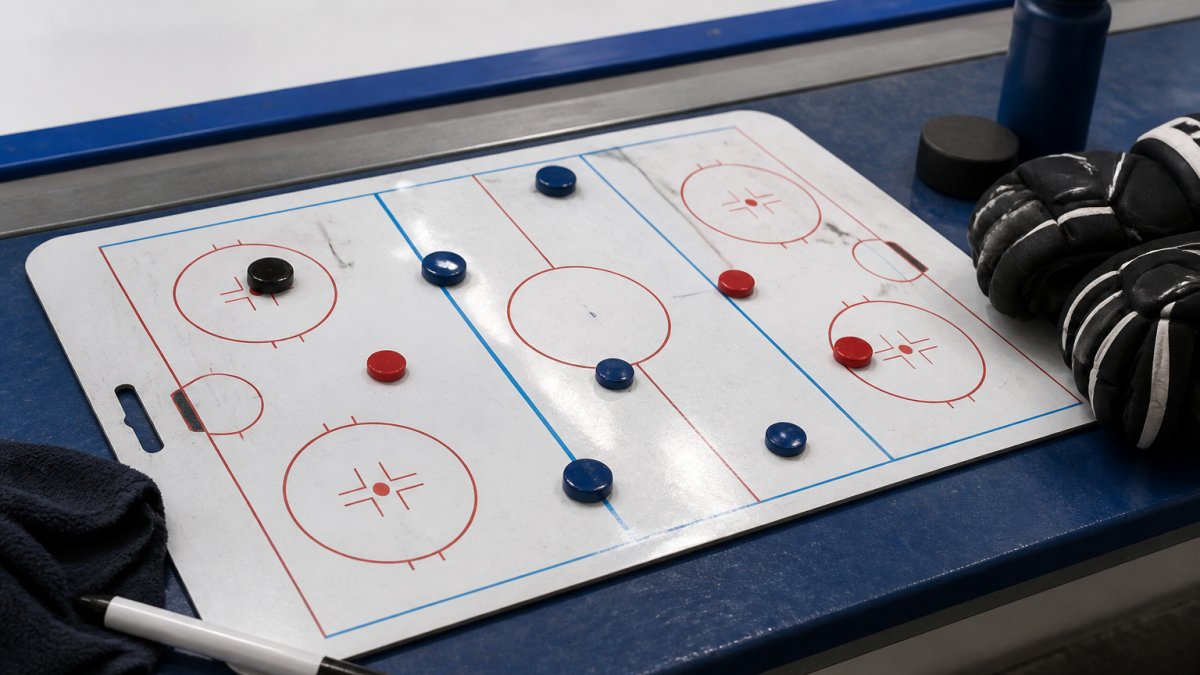
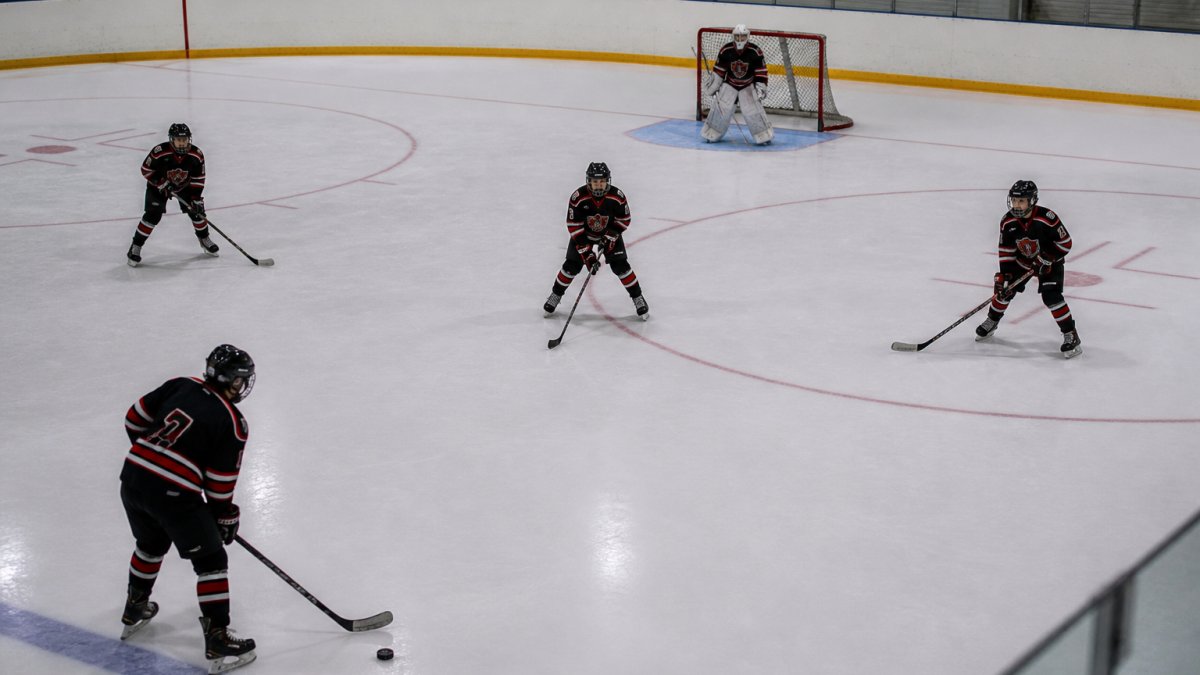
The box formation uses four players to create a square in front of the net: two defensemen anchor the blue line, two wingers cover the wings, and the center sits high to support the backcheck or break out.
It's simple to teach and protects the slot effectively, forming a wall that's hard to break through.
The box works best with positioning discipline: players must stay in their spots even when the puck moves, or a gap opens on the weak side.
Key positions in the box:
- Defensemen: Protect the blue line, clear rebounds, start breakouts
- Wingers: Cover the perimeter, force passes to the outside
- Center: Support backchecking, prepare to transition forward
Diamond Coverage Alternative
The diamond uses a different shape: one defenseman sits deep, one high at the top of the circle, the wingers play the wings, and the center floats in the middle.
It covers more passing lanes and is harder to move the puck against around the perimeter, but requires more skating and communication.
The diamond works better against teams that move the puck quickly and when you want to pressure the puck carrier aggressively.
Key positions in the diamond:
- High defenseman: Moves with the puck, applies first pressure
- Deep defenseman: Protects the net, covers the slot
- Wingers: Adjust based on puck location, seal off the boards
- Center: Rotates to cover gaps, supports transitions
2. Learn Position-Specific Hockey Defensive Zone Responsibilities
Every player has a job in the defensive zone. When each understands their role, the team moves as one unit; confusion happens when nobody knows who covers what.
Download Hockey Positioning™ and transform how your team learns positioning.
Frequently Asked Questions
What is defensive zone positioning in hockey?
Defensive zone positioning is where each of the five players on the ice positions themselves to stop the opposing team from scoring. It involves maintaining proper spacing, protecting the high-danger area (the slot or 'house'), and covering passing lanes. Good positioning means players are ready to intercept passes, pressure the puck carrier, and support teammates without leaving dangerous gaps.
How can young hockey players improve their defensive zone awareness?
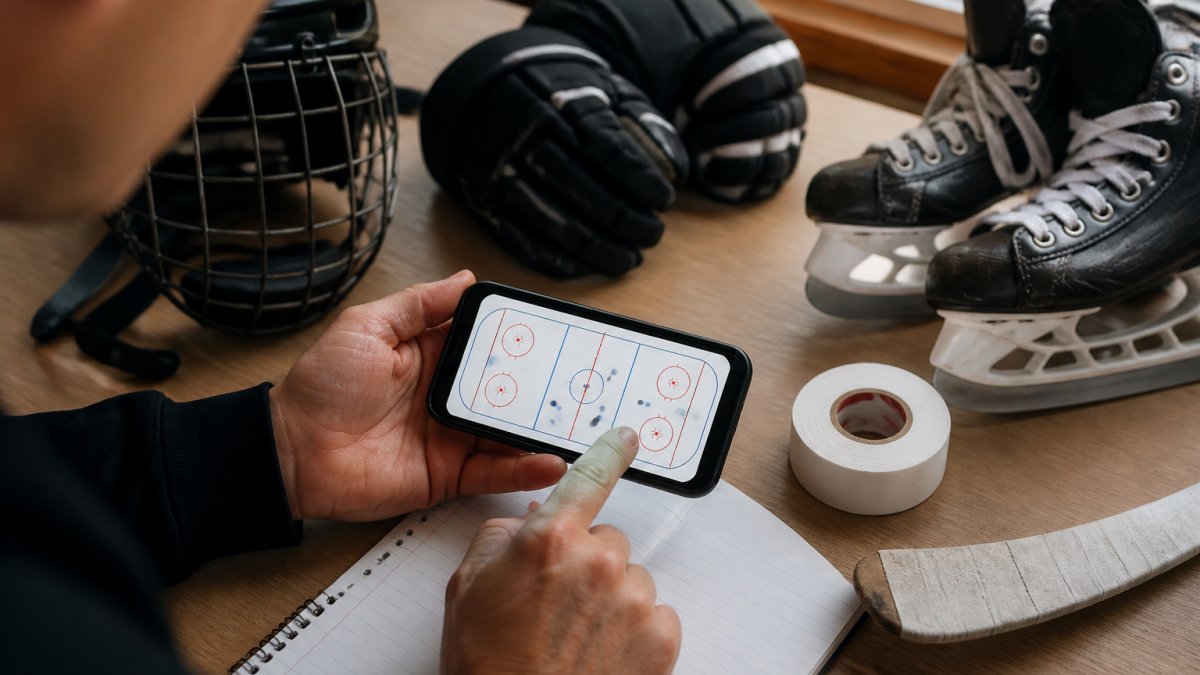
Young players improve awareness through repetition, drills, and visual learning. Practice five-on-five coverage drills that emphasize reading the puck carrier and anticipating passes. Interactive tools that show correct positioning for every puck location help players understand the 'why' behind each movement. Start with basic box formation, then progress to more complex scenarios as understanding grows.
What drills help improve defensive zone positioning?
Effective defensive zone positioning drills include three-on-three rotation exercises to build spacing and support, five-on-five full-ice drills to practice real-game scenarios, and solo practice using interactive visual tools at home. Solo drills can focus on anticipating passes, reading puck movement, and understanding where defenders should be positioned for different play situations.
How do you defend the slot in hockey?
To defend the slot (the high-danger area directly in front of the net), position defenders between the puck and the net, seal off passing lanes, and maintain stick position to block shots and passes. Anticipate cross-ice and point-to-point passes before they happen. Stay tight to attackers in the slot, communicate with your goalie, and be ready to clear rebounds. This is the most critical area to protect.
Featured Resources
USA Hockey's official coaching guide on defensive zone strategies
Hockey Canada's positioning and system fundamentals for youth programs
International Ice Hockey Federation guidelines on youth hockey skill development