 How-to
How to Explain Hockey Offsides to a 6 Year Old
Quick Summary
Hockey offsides means a player crossed the blue line into the attacking zone before the puck did. Tell a 6 year old: the puck goes through the door first, then you follow. Both skates must cross after the puck.
- Offside happens when a player's skates cross the blue line before the puck does.
- Keep it simple for kids: "Puck first, me second.
- The skates decide the call, not the body, stick or hands.
- Use two blocks as a blue line and toy players to demonstrate.
- Keep icing and offside separate, since they are different rules.
Table of Contents
- Why the Offside Rule Confuses Young Players
- The Blue Line Rule in Plain Language
- Hockey Offside Examples a 6 Year Old Can Picture
- A Quick Demonstration You Can Do Without a Rink
- Explaining Icing and Offside Without Mixing Them Up
- A Short Script for Parents and Coaches
- Offside Video for Kids and a Practice Game to Finish
- Frequently Asked Questions
Why the Offside Rule Confuses Young Players
Last Updated: November 19, 2026
Explaining hockey offsides to a 6 year old can be harder than it looks. Many kids want to chase the puck rather than wait behind a line. The idea is simple: players need to be in the right place at the right time.
The offside rule is confusing for young players because it depends on where players are, not just where the puck is. A child who has never seen a blue line can't picture why a teammate standing in the wrong spot stops the play.
Many young players also get mixed up because the rule feels like a penalty. It isn't. Offside is about timing and position.
- Kids focus on the puck and miss the players around it
- The blue line feels abstract until they can see it
- Coaches often explain the rule faster than a child can process it
Many kids find it easier to understand an idea when they can see it first, so a simple, hands-on approach can work well.
The Blue Line Rule in Plain Language
Offside happens when a player enters the attacking zone before the puck does. Think of the blue line as a door. Everyone has to walk through the door after the puck, not before it.
Here's the simplest way to say it to a 6 year old: "The puck goes through the door first. Then you can follow."
That one sentence is the whole rule. A child does not need the word "offside" to understand it at first. They only need to know the order: puck first, player second.
- The blue line marks the edge of the attacking zone
- If a player's skates cross it before the puck, that's offside
- Both skates must cross the line after the puck for the play to count
A useful detail for parents: the rule is about the player's skates, not their stick or their hands. A child can stand with their body leaning over the line and still be onside as long as both skates are behind the puck when it crosses. That is why coaches say "watch the feet." Pointing at the skates, not the whole body, can help clear up the confusion.
Here is a ready-to-say script for a parent or coach:
"See the blue line? That's the door. The puck has to go through the door first. If you go through before the puck, the whistle blows. So wait for the puck, then skate in."
Then give the child a one-sentence reminder they can repeat during a game: "Puck first, me second." A child can say that short line to themselves while standing at the blue line.
Watch out: a player is not offside just for being near the blue line. Standing next to the line with both skates on the correct side is fine. The call only happens when the skates actually cross into the attacking zone before the puck. Correcting that misunderstanding early prevents a child from thinking they are always in trouble near the line.
This is the core rule. Most other details build on it.
Hockey Offside Examples a 6 Year Old Can Picture
Examples help kids understand faster than definitions. Use situations they already know, like lining up for recess or waiting for a turn on a slide.
Onside example: The puck crosses the blue line first. Then a teammate skates in behind it. The play is allowed.
Offside example: A player races over the blue line while the puck is still behind it. The whistle blows.
Try this with a child:
- Put two toy blocks on the floor as the blue line.
- Place a small ball on one side.
- Ask the child to move a toy player across the line before the ball. Then have them try it after the ball.
Kids usually get it after two or three tries. The hockey offsides examples work best when the child does the moving, not the adult.
A Quick Demonstration You Can Do Without a Rink
You don't need ice to teach this. A living room floor works fine.
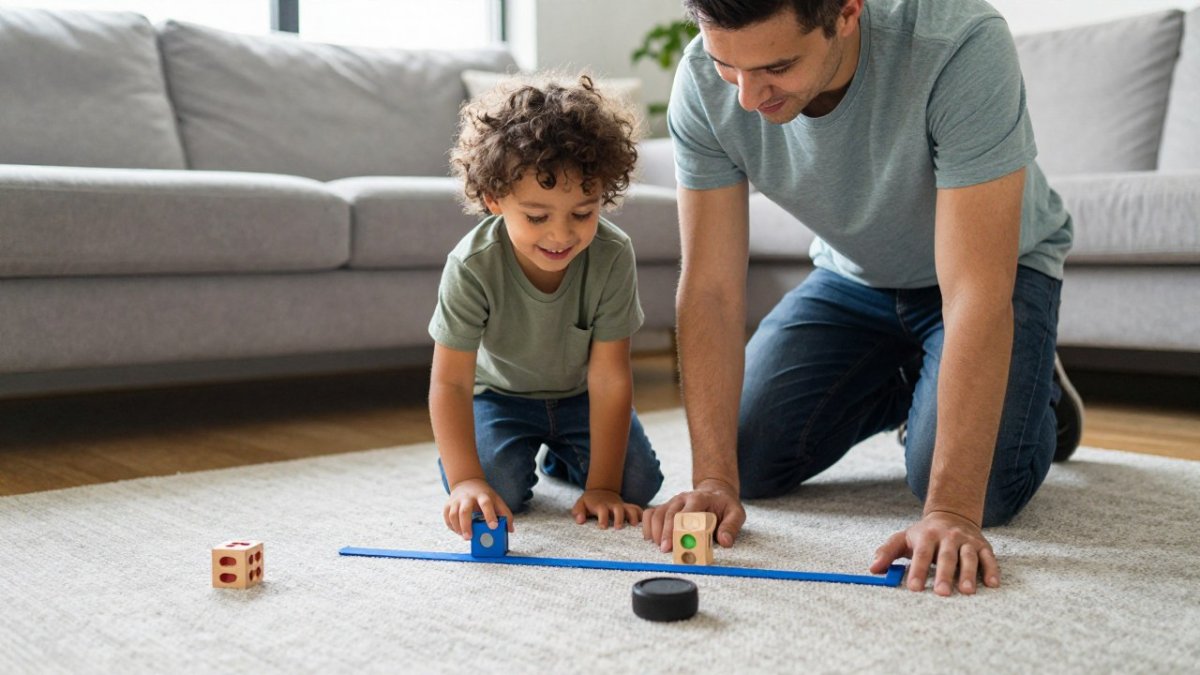
Set up a simple rink in five minutes:
- Make a blue line with two blocks, a strip of tape, or a folded towel.
- Put a small ball on one side as the puck.
- Pick two toy figures as the players.
- Mark one side as the attacking zone with a second line or a book.
Then run three short scenarios, one at a time. Let the child move the toys, not you.
Scenario 1, Onside. Roll the ball across the blue line first. Then walk a toy player across. Ask: "Who went through the door first?" The child should say the puck. Say: "Good, that's onside. The play counts."
Scenario 2, Offside. This time walk the toy player across the line while the ball is still behind it. Ask: "Did the player go first?" The child should say yes. Say: "That's offside. The whistle blows."
Scenario 3, Skate position. Place the toy player right on the line with the ball behind. Ask: "Is the player in the zone yet?" The answer is no, because the skates have not crossed. Then slide the player over before the ball and repeat the offside call. This shows that the feet decide the call, not the body.
Repeat the three scenarios until the child can say the rule in their own words. The hands-on version can stick better than a lecture because the child is the one moving the pieces.
If your child is ready for one more step, add a simple tag-up demo. Slide the toy player back behind the blue line, then roll the ball in again. Say: "If you went in too early, you can come back out and try again. Coming back out is called tagging up." Keep it to one sentence. A delayed offside is easier to understand after the basic rule is solid, not before.
This quick demo also shows why positioning matters: a player who is too early is out of the play, even if they are fast.
Here is a quick reference for the three demo scenarios and what each one shows.
| Scenario | What the child does | Correct call |
|---|---|---|
| Onside | Puck crosses the blue line first, then the toy player follows | Onside, play counts |
| Offside | Toy player crosses the line while the ball is still behind it | Offside, whistle blows |
| Skate position | Player sits on the line with the ball behind, then crosses early | Feet decide the call, not the body |
Explaining Icing and Offside Without Mixing Them Up
Icing and offside both involve the puck crossing lines, so it can help to keep them separate.
- Offside: Players cross the blue line before the puck
- Icing: The puck crosses the far red line and the whole length of the rink without being touched
Two different toy setups can show each rule separately, which can help avoid mixing them up.
A Short Script for Parents and Coaches
Use this short script when you explain the rule:
"Pucks go first, players follow. If you skate over the blue line before the puck, the whistle blows. Wait for the puck to cross, then go."
Repeat it during practice.
Coaches can also ask kids to say the rule back as a quick check of their understanding.
Offside Video for Kids and a Practice Game to Finish
Short videos can help. Look for simple, child-friendly clips that show the blue line and the puck crossing before players.
Finish with a practice game. Set up two blue lines with cones. One player tries to cross the line early, and the others call "offside" if they do. Switch roles every round.
Ready to help your child see positioning on the ice? Try Hockey Positioning™ to watch players move into the right spots for every game scenario. Download it on the App Store and start practicing today.
Frequently Asked Questions
How do you explain hockey offsides to a child?
Start with one idea: the puck has to cross the blue line before the players do. Picture a line on the ice that the puck must lead the way over, like a balloon that has to float through a door before the kids run through. If a player's skates cross the blue line into the attacking zone before the puck does, the whistle blows. Keep the words short, point to the lines on the ice or on a diagram, and let the child repeat the rule back in their own words before moving on.
What is the offside rule in hockey in simple terms?
In simple terms, a player cannot enter the attacking zone ahead of the puck. The puck goes first across the blue line, then the players follow. Many beginners think any player just being near the line is offside, but the rule is about who crosses first. For a six year old, say it as one sentence: puck first, then teammates. Once that clicks, the details like tagging up later can wait for practice.
What is the difference between offside and icing in hockey?
Offside happens in the attacking zone when a player enters ahead of the puck. Icing happens when a player shoots the puck from their own side all the way past the far red line, and it is not touched by anyone. Offside is about the blue line and entry order. Icing is about the puck traveling the whole length of the rink. For a child, offside means the puck went in first, and icing means the puck flew too far down the ice.
Are hockey offside rules different for young players?
The core rule is the same at every level: the puck must enter the attacking zone before the attacking players. Youth leagues often focus on teaching the idea rather than calling every close play, and your child's coach may be more lenient about delayed offsides while kids are still learning. Ask the coach how they call offsides in practice so you can use the same words at home.