 blog
7 Best Hockey Training Apps for Adults
Table of Contents
- Why Hockey Training Apps Matter for Adult Players
- Hockey Apps for Beginners: Starting Your Learning Journey
- Hockey Positioning Apps That Teach Strategic Play
- Hockey Stickhandling Training Apps for Skill Development
- Hockey Drills Apps: Practice Anywhere, Anytime
- What to Look for When Choosing a Hockey Training App
- Can Apps Replace On-Ice Practice?
- Frequently Asked Questions
Last Updated: October 8, 2026
Why Hockey Training Apps Matter for Adult Players
Adult hockey players face a unique challenge: they're learning a sport with complex spatial awareness and positional strategy, often without the foundational coaching that younger players receive. Hockey training apps address this gap by making positioning and game strategy visual and interactive rather than abstract.
The real value isn't replacement for on-ice time. It's acceleration. Apps let you understand what you're supposed to do before you step on the ice, which means your practice hours count for more. When you can visualize where you should be during a power play or penalty kill, the actual execution comes faster.
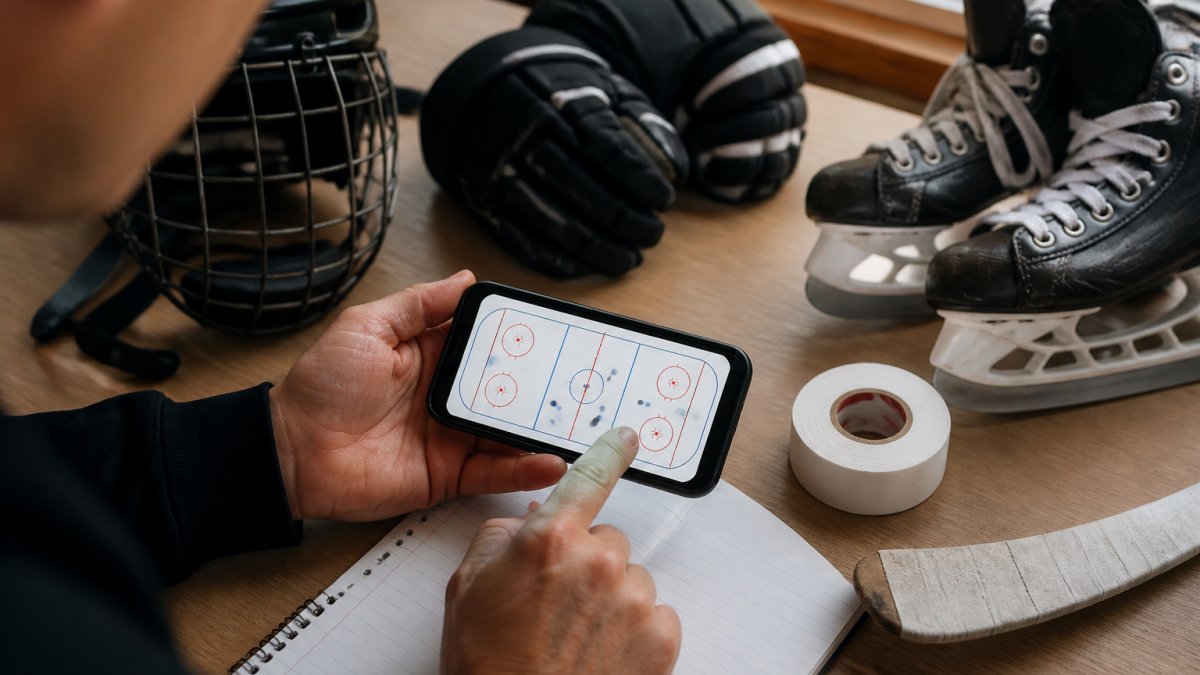
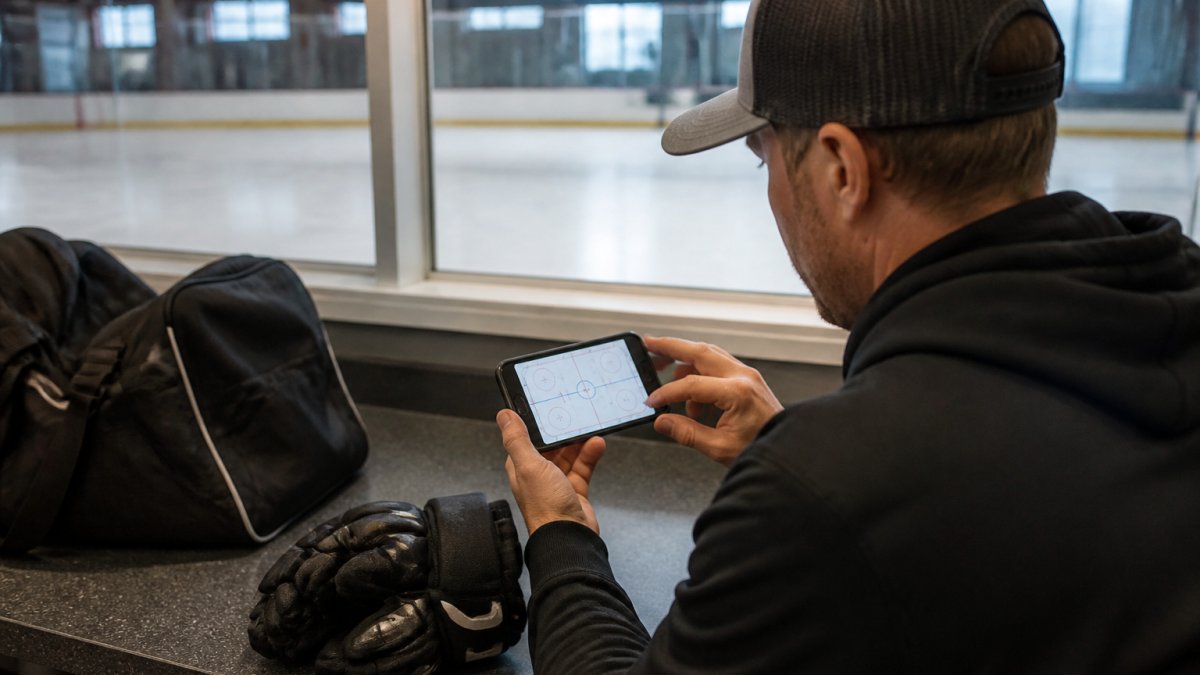
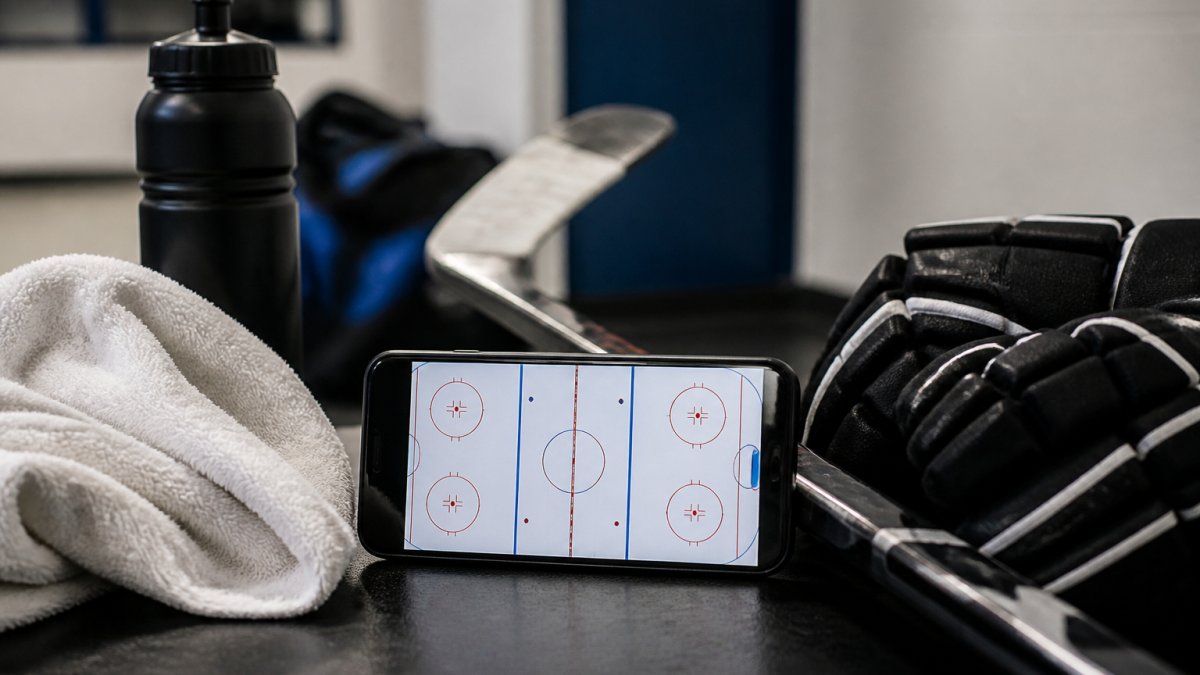
Hockey Positioning™ transforms this learning process by letting you drag the puck across an interactive ice surface and instantly see how players should move. This visual approach works because positioning isn't something you can memorize from a diagram, you need to see it in motion, understand the angles, and build that spatial awareness.
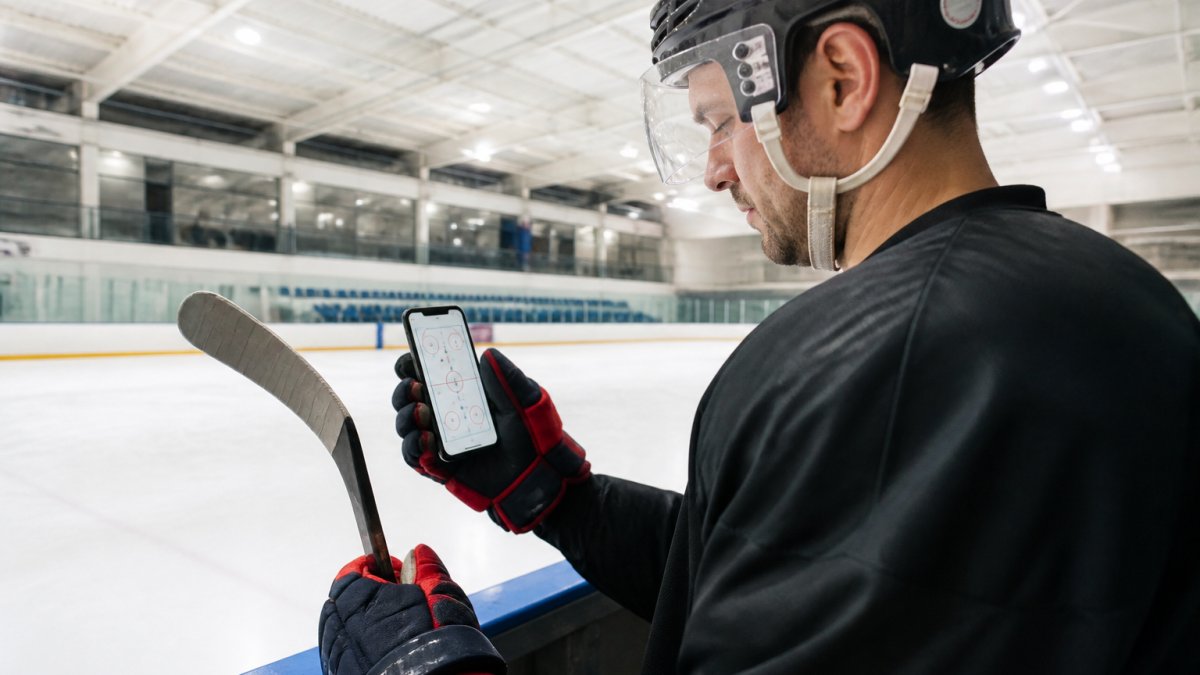
Below, we'll walk through the best hockey training apps available and what makes each one valuable for different learning styles and skill levels.
Hockey Apps for Beginners: Starting Your Learning Journey
If you're new to hockey, the fundamentals feel overwhelming. There's so much happening simultaneously, you're managing the puck, reading the ice, and trying to remember where you should be. Apps designed for beginners break this down into manageable pieces.
Hockey Positioning™ stands out for adult beginners because it eliminates the need for complicated diagrams. Instead of staring at a whiteboard sketch, you interact with a full ice surface. The app shows you exactly where to be for every game scenario, from basic 3-on-3 to power plays and penalty kills. Pro coaching tips appear at every puck location, so you're not just seeing the right position, you understand why it matters.
What makes this approach stick is the immersion. You're not passively watching; you're dragging the puck yourself and seeing the team respond. This active learning creates muscle memory for positioning long before you hit the ice. The customizable jersey colors and immersive hockey sounds add engagement, especially important when you're starting out and motivation can fade.
The key feature for beginners is simplicity without oversimplification. The app teaches real positional play, not dumbed-down versions, but presents it in a way that doesn't require years of hockey knowledge to understand. This is critical for adults who don't have youth hockey experience to build on.
Other hockey apps for beginners tend to focus on drills or skating mechanics. Those matter, but they come after you understand where to be. That's why positioning apps should be your first stop.
Hockey Positioning Apps That Teach Strategic Play
Strategic positioning separates casual players from competitive ones. Understanding when to pinch at the blue line, how to support the puck carrier, and where to be during transition plays is what wins games.
Hockey positioning apps teach these concepts through scenario-based learning. Rather than memorizing plays, you learn the principles behind them. When you understand why a winger should be high in the offensive zone during a power play, you can adapt that principle to different game situations.
The best positioning apps use full-ice visualization. They show you not just your position but how it relates to every other player on the ice. This spatial awareness is nearly impossible to develop from a coach's whiteboard explanation, you need to see it in motion from multiple angles.
Hockey Positioning™ includes scenarios for power plays, penalty kills, and even game situations like 3-on-3 overtime. Each scenario teaches you the positioning framework, and the pro coaching tips explain the reasoning. This builds your hockey IQ, not just your ability to follow instructions.
What separates positioning apps from other training tools is that they address the mental game directly. You're not just practicing a skill; you're learning to think like a player who understands the ice. For adult players building competitive instincts, this is invaluable.
Hockey Stickhandling Training Apps for Skill Development
Stickhandling is the foundation of everything else. You can't execute a play if you can't control the puck, and you can't improve under pressure if your hands aren't reliable.
Hockey stickhandling training apps focus on building muscle memory through repetition and progression. The best ones use video demonstrations combined with tracking or feedback mechanisms so you can see if you're doing the drill correctly.
These apps typically include:
- Cone drills you can practice off-ice
- Speed and accuracy challenges that increase difficulty
- Video tutorials showing proper hand positioning and movement
- Progress tracking so you can measure improvement over time
The advantage of app-based stickhandling training is accessibility. You can practice the fundamentals anywhere, not just on ice. Many drills can be done with a ball and stick on pavement or in a gym, making consistent practice possible even when ice time is limited.
For adult players, stickhandling apps work best as supplementary tools. They're not replacing on-ice practice, but they're building the muscle memory that makes your ice time more productive. Consistent off-ice work translates directly to better puck control during games.
Hockey Drills Apps: Practice Anywhere, Anytime
Hockey drills apps give you structured practice routines you can follow independently. Rather than relying on a coach to design your practice, these apps provide frameworks for improving specific skills.
The most useful drills apps include:
- Warm-up routines designed for different skill levels
- Skill-specific progressions (passing, shooting, footwork)
- Conditioning drills that simulate game intensity
- Game-situation drills that teach decision-making under pressure
- Timed challenges so you can track improvement
What matters with drills apps is that they're designed by hockey professionals who understand progression. A good app doesn't throw you into advanced drills; it builds your foundation first, then increases complexity as you improve.
For adult players with limited practice time, a structured drills app ensures you're using your time efficiently. Instead of wandering through a practice wondering what to work on, you follow a plan designed to build specific capabilities.
The best drills apps also include video demonstrations so you can see proper form before attempting the drill. This prevents you from practicing bad habits, which is especially important when you're learning without constant coaching feedback.
What to Look for When Choosing a Hockey Training App
Not all hockey training apps serve the same purpose. Before downloading, identify what you actually need to improve.
Start by assessing your current level. Are you struggling with basic positioning? Then a positioning-focused app like Hockey Positioning™ is your priority. Are you comfortable with positioning but need to sharpen your stickhandling? Then a skills-focused app makes sense. Are you working on game conditioning? A drills app with timed challenges would be better.
Next, consider your learning style. Some people learn from video demonstrations. Others need interactive visualization. Still others prefer structured practice routines. The app that works for your friend might not work for you.
Look for these practical features:
- Clear progression from beginner to advanced content
- Video demonstrations of proper technique
- Progress tracking so you can see improvement over time
- Offline functionality if you want to use it away from home
- Reasonable pricing with transparent terms
The app should also match your schedule. If you have 15 minutes a few times per week, you need an app with short, focused sessions. If you have longer training windows, an app with comprehensive routines makes more sense.
Finally, consider whether the app is designed by hockey professionals. Apps created by actual coaches and players tend to teach concepts that actually transfer to on-ice performance. Apps designed by people outside hockey often miss crucial details about how the sport actually works.
Can Apps Replace On-Ice Practice?
This is the question every adult player asks: if I use these apps, can I skip some ice time?
The honest answer is no. Apps are acceleration tools, not replacements. You cannot develop true hockey skills without being on the ice. Balance, edge work, decision-making under game pressure, and the physical demands of the sport require actual ice time.
What apps do is make your ice time more efficient. When you understand positioning before you step on the ice, you can focus on execution rather than figuring out where to be. When you've practiced stickhandling drills off-ice, your hands are sharper during games. When you've studied game scenarios through an interactive app, your decision-making is faster.
Think of apps as the mental and foundational work that makes physical practice more productive. You still need the ice. You're just arriving better prepared.
For adult players with limited ice time, which is most of us, this efficiency matters enormously. If you have four hours per week on ice and can use apps to improve the quality of those four hours, you'll progress faster than someone with eight hours per week who isn't preparing.
The most effective approach combines three elements: app-based learning for positioning and strategy, off-ice drills for skills, and on-ice practice for execution. Each one serves a purpose. None of them alone is sufficient.
Adult hockey players have more training resources available now than ever before. The challenge is choosing tools that actually improve your game rather than just keeping you entertained.
Hockey Positioning™ stands out because it addresses the positioning knowledge gap that adult players face. Instead of spending months trying to figure out where you should be on the ice, you learn it visually through interactive scenarios. The app includes pro coaching tips at every puck location and covers everything from basic positioning to power plays and penalty kills. For adult beginners and recreational players building positional awareness, this is the most direct path to faster improvement.
Visit the Hockey Positioning™ website to explore pricing options and download the app. Start with a free trial to see how interactive positioning learning works for your game.
Frequently Asked Questions
What is the best hockey training app for adults?
The best hockey training app depends on your goals and experience level. Adults focused on positioning and strategy benefit from apps with interactive ice surfaces and visual scenario training. Beginners should prioritize apps with clear, simple interfaces and pro coaching tips. Competitive players may prefer apps offering advanced drills and tactical depth. Look for apps designed specifically for adult learners, with features that match your current skill level and training priorities.
Are hockey training apps effective for learning positioning?
Hockey positioning apps can be highly effective when they use interactive, visual learning. Apps that let you drag the puck across a full ice surface and see players move to correct positions help you understand game scenarios without complicated diagrams. This visual approach makes tactical concepts stick better than static diagrams or videos alone. However, apps work best as a supplement to on-ice practice, helping you understand *where* to be before you execute it live.
Can a hockey drills app help improve stickhandling at home?
Hockey drills apps can teach you stickhandling patterns, footwork, and hand positioning, but they cannot fully replace physical practice with a stick and puck. Apps work best for understanding technique, visualizing movement patterns, and learning drill sequences. You'll still need to practice the actual stickhandling motions on ice or with equipment at home to build muscle memory and speed.
What should I look for in a hockey training app?
Choose an app that matches your skill level and training goals. Key features include clear, intuitive interface; interactive or visual learning tools; pro coaching tips; coverage of scenarios relevant to your needs (beginner fundamentals, positioning, drills, or stickhandling); and realistic hockey mechanics. For adults new to the sport, apps designed specifically for adult beginners with simple explanations work better than apps built primarily for youth players.