 how-to
How can you improve youth hockey game sense?
Last Updated: October 26, 2026
Quick Summary
To improve youth hockey game sense, teach players to scan and do shoulder checks every two to three seconds, build play recognition through video analysis and pattern observation, practice off-ice decision-making with age-appropriate routines, run positioning drills in game-like situations, and develop situational awareness through a four-stage progression from walk-throughs to live-game scenarios.
- Scanning every two to three seconds helps players know their options before receiving the puck.
- Off-ice sessions should be 10-15 minutes for ages 6-8, 15-20 minutes for ages 9-11, and 20-30 minutes for ages 12-14.
- Small-area games like three-on-three or four-on-four in confined spaces force quick positioning decisions and build game sense.
- The four-stage progression moves from walk-throughs with no pressure to controlled reps, variable reps, and finally game-like situations with consequences.
- Video analysis works best when paired with a specific focus question rather than passive watching.
Table of Contents
- What is hockey game sense and why it matters
- Step 1: Teach scanning and shoulder checks before the puck arrives
- Step 2: Build play recognition through pattern observation
- Step 3: Improve hockey IQ at home with off-ice practice
- Step 4: Use youth hockey positioning drills in practice
- Step 5: Develop hockey situational awareness exercises
- Measuring progress and bridging drills to live games
- Start building game sense with interactive tools
- Frequently Asked Questions
What is hockey game sense and why it matters
Young players who chase the puck struggle because they're reacting instead of thinking.
Hockey game sense can be taught. It's a skill, not a talent, and it's one of the biggest differences between players who plateau and players who keep improving.
Hockey Positioning™ helps players improve their hockey IQ, so they can stop chasing and start leading, play with confidence, and get more ice time because coaches trust their positioning.
Step 1: Teach scanning and shoulder checks before the puck arrives
The foundation of hockey game sense is scanning, constantly looking around to see where teammates and opponents are positioned.
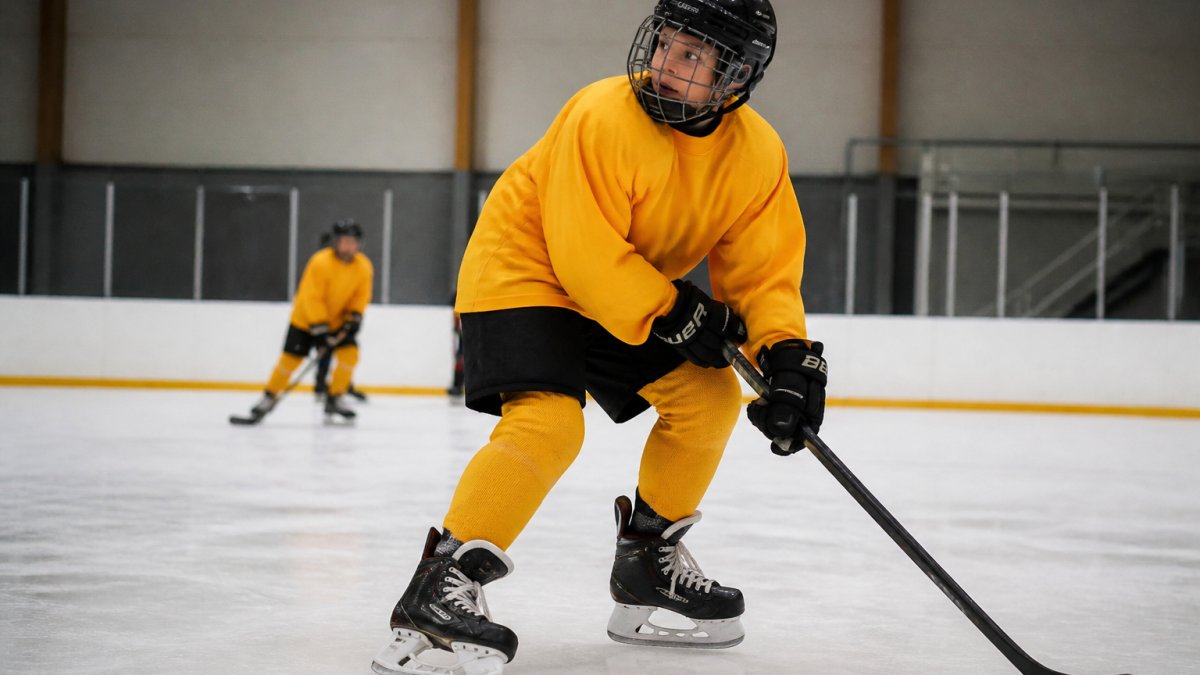
Start with a simple drill: have players skate in a line across the ice and do a shoulder check every few strides.
The mistake most coaches make is teaching scanning only during complex drills.
Here's what scanning teaches:
- Where open ice is located
- Where teammates are positioned to support
- Where defenders are moving
Players who scan consistently make better decisions. They know their options before they need them.
Step 2: Build play recognition through pattern observation
Play recognition is the ability to see a situation developing and know what's likely to happen next.
Young players see individual actions, not patterns. A coach's job is to help them connect those actions into sequences.
Start with video. Show game footage and pause it at key moments.
Then move that learning to practice.
Common patterns youth players should recognize:
- Defensive breakout sequences (where the puck goes, where support forms)
- Offensive zone entry patterns (how to attack, where defenders position)
- Transition play (when to push forward, when to support behind)
The key is repetition. Show the same patterns in different ways. Eventually, recognition becomes automatic.
Step 3: Improve hockey IQ at home with off-ice practice
Hockey game sense doesn't develop only on the ice. Off-ice work builds the mental foundation that transfers to live games, letting youth players improve youth hockey game sense by rehearsing decisions without the speed and pressure of a real shift.
Other providers stop at "watch games and visualize." The missing piece is age-appropriate structure: a 7-year-old and a 14-year-old need different routines, viewing tasks, and ways to talk about the game.
Age-specific off-ice routines
Ages 6-8: Build the looking habit. The goal isn't strategy, it's making scanning and awareness normal. Keep sessions to 10-15 minutes.
- Watch one 5-minute clip of a pro game and count how many times a chosen player looks over their shoulder before receiving a pass.
- Draw a simple rink on paper and place magnets or coins for teammates and opponents. Ask: "Where is the open ice?"
- Play "spot the support": pause a clip and have the player point to the teammate supporting the puck carrier.
Ages 9-11: Connect actions to sequences. Players this age can start linking cause and effect. Sessions of 15-20 minutes work well.
- Track one player for a full shift and write down three things they did without the puck (supported, created space, moved to open ice).
- Pause a clip at a breakout and ask the player to predict the next pass before pressing play.
- Use a whiteboard or a simple app to sketch where players should be on a 2-on-1 or 3-on-2.
Ages 12-14: Study decisions and trade-offs. Older youth players can reason about why a play worked or failed. Sessions of 20-30 minutes are appropriate.
- Watch a period and chart one position's decisions: when they passed, when they carried, when they chipped the puck out.
- Ask "what was the second-best option?" after key plays. This builds the habit of weighing alternatives under pressure.
- Have them explain a power-play setup out loud, then compare it to what the team runs in practice.
Make video review active, not passive
Passive watching builds fandom, not hockey IQ. Give every viewing session a job:
- Focus question: "Where does this player move without the puck?"
- Prediction pause: Pause before a pass and ask what happens next.
- Pattern log: Keep a running list of recurring patterns (breakout shapes, forecheck pressure, zone entries) the player notices across games.
Video analysis tools let players slow down plays, but the tool matters less than the question being asked.
Mental rehearsal that mirrors real decisions
Visualization works best when it's specific. Have players imagine a concrete situation, receiving a pass on the half-wall with a forechecker closing, then walk through their options: where teammates are, where the defense is, what the best play is.
Reading about strategy, positioning, and game theory also helps, as does talking hockey with coaches and experienced players. Questions like "Why did that player move there?" develop critical thinking.
Improve hockey IQ at home with off-ice practice(page:3) offers detailed exercises and strategies for building game sense outside the rink.
A simple weekly off-ice plan
- Monday: 10-minute scanning count on a pro clip.
- Wednesday: 15-minute prediction pause on a breakout sequence.
- Friday: 10-minute whiteboard sketch of one game situation the team will face this week.
Off-ice work that builds game sense:
- Watching pro games with a focus question
- Age-appropriate video analysis of positioning and decision-making
- Reading about hockey strategy
Off-ice practice routines should match the player's age and focus on building specific skills.
| Age Group | Session Length | Primary Focus | Example Activity |
|---|---|---|---|
| Ages 6-8 | 10-15 minutes | Build the looking habit | Count shoulder checks in a 5-minute pro clip |
| Ages 9-11 | 15-20 minutes | Connect actions to sequences | Predict the next pass at a breakout |
| Ages 12-14 | 20-30 minutes | Study decisions and trade-offs | Chart one position's pass/carry decisions |
| Weekly routine | Varies | Consistent reinforcement | Monday scan, Wednesday prediction, Friday sketch |
Step 4: Use youth hockey positioning drills in practice
Positioning drills teach players where to be and why, building muscle memory for support positioning and off-puck movement.
The best positioning drills are game-like, replicating situations players face in actual games.
Small-area games are powerful. Three-on-three or four-on-four in a small zone forces quick positioning decisions: where open ice is, when to support, when to create space.
Transition drills also build game sense.
Youth hockey positioning drills for beginners(page:1) provides specific drills you can run in your next practice.
Effective positioning drills share these traits:
- Game-like situations and constraints
- Limited space to force decision-making
- Repetition with variation
Step 5: Develop hockey situational awareness exercises
Situational awareness is knowing what's happening all around you, not just where the puck is, but where every player is moving and why. For youth players, the fastest way to build it is to isolate one game situation, repeat it with small variations, and progressively add pressure until it looks like a real shift.
Most drill lists stop at naming the situation. The missing piece is the progression from a controlled rep to a live-game decision. Here's a concrete structure you can run in practice.
The four-stage progression
Use the same situation through four stages. Each stage adds cognitive load without changing the underlying read.
- Walk-through (no pressure). Players move at half speed with no defenders. Coach narrates the read: "Puck goes here, support forms here, the open ice is there." The goal is a clear picture.
- Controlled reps (light pressure). Add one passive defender or a coach with a stick. Players repeat the same read five to ten times. Immediate feedback on positioning choices.
- Variable reps (live pressure). Add full defenders and change the entry angle, the forecheck shape, or the starting location each rep. Players must recognize the pattern and adapt.
- Game-like (consequences). Run the situation inside a small-area game where the outcome counts, a goal, a turnover, a regroup. This is where drills transfer to live games.
Concrete situational awareness exercises
Run each of these through the four-stage progression. Keep reps short and rotate players so everyone gets decision reps, not just skating reps.
- Breakout read. Start with a puck below the goal line. Players must recognize where support forms and where the outlet is. Vary the forecheck: one forechecker, then two, then a 2-1-2 look.
- Offensive zone entry. Start at the blue line with a 3-on-2. Players choose between carrying wide, chipping, or hitting a late trailer. Vary the defender's gap and angle.
- Power-play rotation. Run a 5-on-4 with a specific setup. Players learn where the seams open and when to rotate. Add a penalty-kill pressure change each rep.
How to coach the reps
- Ask before telling. After each rep, ask the player what they saw before giving feedback. This builds the habit of self-review.
- One cue per rep. Give a single, specific cue ("scan before the pass arrives" or "find the open ice away from pressure") rather than a list.
- Change one variable at a time. If you change the entry angle and the pressure and the numbers at once, players can't tell what they're learning.
Use 10 best youth hockey ice awareness drills(page:2) to find specific exercises that develop situational awareness in your players.
Measuring whether it transfers
Situational awareness shows up in observable behaviors. Track these across a practice block and into games:
- Shoulder checks before receiving the puck
- Early decisions (puck moved within one or two touches)
- Support positioning (teammate available within a stick length)
A common pattern is that players look sharp in stage 2 and revert in stage 4. That's not a failure, it's a signal to spend more time in stage 3 before adding full consequences.
Players who develop situational awareness make faster decisions, know their role in each situation, support teammates automatically, and stop chasing and start positioning.
Measuring progress and bridging drills to live games
Improvement in hockey game sense is measurable: look for changes in decision-making speed, positioning consistency, and support play.
Track these indicators:
- How quickly players make decisions with the puck
- How often they support the puck carrier
- How many times they anticipate movement before it happens
Use best hockey apps for learning game flow to track these metrics and measure progress over time.
Video is your best tool.
The bridge from drills to live games is progressive complexity. Start with small-area games. Move to larger zones.
Interactive hockey drills for youth teams(page:4) provides tools to make this progression active and engaging.
Common signs of improving game sense:
- Players stop chasing the puck
- Support positioning becomes automatic
- Decision-making gets faster
Start building game sense with interactive tools
Building hockey game sense takes time and repetition. Drills work. Video analysis works. Off-ice practice works.
Hockey Positioning™ lets young players drag the puck across a full interactive ice surface and instantly see where every player should be positioned.
Visual, interactive learning sticks because it's immediate and concrete: players see cause and effect and understand positioning rather than memorizing it.
American Development Model youth hockey guidelines recommend building game sense as a core competency starting at age eight. Hockey Canada's coaching resources emphasize decision-making and awareness development in their official curriculum. USA Hockey coaching education standards stress the importance of teaching players to read the ice and anticipate play.
Start with one drill this week. Add scanning to your warm-up. Record one practice and review one player's positioning. Small steps compound.
Frequently Asked Questions
How can I help my child develop better hockey IQ?
Help your child develop hockey IQ by teaching them to scan the ice constantly, recognize play patterns, and make decisions under pressure. Have them watch game footage and identify where players move before the puck arrives. Use interactive tools that show positioning visually, this makes abstract concepts concrete. Practice small-area drills that force quick decision-making, and talk through their choices after games to build pattern recognition.
Can hockey sense be taught or is it innate?
Hockey sense is absolutely teachable. While some players develop it faster, all players can improve game sense through deliberate practice, observation, and structured drills. Scanning habits, play recognition, and decision-making speed all improve with repetition and feedback. The key is consistent practice, watching games, playing small-area drills, and reviewing decisions in real situations. Interactive visual learning tools speed up the process by making positioning patterns clear.
What's the difference between hockey IQ and technical hockey skills?
Technical skills are what your body does, skating speed, shooting accuracy, stick handling. Hockey IQ is what your mind does, knowing where to be, reading the play, making the right pass at the right time. A player can have excellent technical skills but poor positioning if they don't develop game sense. Both matter: technical skills let you execute the decision, but hockey IQ tells you which decision to make. Young players need both to succeed.
My child plays recreational hockey and still chases the puck, will positioning drills actually transfer to real games?
Yes, but only if drills mimic game pressure and decision-making. Drills that force scanning, quick choices, and support positioning transfer best. Small-area games with limited ice space work well because they replicate the pressure of real play. The key is repeating the same decision-making pattern in different contexts, first in controlled drills, then in progressively more game-like scenarios. Video review after games helps players connect what they practiced to what they see on ice.
Build game sense faster with Hockey Positioning™. Our interactive ice surface shows players exactly where to be for every game scenario, from power plays to breakouts. Download the app today and watch your players transform from puck-chasers into confident, intelligent players who understand the game.