 How-to
How to Choose Your First Hockey Stick: A Beginner's Guide
Quick Summary
Choose your first hockey stick by starting with your height, since the right length matters more than anything else for a beginner. The top of the stick should reach about your chin or nose, with the blade resting flat on the floor in front of your toes. Then match the flex to your body weight, choosing the softer option if you are between ratings.
- Measure stick length in your skates: the top should reach about the chin or nose.
- A stick that is too long makes puck control harder and teaches bad habits.
- Pick flex by body weight; for example, 110 to 150 lbs suggests roughly 50 to 65 flex.
- If you are between two flex ratings, choose the softer one for your first stick.
- Test handedness by noticing which hand feels natural lower on the stick, not by copying others.
Table of Contents
- Start With Your Height and Stance: Hockey Stick Size Chart by Height
- How to Measure Stick Length Correctly
- Pick the Right Flex for Your Body Weight and Strength
- Choose a Blade Curve That Fits Your Shot and Position
- Find Your Handedness with a Simple Beginner Test
- How to Cut a Hockey Stick to Change Its Effective Flex
- Your First Purchase: Budget, Used Sticks and Next Steps With Hockey Positioning™
- Frequently Asked Questions
Start With Your Height and Stance: Hockey Stick Size Chart by Height
Last Updated: November 10, 2026
Choosing your first hockey stick starts with one measurement: your height, because the right length matters more than anything else for a beginner's first stick. A stick that is too long or too short can throw off your balance, your shot and your stickhandling, so get the size right before your first practice. Most beginners grab whatever is on the rack, which is why so many end up frustrated.
This guide walks you through the decisions that matter most, starting with the size chart below.
Hockey stick size chart by height (rough guide):
- Under 4'0" (youth 5-7): a stick reaching roughly to the player's chin or nose
- 4'0" to 4'8" (youth 8-10): a stick reaching roughly to the chin
- 4'8" to 5'2" (youth 11-13): a stick reaching roughly to the chin or the bottom of the nose
- 5'2" and over (junior and adult beginners): a stick reaching roughly to the chin, sometimes a little higher for players who stand tall
These ranges are a starting point, not a rule. Stance and skating style change the right length, so check fit on skates before you buy.
How to Measure Stick Length Correctly
Stand in your skates, or in shoes with a similar height, and hold the stick upright beside you. The top of the stick should reach about the chin or nose. Next, check that the blade rests flat on the floor in front of your toes. If the blade sits far ahead, the stick is too long. If it curls under your heel, the stick is too short.
Watch out: Many parents buy a stick the child will "grow into." A stick that is too long makes it hard to control the puck and teaches bad habits. Buy the right size now and upgrade later.
Adjusting Length for Your Playing Style
Forwards often pick a slightly shorter stick for quick handling and tight passes. Defencemen often choose a longer stick to reach pucks and break up plays from a distance. Adult beginners who skate upright may prefer a bit more length, while players who crouch low usually do better with less.
Pick the Right Flex for Your Body Weight and Strength
Flex describes how much the shaft bends when you load it with weight. A stick with a low flex rating bends easily. A stick with a high flex rating stays stiffer.
For most beginners, flex matters more than people expect. A stick that is too stiff is hard to load for a lighter player, so shots feel weak and inaccurate. A stick that is too flexible bends too much for a stronger player and loses control.
A practical starting point by body weight:
- Under 80 lbs (youth beginners): roughly 30 to 40 flex
- 80 to 110 lbs (older youth and smaller adults): roughly 40 to 50 flex
- 110 to 150 lbs (teen and adult beginners): roughly 50 to 65 flex
- 150 to 180 lbs: roughly 65 to 75 flex
- 180 to 220 lbs: roughly 75 to 85 flex
- Over 220 lbs: roughly 85 to 100 flex
These ranges are a starting point, not a rule. Strength and shooting style change the right flex, so treat the chart as a first filter and adjust after a few sessions.
How to test flex before you commit:
Hold the stick in your shooting stance and try to bend the shaft with your lower hand, as if you were loading a wrist shot. A stick that bends easily with moderate effort is in the right range for a beginner.
Watch out: A stick that is too stiff for your weight will not bend during a shot, so the puck leaves the blade flat and weak. If you cannot flex the stick in your stance, size down in flex rather than trying to muscle it.
Strength and style adjustments:
- A lighter player with good technique can sometimes handle a slightly higher flex than the weight chart suggests.
- A heavier player with a short, quick shot may prefer a softer flex for a faster release.
- Players who take mostly slap shots usually want a stiffer flex than players who rely on wrist shots and quick releases.
- Forwards who shoot in tight often prefer a softer flex for a quick release, while defencemen who take long shots may prefer a stiffer flex for power.
If you are between two flex ratings, choose the softer one for your first stick. It is easier to learn on a stick you can load, and you can move up once your shot mechanics are consistent.
The article gives a rough flex range for each body weight, so you can narrow down your first stick quickly.
| Body weight | Approximate flex |
|---|---|
| Under 80 lbs (youth beginners) | 30 to 40 |
| 80 to 110 lbs | 40 to 50 |
| 110 to 150 lbs | 50 to 65 |
| 150 to 180 lbs | 65 to 75 |
| 180 to 220 lbs | 75 to 85 |
| Over 220 lbs | 85 to 100 |
Choose a Blade Curve That Fits Your Shot and Position
The blade curve changes how the puck sits on the stick and how easy it is to lift the puck for a shot. A deeper curve helps with lifting and wrist shots. A shallower curve gives more control for passing and stickhandling.
Beginners often find a mid-range curve easier to control.
Forwards who shoot often may like a deeper curve. Defencemen who pass a lot may prefer a flatter blade.
Find Your Handedness with a Simple Beginner Test
Handedness means which hand sits lower on the stick. Left-handed players hold the stick with the left hand lower. Right-handed players do the reverse.
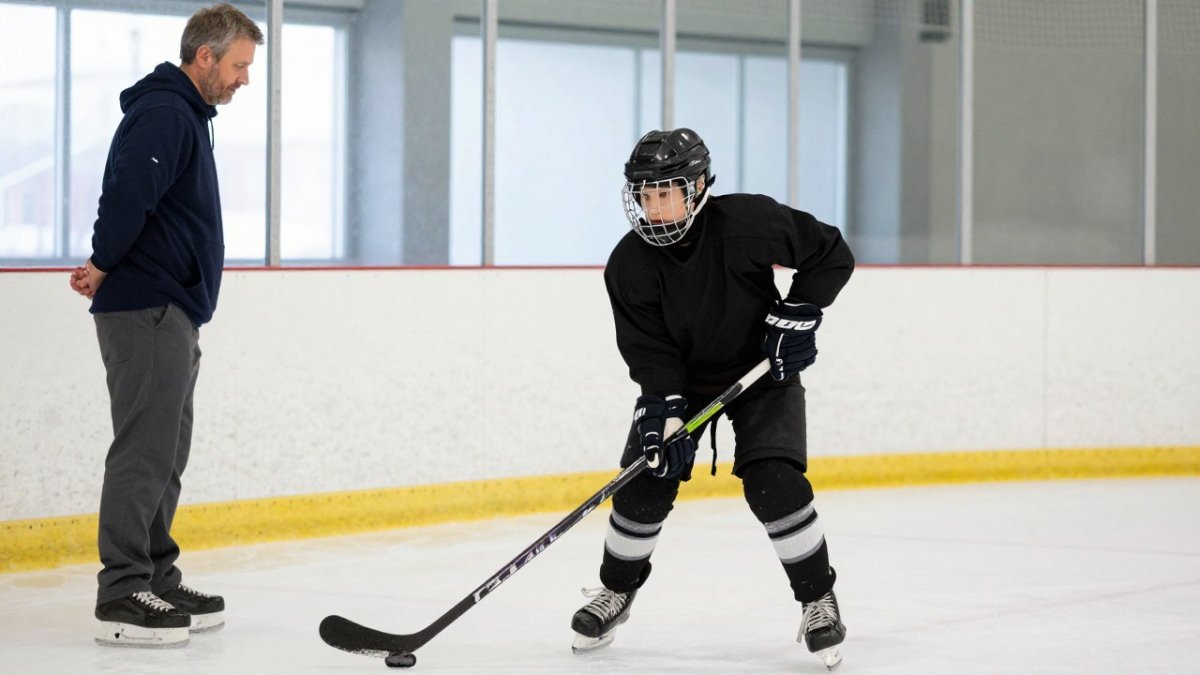
Here is a quick test:
- Stand on the ice in your skates with your feet shoulder-width apart
- Hold a stick with both hands, as if you are about to shoot
- Slide one hand down toward the blade and notice which side feels natural
- Take a few shots or passes and see which side feels more comfortable
Watch out: Many kids are told to switch sides because a coach or teammate uses the other hand. Let the player choose the side that feels natural, because the wrong side makes shooting and passing much harder.
How to Cut a Hockey Stick to Change Its Effective Flex
Cutting a stick shortens it, which makes it stiffer and changes the feel. This is a common trick, but it is easy to get wrong.
Why cutting changes flex:
Flex is measured on the full length of the shaft. When you remove material from the top, the remaining shaft is shorter, so the same amount of force bends it less. The effective flex rises. A stick that felt soft at full length can feel noticeably stiffer after a trim, especially if you remove several inches.
A rough way to estimate the change:
A common pattern is that removing about two inches from a stick raises its effective flex by roughly five points. Removing four inches can raise it by roughly ten points or more. The exact change depends on the stick's construction, so treat this as an estimate rather than a precise formula.
How to avoid cutting yourself into a too-stiff stick:
- Measure the stick at full length in your skates before you cut anything.
- If the stick is only slightly long, cut one inch at a time and re-check the fit.
- If the stick is several inches too long, consider buying a shorter stick or a lower flex rating instead of cutting a stiff stick down.
- If you are between flex ratings and plan to cut, choose the softer rating so the trimmed stick lands in your usable range.
Watch out: Cutting too much can make the stick too short for your height and too stiff to load, which defeats the purpose of buying the right size in the first place. Measure twice and cut once.
Before you cut, check the construction:
Some sticks are not designed to be cut, and cutting them can weaken the shaft or void the manufacturer's guidance. Check the stick's construction and any manufacturer instructions before trimming. Composite sticks with certain internal structures may be more sensitive to cutting than traditional wood shafts, so confirm the stick is intended to be trimmed.
A beginner-friendly alternative:
If you are unsure about cutting, buy a stick that already fits your height and flex range.
Your First Purchase: Budget, Used Sticks and Next Steps With Hockey Positioning™
A beginner does not need an expensive stick. A mid-range composite or a solid wood stick can work well for learning the basics. Spend more only when you know your size, flex and handedness.
Buying used can save money. Before you buy, check the shaft for cracks, dents or soft spots, and check that the blade is not split or heavily worn. Ask whether the stick is the right length and flex for your player.
Learning the game is about more than the stick. Once your gear is sorted, you can build your skills on the ice. The Hockey Positioning™ app shows you where to be in each game scenario, and our hockey gear guide explains what else to buy first. For a broader start, our beginner's guide to learning hockey covers the basics, and our positions guide for adults explains where you fit on the ice.
Frequently Asked Questions
What hockey stick should I get as a beginner?
Choose a stick that reaches roughly to your chin or nose when you stand in skates, then match the flex to your body weight and strength. Beginners usually do well with a moderate flex and a mid-range blade curve such as P28 or a similar general-purpose pattern. Avoid pro-level sticks with very stiff flex and aggressive curves, which are harder to control. Buy from a shop that lets you test the stick, or check the return policy before you order online. A well-fitting entry-level stick is more useful than an expensive one.
How do I choose the right hockey stick size for my height?
Stand in your skates and have the stick held upright beside you. For most beginners, the top of the stick should land somewhere between the chin and the nose. Shorter sticks give better puck control for young or small players, while longer sticks extend reach and can help with passing and defensive positioning. Growing players should expect to replace sticks regularly, so check length again at the start of each season. Adjust slightly based on whether you play forward or defense.
What hockey stick flex should a beginner use?
Flex is the stiffness of the shaft, usually shown as a number. Lighter players and those still building strength do best with a lower flex, because a stiff shaft is hard to load and release. Heavier or stronger players can handle a higher flex for more power. As a rough starting point, match the flex number to your body weight and then go slightly softer if you are new to shooting. Test the feel during warm-up before committing.
Should a beginner buy an intermediate or senior hockey stick?
Most beginners should start with a stick sized for their current height and strength, not for the level they expect to reach. Junior and intermediate sticks are typically lighter and more forgiving, which suits learners. Senior-sized sticks can be too long and too stiff for a young or new player, making technique harder to develop. If you are unsure, pick a stick that feels comfortable in the hands and allows a relaxed stance. Upgrade once your size or skill clearly outgrows it.