 how-to
Positional Play Visual: Teaching Hockey Positions to Kids
Table of Contents
- Why Positional Play Visual Learning Works for Young Hockey Players
- Step 1: Start with the Ice Surface Layout and Player Zones
- Step 2: Use Positional Play Activities for PE to Build Foundation Skills
- Step 3: Teaching Hockey Positions to Kids Through Interactive Scenarios
- Step 4: Visual Hockey Drills for Young Players That Stick
- Step 5: PE Games for Spacing and Teamwork on and Off Ice
- Reinforcing Positional Play Visual Concepts at Home and in Practice
- Frequently Asked Questions
Last Updated: October 21, 2026
Why Positional Play Visual Learning Works for Young Hockey Players
Young hockey players often chase the puck instead of understanding where they should be on the ice. This is one of the biggest challenges coaches face. The problem isn't effort, it's that kids don't have a clear mental picture of positioning.
Positional play visual learning changes this. When players can see the ice layout and understand where teammates belong, everything clicks. They stop reacting and start thinking ahead.
Research from the American Sports Education Program shows that visual learning helps athletes retain strategy information 65% better than verbal instruction alone. Kids remember what they see. They practice what they understand.
At Hockey Positioning™, we've built an interactive app that makes this visual learning simple and engaging. Instead of staring at a whiteboard diagram, players drag the puck across a full ice surface and watch their teammates move into position automatically. The app shows exactly where each player should be for every game scenario, power plays, penalty kills, even basic 5-on-5 play.
This approach eliminates the gap between what a coach draws and what a player actually understands on the ice.
Step 1: Start with the Ice Surface Layout and Player Zones
Understanding the ice begins with knowing the zones. The ice is divided into three main areas: the defensive zone, neutral zone, and offensive zone. Each zone has specific positioning rules.
Start by teaching kids the basic layout:
- Defensive zone: Where your team protects the goal
- Neutral zone: The middle section where teams transition play
- Offensive zone: Where your team attacks
Breaking the ice into zones helps young players understand spacing. They learn that position isn't random, it's based on where the puck is and what zone the team is in.
A visual approach works best here. Show the ice layout on paper, then let players see it in action. When kids can interact with a full ice surface and see players move based on puck position, the zones make immediate sense. They understand why a defenseman stands in one spot and a forward stands in another.
Many coaches find that once players grasp the three zones, learning specific positions becomes much easier. The zones provide the framework. Positions fill in the details.
Step 2: Use Positional Play Activities for PE to Build Foundation Skills
Positional play activities for PE teach kids the mechanics of positioning without needing a full game. These drills build muscle memory and decision-making skills.
Start with simple activities:
- Passing lanes drill: Players stand in formation and practice passing without moving. This teaches spacing and awareness.
- Zone transition drill: Players move the puck from defensive zone to offensive zone while staying in formation. This teaches how positions shift as play moves.
- Breakout drill: The team practices moving the puck out of the defensive zone together. This reinforces defensive positioning and transition.
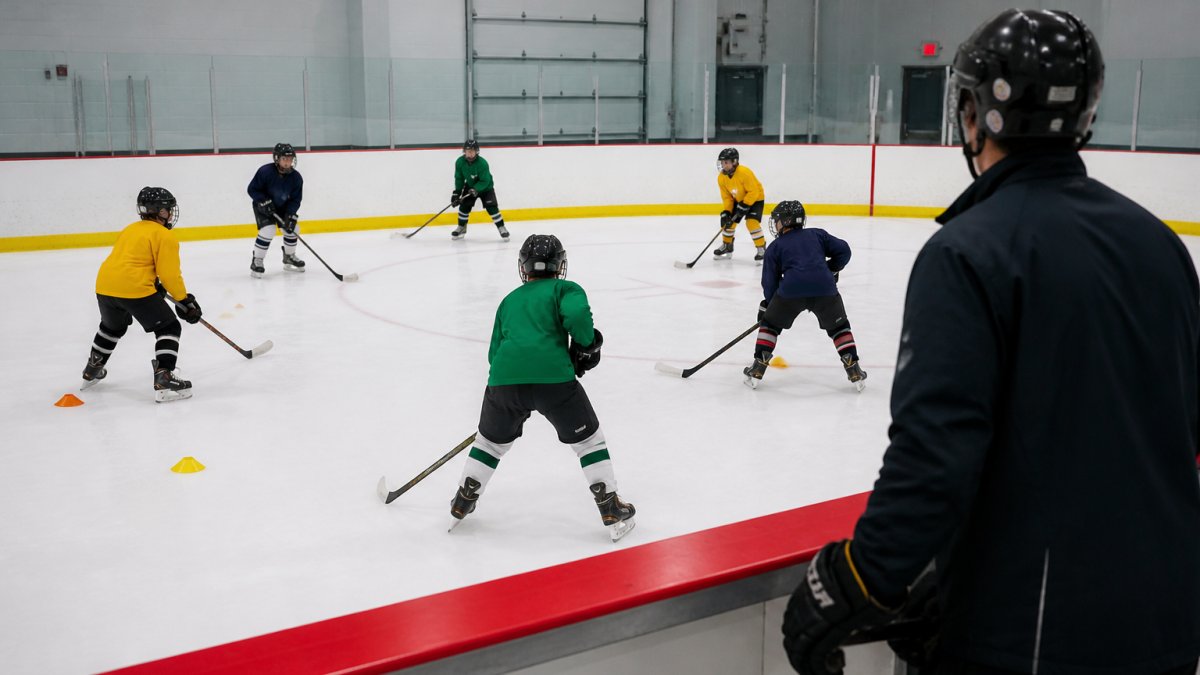
These activities work because they isolate one concept at a time. Kids aren't overwhelmed by a full game. They focus on understanding where to be and why.
The key is repetition with visual feedback. When players practice the same drill multiple times, their bodies learn the positions automatically. Then when a real game starts, they don't have to think, they just move.
Step 3: Teaching Hockey Positions to Kids Through Interactive Scenarios
Teaching hockey positions to kids works best when you use real game situations. Instead of explaining what a winger does in theory, show what a winger does when the puck is in the corner or at center ice.
Interactive scenarios make this clear. A scenario shows:
- Where the puck is
- What each player should do
- Why that positioning matters
For example, a power play scenario shows how positions change when one team has an extra player. Kids see that forwards move closer together and defensemen spread wider. They understand the reasoning, more attackers means tighter spacing to create passing lanes.
Common scenarios to teach:
- 5-on-5 play: Standard positioning with equal players
- Power play: Attacking with an extra player
- Penalty kill: Defending with one fewer player
- Breakout: Moving the puck from defensive zone to neutral zone
- Forecheck: Attacking in the offensive zone
Each scenario teaches a different positioning principle. By working through several scenarios, kids build a complete picture of how positioning changes based on game situations.
Many teams find that interactive scenarios stick better than static diagrams. When kids see players move and understand the purpose of each movement, they retain the information longer. They can apply it during games.
Step 4: Visual Hockey Drills for Young Players That Stick
Visual hockey drills for young players combine movement with clear visual feedback. The drills should show what correct positioning looks like in action.
Effective visual drills include:
- Mirror drill: One player leads, others follow and copy positioning. This teaches spacing and awareness.
- Positional rotation drill: Players rotate through each position on the ice, learning how each position moves and why.
- Scenario-based drill: Coach calls out a game situation (power play, breakout, penalty kill) and players move into correct positions.
- Video review drill: Record practice, then play it back and discuss positioning choices. Kids see their own mistakes and successes.
The video review drill is especially powerful. When players watch themselves, they see positioning problems immediately. They understand what went wrong and why. This visual feedback drives learning faster than verbal correction alone.
According to the National Association for Sport and Physical Education, drills that include visual feedback improve skill retention by 40% compared to drills without it. Kids remember what they see themselves doing.
Step 5: PE Games for Spacing and Teamwork on and Off Ice
PE games for spacing and teamwork don't always need ice. Off-ice games build the same understanding in a gym or field.
Try these games:
- Keep-away: Players pass a ball while staying spread out. This teaches spacing and awareness without ice.
- Cone positioning game: Players stand around cones and move to new positions based on coach calls. This teaches zone awareness and quick movement.
- Relay positioning: Teams run relays while maintaining formation. This teaches teamwork and spacing under pressure.
- Capture the flag (positional version): Players must stay in assigned zones while trying to capture a flag. This teaches zone defense and positioning discipline.
These games are fun because they feel like games, not drills. Kids enjoy them, so they practice harder and retain more. Off-ice games also work for players who don't have regular ice time, they can improve positioning anywhere.
The best part is that these games build confidence. When kids succeed in a game setting, they believe they can succeed on ice too. Confidence translates to better positioning during actual games.
Reinforcing Positional Play Visual Concepts at Home and in Practice
Positioning improvement doesn't stop at practice. Reinforcement at home and in structured practice sessions accelerates learning.
At home, parents can:
- Watch games together: Pause and discuss positioning. Ask kids why players are standing in certain spots. This builds analytical thinking.
- Use interactive apps: Apps like Hockey Positioning™ let kids practice scenarios anytime. They can repeat drills at their own pace and see instant feedback.
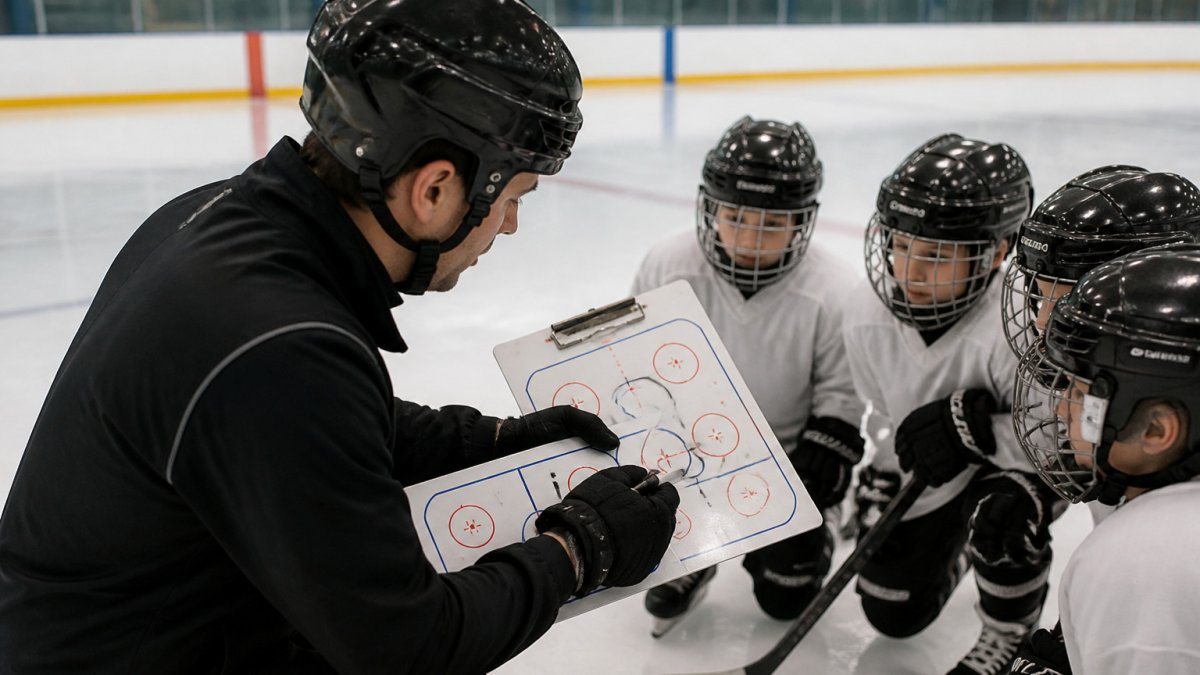
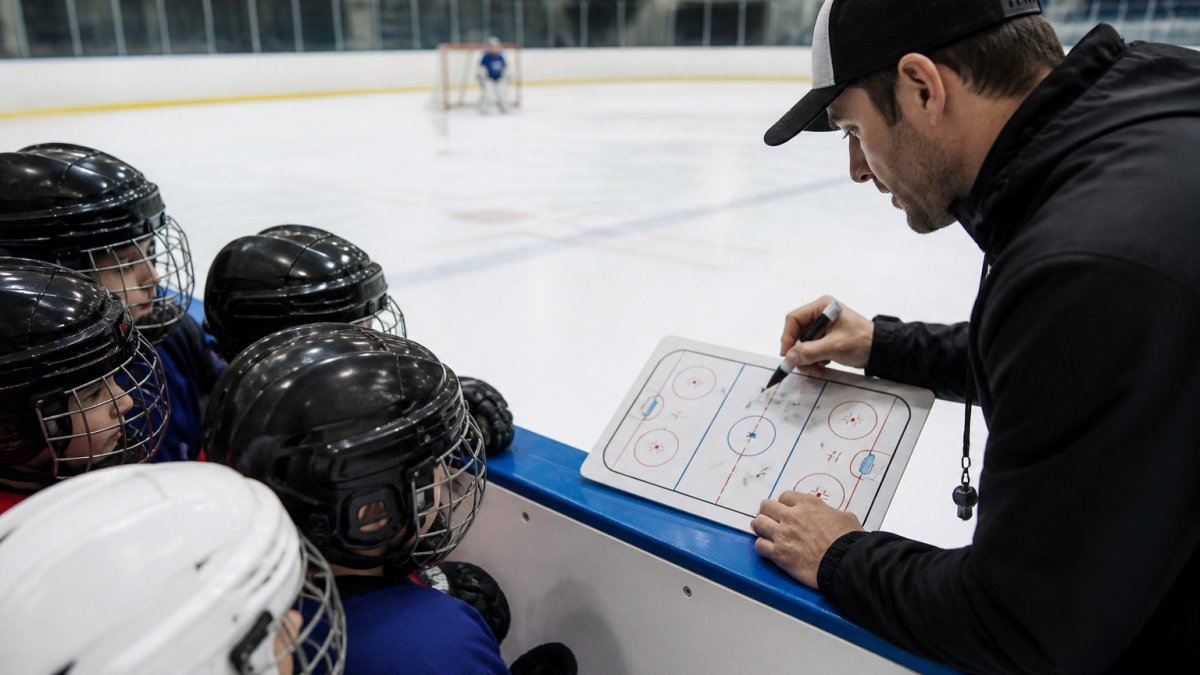
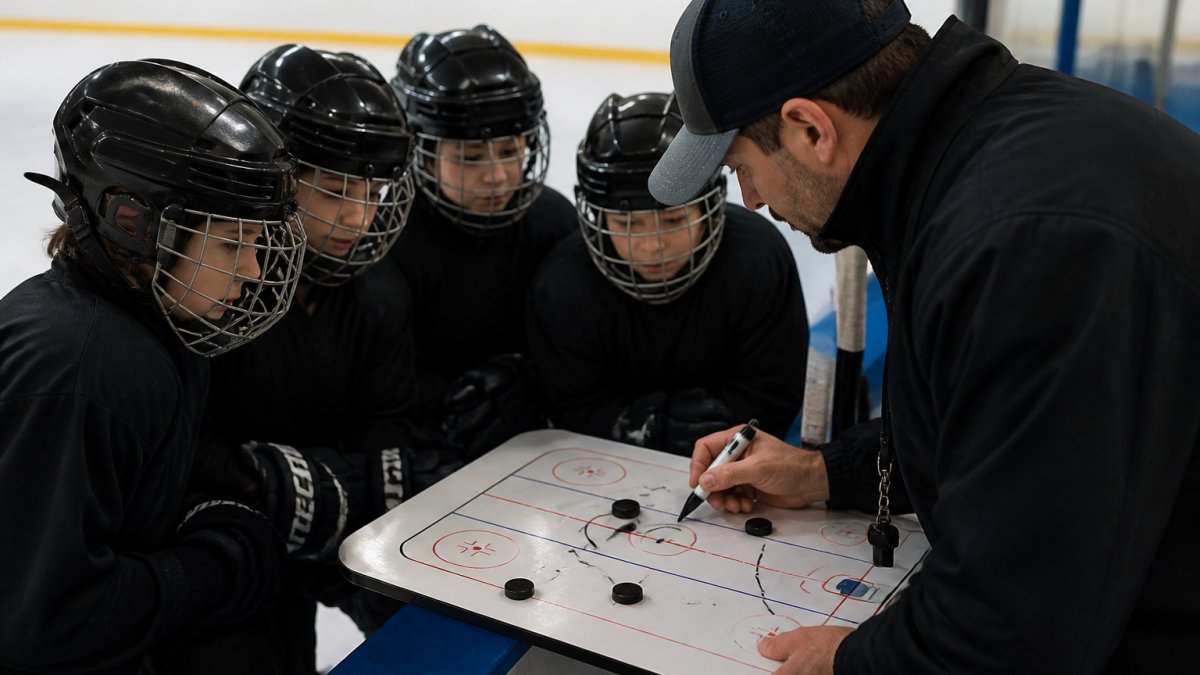
- Draw plays together: Simple ice diagrams help kids visualize positioning. Even drawing on paper reinforces the concepts.
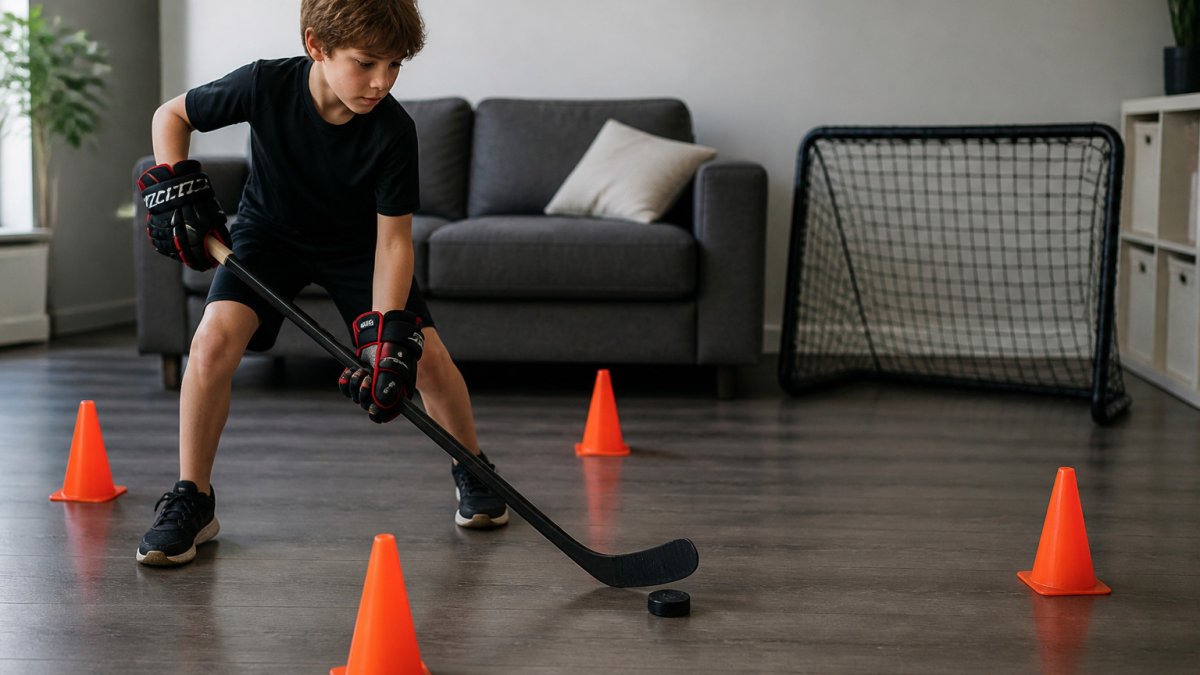
- Play positioning games: Off-ice games at home (like the ones above) keep skills sharp between practices.
In practice, coaches should:
- Review video: Show clips of good and bad positioning. Kids learn from seeing real examples.
- Reinforce with repetition: Run the same drills regularly so positioning becomes automatic.
- Celebrate improvement: When kids improve positioning, acknowledge it. Positive feedback motivates continued effort.
- Adjust complexity gradually: Start simple, then add complexity as kids master basics.
The combination of practice, home reinforcement, and visual feedback creates lasting improvement. Kids don't just learn positioning, they internalize it.
Many parents find that interactive visual tools help their kids practice at home. Hockey Positioning™ offers a way for players to see scenarios and practice positioning independently. Kids can work through power plays, penalty kills, and regular play scenarios whenever they have a few minutes. The app shows exactly where each player should be, which removes guesswork and builds confidence.
Teaching positional play visual concepts to young hockey players transforms how they understand the game. Instead of chasing the puck, they learn to think ahead and move with purpose. Visual learning, interactive scenarios, and consistent reinforcement build hockey IQ that lasts.
The key is making positioning easy to see and understand. When kids can visualize where they should be and why, they play with confidence. That confidence becomes the edge they need to compete at their level.
Download Hockey Positioning™ on the App Store to give your players the visual learning tool they need. The app's interactive ice surface, pro coaching tips, and game scenarios make positional play clear and fun. Your players will stop chasing the puck and start playing smart hockey.
Frequently Asked Questions
How does visual positional play learning help kids stop chasing the puck?
When kids see positions move dynamically on an interactive ice surface, they understand where to be before the puck arrives. Traditional diagrams stay static, kids forget them. Visual, interactive positional play shows cause and effect in real time: when the puck moves to a new location, players instantly shift to correct positions. This repetition builds muscle memory and game awareness that translates directly to on-ice decision-making.
What's the difference between teaching hockey positions to kids using an app versus a coach's whiteboard?
A whiteboard shows one frozen moment. An interactive app lets kids drag the puck across the entire ice and watch all five players reposition instantly for that exact scenario. Kids can experiment: 'What if the puck moves here?' and see the answer immediately. This hands-on exploration sticks far better than passively watching a coach draw lines. The app also includes pro coaching tips at every puck location, reinforcing why each position matters.
Can visual hockey drills for young players work for kids as young as 7?
Yes. Visual hockey drills designed for young players use simple, intuitive interfaces, drag the puck, watch players move. No complex diagrams or text-heavy explanations. Kids aged 5-13 learn best through seeing and doing, not reading strategy. An app built specifically for this age group avoids overwhelming screens and focuses on one clear concept at a time, making even 7-year-olds confident in their positioning.
How do PE games for spacing and teamwork reinforce positional play off the ice?
PE games that teach spacing and teamwork, like modified hockey games with smaller zones or relay drills requiring synchronized movement, train the same decision-making kids need on ice: where to be relative to teammates and opponents. These games build spatial awareness and communication without needing a full rink. When combined with visual positional play learning, kids understand the 'why' behind spacing before they practice the 'how' on ice.