 How-to
Puck Possession Strategies for Adult Rec Hockey Players
Quick Summary
Puck possession in adult rec hockey comes from positioning before you go for the puck. Stop chasing it, angle your body between the puck and your net, and give the carrier one or two open options. Teams that do this keep the puck longer and turn it over less.
- Ask whether you are the closest player with a good angle before moving toward a loose puck.
- Stay one to two strides away from the carrier, on an angle rather than directly beside them.
- Protect the puck with your body low, feet moving, and the puck on your far hip.
- Use a simple three-option setup in the offensive zone: board worker, slot player, and high player.
- Run two-player keep-away for 60 seconds per rotation to build possession skills in short sessions.
Table of Contents
- Why Puck Possession Breaks Down in Adult Rec Leagues
- Position Before You Try to Gain Possession
- Puck Protection Tips for Adults
- Puck Support in Hockey: Giving the Carrier Options
- Hockey Puck Control Drills You Can Run With Limited Ice Time
- Offensive Zone Puck Possession: Simple Team Systems
- Building Possession Habits Into Your Next Shift
- Frequently Asked Questions
Why Puck Possession Breaks Down in Adult Rec Leagues
Last Updated: November 17, 2026
Most adult rec hockey players lose the puck because they chase it. The puck moves, so they move too, and within seconds the whole team is clumped around one spot. The fix is about where you stand, not how fast you skate.
Adult rec leagues make this worse. Players show up with different skill levels, limited practice time, and little shared structure. A team might go a whole season without running a single drill together. Without a common system, everyone reacts to the puck instead of supporting it.
The result is predictable. One player goes after the puck, the next player follows, and the opposing team has an open lane to skate through. Possession breaks down not because anyone lacks effort, but because no one knows where they should be.
- Players chase the puck instead of holding a position
- Teammates crowd the same spot, leaving open ice behind
- Nobody gives the puck carrier an option to pass to
- Shifts end with turnovers and no clear reason why
Position Before You Try to Gain Possession
Good possession starts before the puck ever arrives. Get into position first, and you give yourself a chance to win the battle. Dive at the puck first, and you usually lose it. You can learn practical defensive zone positioning before you commit to going for the puck.
A common mistake is treating every loose puck as yours. Ask one question before you move: am I the closest player with a good angle, or is a teammate in better position? If the answer is the teammate, hold your spot and support him. If you tend to dive at the puck, learn how to stop chasing the puck and hold your position instead.
- Stop skating straight at the puck when you are not the closest player
- Angle your body between the puck and the net you defend
- Keep your stick on the ice and your head up to see the play
Puck Protection Tips for Adults
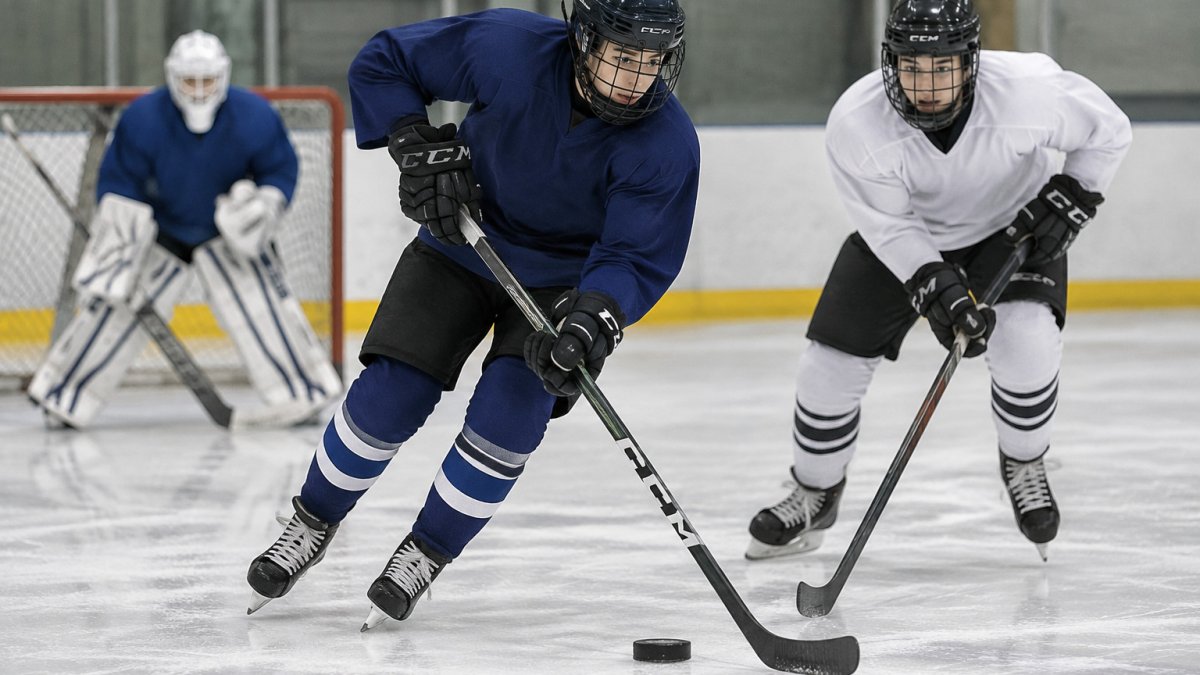
Protecting the puck means keeping your body between it and the opponent. Your stick and skates matter, but your body does most of the work along the boards. In adult rec leagues, where size and speed vary wildly from shift to shift, protection is less about overpowering anyone and more about buying yourself two seconds to find a pass.
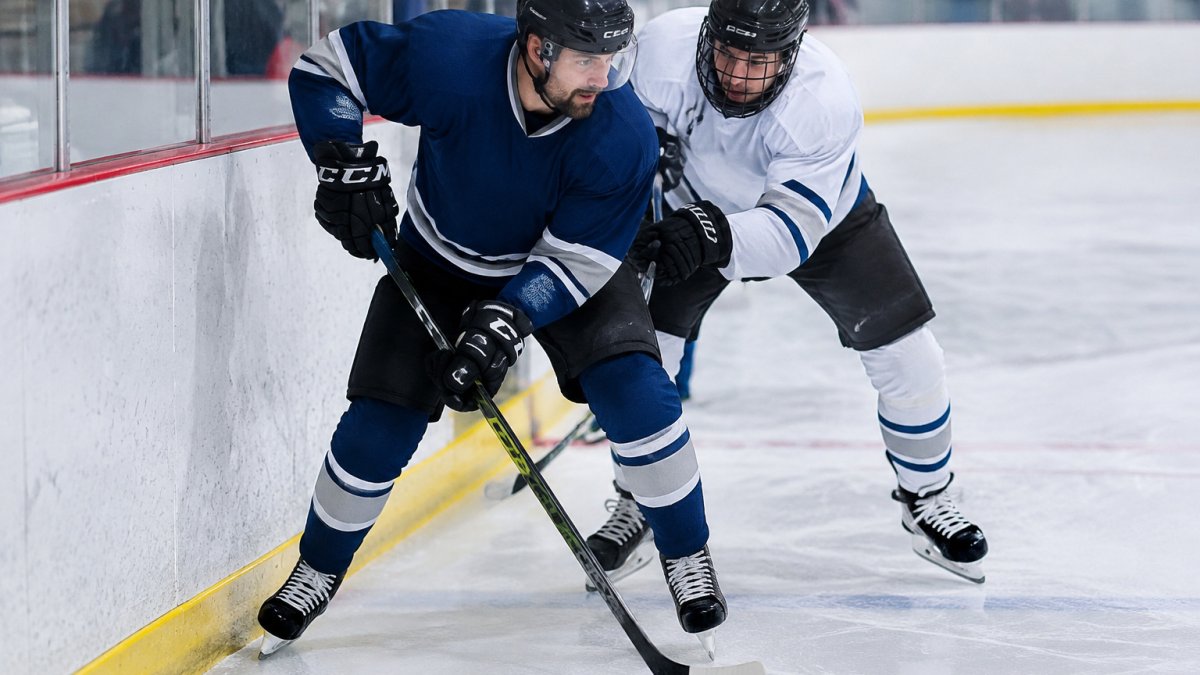
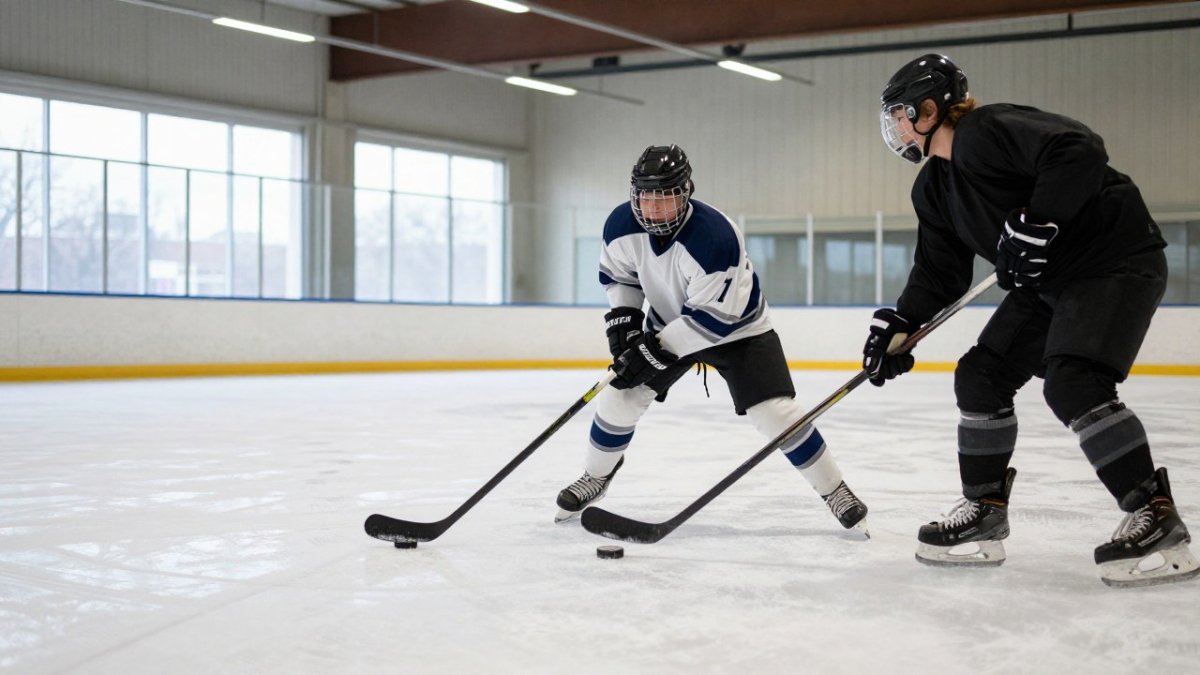
Many adult players try to hold the puck with their stick alone. That rarely works against a bigger or faster opponent. Turn your back to the defender, keep your feet moving, and use your body to shield the puck.
!An adult recreational hockey player in a helmet and jersey shielding the puck with his body and stick along the boards during a weekend league game
Body mechanics that actually work
- Keep your body low with knees bent and weight centered. A wide base lets you absorb a check or a stick lift without losing balance.
- Place your body between the defender and the puck, with the puck on your far hip rather than out in front of you.
- Move your feet in small, choppy steps to stay balanced under pressure. Long strides expose the puck.
- Roll your shoulders toward the defender so your back and hip form a wall, then pivot away from pressure rather than pushing straight into it.
Stick detail most rec players miss
Your stick is a shield, not a fishing pole. Keep the puck on your backhand or forehand depending on which side the defender is on, and use your lower hand to block the opponent's stick rather than reaching for the puck.
Watch out: if you turn your back completely to the defender and stop moving your feet, you invite a legal check from behind in leagues that allow body contact, and you lose your ability to see the outlet pass.
Rec-league trade-offs
In a mixed-skill league, the safest protection play is often the simplest: shield for one beat, then move the puck to a supporting teammate rather than trying to hold it for a highlight-reel shift.
Puck Support in Hockey: Giving the Carrier Options
Puck support means being an open option for the player with the puck. Without support, the carrier has to make a risky decision alone. With close support, they have a clean pass available.
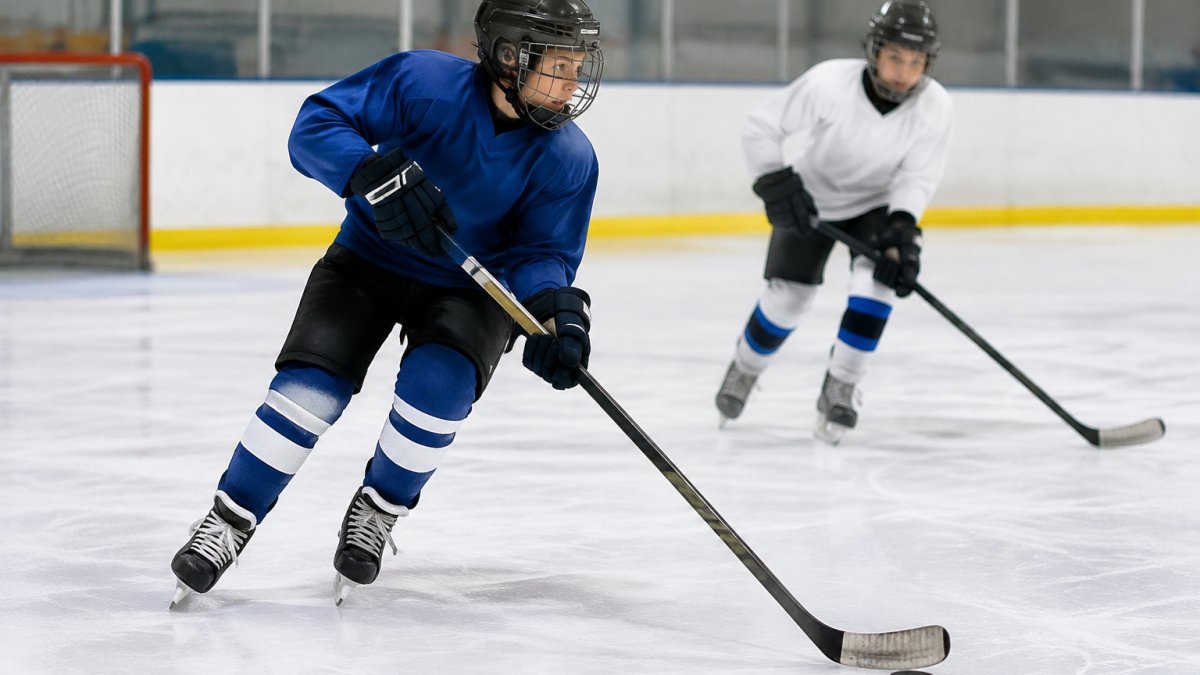
Position yourself at a safe distance from the puck carrier, usually one to two strides away on an angle. Too close and you get pressed into the same space. Too far and the pass becomes a gamble.
Teams that give the carrier two or three options tend to keep possession longer. The carrier does not have to force a pass, and the defense has to cover more ground. You can follow a structured, step-by-step way to teach positional support to build this habit.
- Stay on an angle, not directly beside or behind the carrier
- Move to open ice when the carrier looks trapped
- Call for the puck early so the carrier knows you are there
Hockey Puck Control Drills You Can Run With Limited Ice Time
Adult rec players rarely get a full ice session. The good news is that short drills can build real possession skills in 10 to 15 minutes.
Try these drills at the start of practice or during warmups:
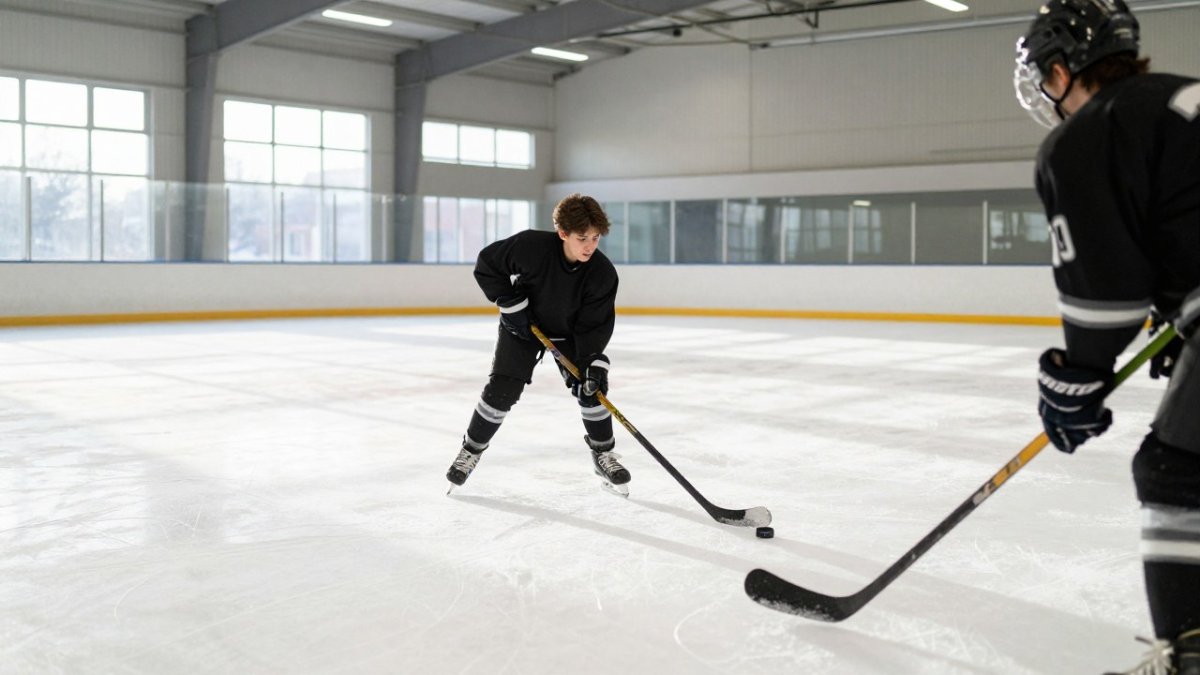
- Two-player keep-away: Two players stay within a 20-foot square and pass the puck while a third tries to steal it. Rotate every 60 seconds.
- **
- Triangle support: Three players form a triangle around the puck carrier. The carrier passes to whichever teammate is open.
Keep each drill short and focused. Tired players make poor decisions, so stop before form slips.
Offensive Zone Puck Possession: Simple Team Systems
In the offensive zone, possession decides whether you get a shot or a turnover. Simple systems help rec teams stay organized even when players have different skill levels and have never practiced together. The goal is not a complex cycle, it is three clear options for the puck carrier at all times.
A basic system works well: one player works the puck along the boards, one moves to the slot, and one stays high near the blue line for a pass. Everyone else holds position in the middle of the ice.
Where each role should be
- Corner/board worker: First player in on the forecheck or first to the loose puck along the wall. Protect the puck, keep your feet moving, and look to the slot or the point. Do not skate the puck out of the corner into traffic.
- Slot/net-front player: Stay in the middle of the ice between the faceoff dots, one to two stick lengths from the crease. Your job is to be a short passing option and to screen or tip. Do not drift to the wall, that empties the middle and gives the defense an easy clear.
- High player (point): Stay near the blue line on your side. You are the reset option when the boards are covered and the safety valve if the puck turns over. Keep your feet moving along the line so you can step into a pass or retreat on a turnover.
- Weak-side winger: Hold the far side of the ice rather than chasing the puck. You are the cross-ice option and the first player back if possession is lost.
Decision cues for the carrier
- If the defender is on your back and a teammate is open in the slot, pass early rather than trying to beat the defender one-on-one.
- If both the slot and the point are covered, move the puck back to the high player and reset rather than forcing a low-percentage pass through the middle.
- If you are the last player back and the puck is loose, chip it deep or safely clear rather than attempting a risky dangle at the blue line.
Watch out: the most common rec-league breakdown is all three forwards drifting to the puck side, which leaves the weak side empty and turns a possession shift into an odd-man rush the other way.
Keeping possession through puck movement
Possession in the offensive zone is maintained by moving the puck faster than the defense can rotate. Two quick passes beat one long carry almost every time in adult leagues, because defenders are slower to adjust than the puck is to move.
Measuring whether it is working
You do not need video or analytics to track progress. Count controlled zone entries, completed passes under pressure, and avoidable turnovers per period.
The article lays out four roles for keeping possession in the offensive zone, and each one has a clear job.
| Role | Where to stand | Main job |
|---|---|---|
| Corner/board worker | First player to the loose puck along the wall | Protect the puck and look to the slot or point |
| Slot/net-front player | Between the faceoff dots, 1-2 stick lengths from the crease | Be a short passing option and screen or tip |
| High player (point) | Near the blue line on your side | Reset option and safety valve on turnovers |
| Weak-side winger | Far side of the ice | Cross-ice option and first player back |
Building Possession Habits Into Your Next Shift
Possession does not come from one great play. It comes from small habits repeated every shift. Pick two or three from this article and focus on them next time you skate. For the broader picture, see the hockey positional play guide for adult rec leagues.
Before your next game, choose one habit to practice: hold your position, support the carrier, or protect the puck with your body. Check in with yourself after each shift. Did you chase the puck, or did you stay in your spot?
Hockey Positioning™ lets you walk through puck locations and positioning before you step on the ice.
Frequently Asked Questions
How can adult rec hockey players improve puck possession?
Start by positioning before you try to win the puck. Stand between the opponent and the net, keep your stick on the ice, and keep your feet moving so you can react. Most turnovers in rec leagues happen because a player reaches for the puck while off balance. Practice short, accurate passes to a teammate with time and space, and only carry the puck when no pass is open. Repeating these habits during warm-ups and practice shifts builds the reactions you need under game pressure.
What are the best ways to protect the puck in hockey?
Keep your body between the puck carrier and the opponent, and use your back leg and hip to absorb contact. Hold your stick low and angled to shield the puck while keeping your head up to see your options. Move the puck away from pressure with small, quick touches rather than wide reaches. When you are pinned on the boards, face the play if you can and look for a teammate's support before the defender closes the gap.
How should teammates support the puck carrier?
Support players should move to open ice at an angle that gives the carrier a passing option, not directly beside them where one defender can cover both. Stay within a stick-length to a few strides so a pass is quick and accurate. Call for the puck clearly and early. Adult rec teams often bunch up around the puck, so spreading out by one or two strides per player can create the space the carrier needs to escape pressure.
When should you pass instead of skating with the puck?
Pass when a defender is closing in, when a teammate has a clear lane with time and space, or when your skating path leads toward a crowded area. Skate with the puck when the lane ahead is open and no teammate is in a better position. A simple cue for rec players: if you have to look down to control the puck, you are probably too pressured to carry it and should move it quickly to a supporting player.